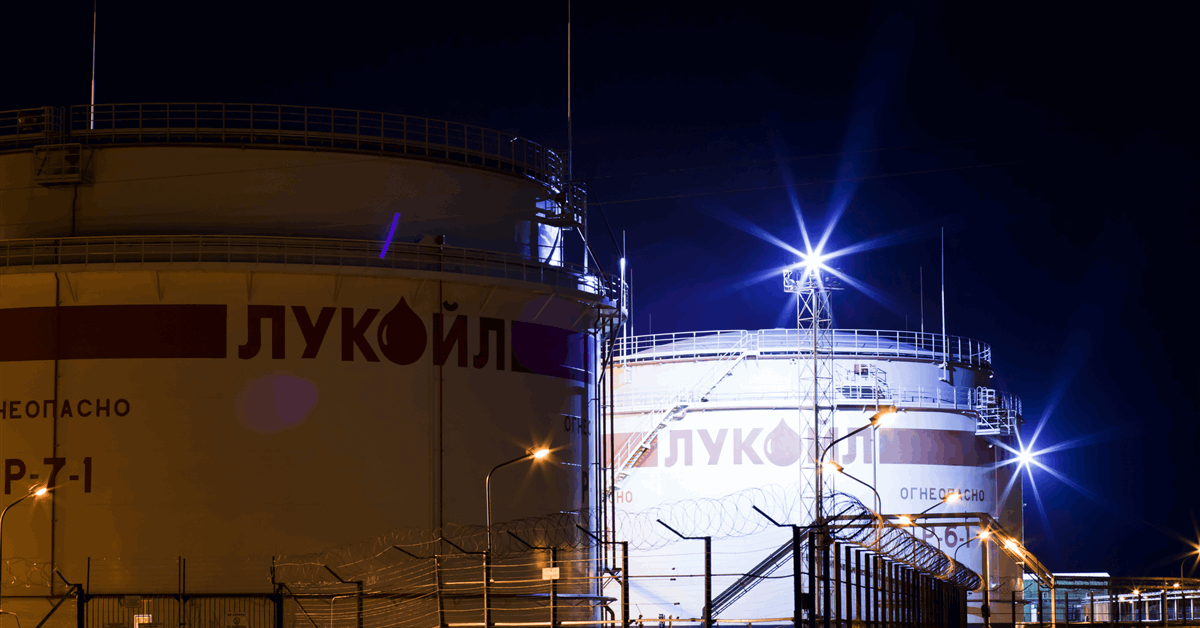
The global energy landscape is undergoing a profound restructuring, driven by geopolitical forces that compel even the most entrenched players to re-evaluate their international footprints. Lukoil PJSC, Russia’s second-largest oil producer and historically one of its most internationally diversified, has announced plans to divest its foreign assets. This strategic pivot, a direct consequence of escalating US and UK sanctions, marks a significant moment for the company and the broader oil and gas market. For investors, understanding the drivers, implications, and future trajectory of these asset sales is paramount, especially as market volatility continues to define the trading environment.
Lukoil’s Forced Divestment: A Geopolitical Chess Move
Lukoil’s decision to offload its international portfolio underscores the tangible impact of Western sanctions on Russian energy giants. The company, which boasts a sprawling global presence including upstream operations in former Soviet states like Kazakhstan, Uzbekistan, and Azerbaijan, as well as significant stakes in Iraq, Cameroon, Nigeria, and Ghana, is now actively considering bids for these holdings. This divestment process is being conducted under a specific wind-down license issued by the US Treasury’s Office of Foreign Assets Control (OFAC), with Lukoil signaling its readiness to seek extensions to ensure smooth operational transitions. The restrictive measures, initially imposed by the UK and subsequently by the US Trump administration on both Lukoil and state-controlled Rosneft PJSC, aim to intensify pressure on the Putin regime. For a company that also operates a vast network of 5,300 retail fuel stations across 19 countries and owns refineries in Europe, this represents a massive operational and strategic unwinding, fundamentally reshaping its global reach and future growth prospects.
Market Headwinds and Asset Valuation Dynamics
The timing of Lukoil’s asset sales coincides with a period of notable instability in global oil markets, adding a layer of complexity to potential valuations. As of today, Brent crude trades at $90.38 per barrel, reflecting a sharp 9.07% decline from its opening. WTI crude similarly registered a significant downturn, currently at $82.59, down 9.41% for the day. This immediate market softness follows a more sustained trend; over the past two weeks, Brent has shed a substantial $22.4, or nearly 20% of its value, since March 30th. Such a volatile pricing environment inevitably influences investor appetite and bid prices for distressed assets. While a depressed market might suggest lower acquisition costs for buyers, it also introduces greater uncertainty regarding future revenue streams, potentially leading to more conservative valuations. Furthermore, the retail fuel market is also feeling the pressure, with gasoline prices currently at $2.93, down 5.18%, which could impact the valuation of Lukoil’s extensive network of service stations and associated downstream infrastructure. Strategic buyers will need to weigh the long-term potential of these assets against the immediate market headwinds and the inherent geopolitical risks.
Navigating Uncertainty: Investor Questions and Forward-Looking Catalysts
The divestment of Lukoil’s foreign assets comes at a time when investors are grappling with significant questions about the future of oil prices and global supply stability. Our proprietary intent data shows a clear focus from investors asking, “What do you predict the price of oil per barrel will be by end of 2026?” and “What are OPEC+ current production quotas?” These questions underscore the prevailing uncertainty and the critical role of supply-side management in shaping market sentiment. Lukoil’s asset sales could introduce new operators to key production regions, potentially altering existing supply dynamics, though the immediate impact on global volumes is likely to be marginal if production continuity is maintained under new ownership. However, the broader implications for the global energy balance cannot be understated.
Looking ahead, several key calendar events will provide crucial insights. The upcoming OPEC+ Joint Ministerial Monitoring Committee (JMMC) meeting on April 19th, followed by the full Ministerial Meeting on April 20th, are particularly pivotal. Any decisions regarding production quotas will directly influence global supply, impacting prices and, by extension, the strategic value of the assets Lukoil is divesting. Furthermore, weekly data releases such as the API Weekly Crude Inventory (April 21st and April 28th) and the EIA Weekly Petroleum Status Report (April 22nd and April 29th) will offer granular views into market balances. The Baker Hughes Rig Count, scheduled for April 24th and May 1st, will also be closely watched for signs of North American production activity. These events, combined with the ongoing geopolitical tensions, will continue to shape investor outlooks and the broader trajectory of the energy sector through 2026.
The Reshaping of the Global Energy Map and Strategic Opportunities
Lukoil’s extensive international portfolio presents a unique opportunity for a diverse range of potential buyers, from national oil companies (NOCs) in host nations to opportunistic Western majors or private equity firms willing to navigate the complexities. Companies already present in regions like Kazakhstan, Iraq, or various African nations might see these assets as synergistic additions, offering economies of scale and expanded market access. For instance, an investor’s query about the performance of a company like Repsol, while specific, reflects a broader interest in how non-Russian energy majors are positioned to capitalize on market shifts, including potential asset acquisitions. The due diligence process for these assets will be intense, requiring careful evaluation of operational continuity, environmental liabilities, and, crucially, the long-term geopolitical risk associated with assets divested under sanctions pressure. This process will reshape regional energy landscapes, potentially leading to new alliances and a redistribution of influence. While the immediate focus is on the divestment, the longer-term ramifications include a more fragmented global oil market, with Russian entities increasingly isolated, and a renewed emphasis on energy security and diversification for many nations. This strategic reshuffle, driven by sanctions, will undoubtedly redefine competitive dynamics and investment flows in the coming years.