The intricate dance of global oil flows has once again been complicated by geopolitical pressures, presenting both challenges and opportunities for astute investors. Recent developments indicate a significant disruption to crude supplies for India’s Nayara Energy, a major refining entity. This pivot, driven by EU sanctions targeting Nayara’s Russian ownership, forces a re-evaluation of traditional supply routes and introduces new layers of complexity to global energy security. For investors navigating the oil and gas sector, understanding these shifts is paramount as they ripple through refining margins, shipping economics, and the broader geopolitical landscape that underpins crude pricing.
Geopolitical Currents Reroute Asian Crude Flows
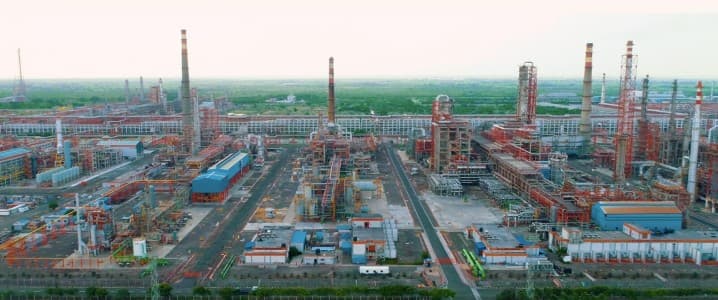
The European Union’s sanctions against Nayara Energy, stemming from its 49% ownership by Russia’s Rosneft, have triggered an immediate and material impact on its crude procurement. Saudi Aramco and Iraq’s SOMO have ceased supplying crude to Nayara’s refinery in Gujarat, with the last non-Russian deliveries, Arab Light and Basrah Heavy, recorded in mid-to-late July. This cessation of supply from traditional Middle Eastern powerhouses like Saudi Arabia and Iraq is not merely a logistical hiccup; it signals a profound shift in Nayara’s operational paradigm. The refinery, with a nameplate capacity of 400,000 barrels per day (b/d), imported an average of just 242,000 b/d in August, marking its lowest intake since November 2022. All August imports were Russian Urals, a stark contrast to the approximately 29% of its 2024 intake that previously originated from the Middle East. This reliance on Russian crude, often facilitated by “dark-fleet” tankers, underscores the growing segmentation of the global oil market and the heightened risk associated with maintaining traditional commercial relationships under sanctions.
This dynamic forces Nayara to navigate a complex web of payment complications and shipping constraints. The EU’s measures are explicitly designed to further restrict the Kremlin’s oil revenues, much of which now finds its way to Asian markets at discounted rates. Nayara has sought assistance from the Indian government to secure compliant banking channels and shipping for both its crude imports and refined product exports. However, New Delhi itself faces increasing pressure from the United States to reduce its Russian oil purchases, including the looming threat of a 50% tariff on certain Indian goods entering the American market. This interconnected pressure creates a precarious environment for Indian refiners and highlights the broader geopolitical risks that investors in the refining and trade sectors must carefully model.
Market Volatility and Price Signals for Investors
Against this backdrop of evolving geopolitical supply dynamics, the broader crude market has exhibited significant volatility. As of today, Brent Crude trades at $90.38 per barrel, marking a substantial 9.07% decline within the day, with its range fluctuating between $86.08 and $98.97. Similarly, WTI Crude is priced at $82.59, down 9.41% for the day, having traded between $78.97 and $90.34. This sharp daily correction follows a notable downward trend over the past two weeks, where Brent fell from $112.78 on March 30 to $91.87 on April 17, representing an 18.5% depreciation. The gasoline market also reflects this bearish sentiment, currently at $2.93, a 5.18% drop today.
These price movements underscore the complex interplay of specific regional supply disruptions, broader global demand concerns, and macroeconomic sentiment. While sanctions-induced re-routing, as seen with Nayara, can tighten specific regional markets or push up shipping costs, the overall market snapshot suggests that broader concerns about economic growth and perhaps oversupply perceptions are currently dominating. Investors are keenly asking about the outlook for crude prices by the end of 2026, a question whose answer is increasingly tied to the resilience of global demand in the face of persistent inflation and central bank policies, alongside the effectiveness of supply management from major producers. The current price action serves as a crucial signal for investors to reassess their positions, considering both immediate geopolitical catalysts and the overarching demand narrative.
OPEC+ Strategy Under Scrutiny Amid Shifting Demand
The ongoing re-calibration of global oil flows, exemplified by Nayara’s predicament, places increased scrutiny on the strategies of major oil-producing blocs. Investors are actively inquiring about current OPEC+ production quotas, recognizing their pivotal role in market stability. This weekend marks a critical juncture, with the Joint Ministerial Monitoring Committee (JMMC) meeting scheduled for April 18, followed by the full OPEC+ Ministerial Meeting on April 19. These gatherings will undoubtedly address the delicate balance between market stability and member country revenue goals, particularly in a market characterized by recent price declines.
Saudi Arabia and Iraq, having curtailed supplies to Nayara, are key players within OPEC+. Their decisions at these upcoming meetings will be closely watched for any signals regarding output adjustments. While the immediate impact of Nayara’s supply disruption is localized, the broader implications for global supply-demand dynamics could influence OPEC+’s collective strategy. Will the group maintain its current output levels to support prices, or will internal pressures and the desire to gain market share in non-sanctioned markets lead to adjustments? Upcoming data releases, such as the API Weekly Crude Inventory on April 21 and the EIA Weekly Petroleum Status Report on April 22, will provide further insights into crude stock levels and refining activity in the U.S., offering a vital demand-side counterpoint to OPEC+’s supply deliberations. These events, combined with the Baker Hughes Rig Count on April 24, will offer a clearer picture of the industry’s direction and production capacity.
Investment Implications: Navigating Sanctions and Supply Chain Risks
For investors, the Nayara situation serves as a stark reminder of the escalating risks associated with global supply chains and the pervasive impact of sanctions. Companies with direct or indirect ties to sanctioned entities face significant operational and financial hurdles, from securing compliant banking channels to sourcing reliable shipping. The reliance on “dark-fleet” tankers, while providing a workaround, introduces higher insurance costs and greater operational risks, ultimately impacting refining margins and profitability. This complex environment necessitates a deeper dive into counterparty risk and geopolitical exposure when evaluating energy sector investments.
Beyond the immediate financial implications for refiners, the broader policy responses from governments like India, balancing energy security with international pressure, will shape future trade relationships. The threat of a 50% tariff on Indian goods to the U.S. demonstrates the tangible economic consequences of these decisions. Investors should therefore focus on companies demonstrating robust supply chain resilience, geographical diversification, and a proactive approach to managing geopolitical risks. The ability of companies to adapt to these rapidly changing market conditions, whether through re-negotiating contracts, optimizing logistics, or exploring new markets, will be a key differentiator in determining their long-term value in an increasingly fragmented global energy landscape. For those asking how specific companies will perform, this environment demands a granular assessment of operational flexibility and risk mitigation strategies.


