The intricate and often opaque world of global oil trade has revealed a new layer of complexity, as U.S.-sanctioned tankers have been identified playing an indirect, yet crucial, role in the supply chain delivering Russian crude to India. This development raises significant questions for investors tracking energy markets, geopolitical risk, and the effectiveness of international sanctions regimes.
Recent tanker-tracking data, compiled from leading analytics firms Kpler and Vortexa and reported by Bloomberg, indicates that vessels designated under U.S. sanctions in January have participated in ship-to-ship (STS) transfers involving Russian crude. This oil subsequently found its way to India via unsanctioned carriers. While India has consistently maintained that it will not permit sanctioned vessels to discharge crude at its terminals, the current findings suggest a nuanced circumvention strategy is at play within the broader Russian oil export network.
Shadow Fleet Dynamics and Indian Imports
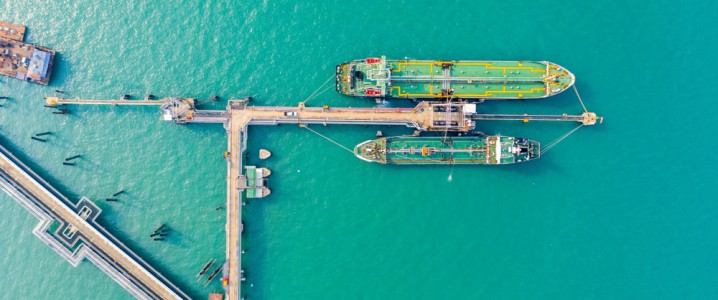
Investigators have traced at least three specific tankers, currently under U.S. sanctions, loading crude from Russia’s Far Eastern ports in recent weeks. These vessels then transferred their cargoes to other ships in either Russian or Malaysian waters. Crucially, these sanctioned tankers did not proceed to India directly. Instead, they acted as a critical, albeit upstream, component in the logistical chain, facilitating the movement of Russian crude before it was ultimately delivered to Indian shores by other, compliant vessels. This operational model highlights the adaptability of Russia’s “shadow fleet” and its partners in navigating stringent international restrictions.
India has emerged as one of the largest purchasers of Russian crude, second only to China, since the imposition of Western sanctions following the conflict in Ukraine. Indian refiners have consistently stated their commitment to adhering to the G7 price cap and other sanction guidelines when sourcing Russian oil. However, the indirect involvement of sanctioned tankers introduces a new dimension to this compliance narrative.
Vandana Hari, founder of Vanda Insights, an authoritative voice in energy analysis, commented on this dynamic, noting that “there will always be an element of calculated risk in Indian imports of Russian crude, but the refiners have mostly played it safe.” Hari further elaborated, suggesting that refiners “can’t be held accountable for how the crude is transported.” This perspective underscores the challenge of enforcing sanctions across complex, multi-stage supply chains, especially when the final recipient has no direct engagement with the sanctioned entity.
Robust Demand and Shifting Trade Routes
Despite the evolving sanctions landscape, India’s appetite for Russian crude remains robust. Preliminary data from last week indicates that India is on track to import nearly 1.8 million barrels per day (bpd) of crude oil from Russia in May. This figure represents a significant increase, marking a 10-month high and solidifying Russia’s position as a dominant supplier to the Indian market. The economic incentives for Indian refiners to procure discounted Russian crude continue to outweigh the perceived risks, driving these elevated import levels.
Furthermore, Kpler data indicates a discernible shift in India’s purchasing preferences. Indian refiners have increasingly sought lighter Russian crude grades, such as ESPO, reflecting specific refining requirements and potentially better arbitrage opportunities. This granular data provides crucial insights for investors monitoring product yields and refinery margins in key Asian markets.
The market’s resilience and adaptability are also evident in the tanker sector. Kpler recently offered a “neutral to bullish” outlook on India’s crude imports from Russia, anticipating that “more tankers [are] joining the fleet to transport Russian cargoes.” This forecast suggests an ongoing expansion of the non-sanctioned fleet dedicated to Russian crude exports, ensuring continued logistical capacity despite Western pressures.
Navigating Sanctions and Market Adjustments
The current state of Russian oil exports to India reflects a period of significant market adjustment. Following the initial shock of U.S. sanctions targeting Russia’s oil trade in January, traders and shipping companies swiftly moved to reconfigure supply chains. This involved a concerted effort to shift cargoes onto non-sanctioned tankers, a process that saw Russian exports to India temporarily dip before making a strong recovery in March.
For investors, this intricate dance between sanctions, trade routes, and fleet management highlights the inherent volatility and geopolitical sensitivities within the global oil market. The continued ability of Russian crude to find buyers, even indirectly leveraging sanctioned assets, underscores the limitations of unilateral sanctions without broader international consensus and enforcement mechanisms. Monitoring the “shadow fleet,” STS transfer activity, and the evolving stances of key importing nations like India will remain paramount for assessing future oil supply dynamics and price stability.
The financial implications for companies involved in shipping, refining, and commodity trading are substantial. Those with exposure to the Indian refining sector or the broader Asian crude market must keenly observe these developments. The risk of secondary sanctions, while not currently applied to Indian entities for these specific activities, remains a potential long-term consideration, adding a layer of geopolitical premium to investment decisions in this segment of the energy market.
Ultimately, the saga of sanctioned tankers and Russian crude deliveries to India serves as a potent reminder of the complex interplay between geopolitics, economic imperatives, and the relentless pursuit of energy security in an increasingly fragmented global landscape. Investors must remain vigilant, analyzing not just declared policies but also the operational realities of global oil supply chains to accurately gauge market risks and opportunities.