Recent Tanker Movements Ignite Speculation on Sanctioned Russian LNG Exports
A notable uptick in sanctioned liquefied natural gas (LNG) tanker activity at Russia’s strategically vital Arctic LNG 2 project is drawing keen attention from global energy market participants. These movements suggest a potential, albeit challenging, resumption of superchilled fuel loadings, a development that could ripple through the tightly balanced international LNG market. For investors closely monitoring geopolitical risks and their profound impact on commodity supply chains, this emerging pattern signals Russia’s persistent drive to monetize its vast natural gas reserves despite a formidable wall of international sanctions.
Sanctioned Vessels Converge on Arctic LNG 2
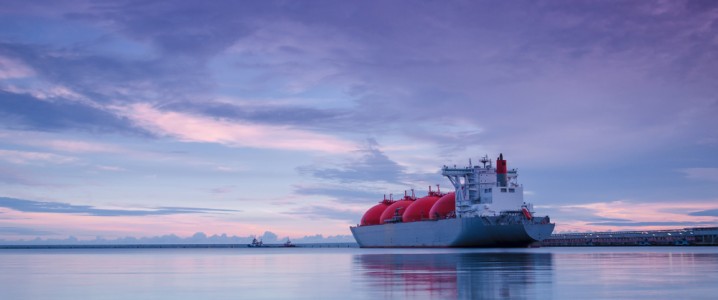
The tanker Voskhod, previously known as North Mountain, recently arrived at the Arctic LNG 2 site. This Russian-flagged vessel was specifically targeted by U.S. sanctions in October of last year, part of an escalated campaign by the U.S. Administration to impede the project’s progress and disrupt its supporting maritime logistics. Shipping databases reveal that Voskhod has, in a significant operational shift, recently altered its commercial management to a company with a registered address in Moscow—a common tactic observed in efforts to circumvent sanctions by obscuring beneficial ownership or operational control.
Voskhod’s arrival marks the second such instance in as many months. Last month, another sanctioned LNG tanker, the Iris, was observed heading towards the Gydan Peninsula, the location of the Arctic LNG 2 facility. While concrete confirmation regarding any cargo loading by the Iris remains elusive, these successive deployments of sanctioned vessels have fueled widespread speculation that Russia is actively exploring avenues to reactivate export operations from the facility, signaling a clear intent to challenge the efficacy of current international restrictions.
Arctic LNG 2: A Flagship Project Under Duress
Arctic LNG 2 was initially envisioned as Russia’s premier liquefied natural gas export initiative, a cornerstone of the nation’s ambitious strategy to significantly expand its presence and influence within the burgeoning global LNG market. Positioned on the resource-rich Gydan Peninsula, the project was slated to be a major contributor to global energy supply. However, an extensive and evolving framework of U.S. and European Union sanctions has effectively brought the project’s operational start-up to a grinding halt. These punitive measures have not only targeted the project’s financial mechanisms and development phases but have also extended to include vessels and entities providing crucial services, thereby creating an increasingly prohibitive operating environment for potential international buyers.
The intensifying pressure from the United States, in particular, has largely succeeded in deterring any international customers who might have previously considered purchasing cargoes from Arctic LNG 2. This has left billions in invested capital largely unproductive and anticipated LNG supply off the market, reshaping the project’s trajectory from a symbol of Russian energy prowess to a testament to the power of coordinated economic pressure.
The Maritime Labyrinth of Sanctions Circumvention
Successfully navigating the intricate complexities of international sanctions to export high-value energy commodities like LNG presents an enormous operational and financial challenge. The hurdles extend far beyond simply identifying a willing buyer; they encompass securing reliable insurance coverage, accessing critical financing, and ensuring port access—all of which are now subject to intense international scrutiny and regulatory oversight. The global shipping and maritime finance industries are highly integrated, making it exceedingly difficult to operate outside the established frameworks without incurring significant risk or cost.
An illustrative, albeit stark, example of these formidable difficulties emerged last year: a sanctioned LNG carrier, after loading its cargo in the Arctic in August, embarked on an extensive, four-month odyssey across various global shipping lanes. Its protracted itinerary included passages through key maritime chokepoints and economic zones, specifically Northern Europe, the Mediterranean Sea, the Suez Canal, the Indian Ocean, and along China’s east coast, before ultimately returning to Russia’s Far East – all without successfully offloading its superchilled payload. This arduous and ultimately fruitless voyage powerfully underscores the profound operational and commercial obstacles faced by sanctioned Russian LNG in penetrating the global market, even when a physical cargo is secured and transport is attempted.
Investor Implications and the Evolving Market Outlook
For energy investors and market analysts, these recent developments at Arctic LNG 2 introduce a complex and nuanced calculus. On one hand, any successful resumption of loadings, however sporadic or limited in volume, could introduce additional supply into a global LNG market that remains sensitive to disruptions and supply tightness, potentially influencing spot prices and regional differentials. The sheer scale of the project, once fully operational, holds the potential to significantly alter global LNG flows.
However, on the other hand, the persistent and well-documented challenges in securing legitimate buyers, coupled with the immense logistical and financial hurdles associated with circumventing international sanctions, strongly suggest that any significant, sustained export volume from Arctic LNG 2 will remain highly improbable in the foreseeable future. The continued and unwavering pressure from Western sanctions signals a long-term commitment to limiting Russia’s energy revenues, effectively forcing Moscow to resort to increasingly opaque, costly, and inefficient methods to move its commodities. Investors are therefore advised to closely monitor vessel tracking data for further indications of loading activities and destination patterns, as well as any shifts in international enforcement policies or the emergence of new circumvention tactics.
The ongoing saga of Arctic LNG 2 serves as a potent reminder of the geopolitical premium now embedded in energy asset valuations and the significant operational risks associated with major energy projects entangled in international conflicts and comprehensive sanction regimes. Its future remains a critical indicator of the broader dynamics between energy security, geopolitical strategy, and global market stability.