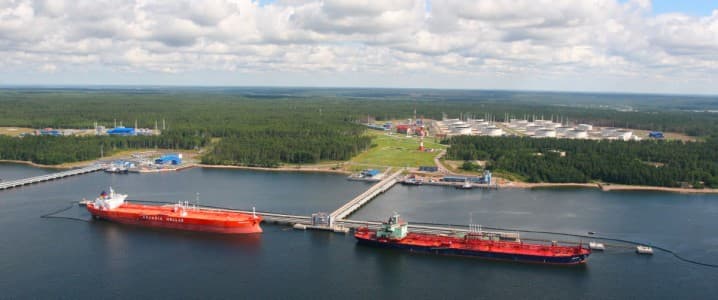
The recent drone attack on Novatek’s Ust-Luga fuel loading and gas processing complex on the Russian Baltic Sea has sent ripples through specific segments of the global energy market, signaling a potentially months-long disruption to refined product and condensate exports. This incident, marking the second such attack this year, underscores the escalating geopolitical risks impacting vital energy infrastructure and highlights the fragility of supply chains. For investors, understanding the nuanced implications of this damage, from immediate operational halts to long-term repair timelines, is crucial for navigating the evolving energy landscape. Our analysis delves into the direct supply impact, current market reactions, upcoming catalytic events, and key investor questions to provide a comprehensive outlook.
Direct Operational Impact and Supply Ramifications
The Ust-Luga complex is a strategic hub, essential for Russia’s export of stable gas condensate, which it refines into various high-value products including light and heavy naphtha, jet fuel, fuel oil, and gasoil. Reports indicate that several units within the complex sustained damage, leading to a complete shutdown of operations immediately following the attack, including all fuel loadings. While one unit might resume operations within days, another could take weeks to repair. Crucially, the most severely damaged unit faces a repair timeline stretching up to six months. This extended outage for a key processing unit implies a significant and sustained reduction in the facility’s output.
Specifically, the disruption is expected to curtail Novatek’s naphtha exports for an extended period, potentially leading the company to redirect more raw gas condensate for export instead. Naphtha, a critical feedstock for the petrochemical industry, could see supply tightness in relevant markets, affecting margins for downstream players. The prolonged repair period underscores that this is not a transient blip but a structural, albeit localized, hit to refined product supply from a major exporter. Investors should monitor naphtha and related product spreads, as well as the operational updates from Novatek, for clearer signals on specific market impacts.
Market Reaction Amidst Broader Downtrends
Counterintuitively, despite news of a significant supply disruption, the broader crude oil market has seen a notable decline. As of today, Brent crude trades at $90.38, experiencing a substantial 9.07% drop within the day, while WTI crude sits at $82.59, down 9.41%. Gasoline prices have also followed suit, trading at $2.93, a 5.18% decrease. This daily snapshot presents a fascinating dichotomy: a geopolitical event tightening specific supply segments, yet crude benchmarks are falling sharply. This suggests that the market is currently weighing other, more dominant bearish factors, potentially related to global demand concerns or an easing of broader geopolitical risk premiums that had previously pushed prices higher.
Adding context, the 14-day Brent trend reveals a significant bearish shift, plummeting from $112.78 on March 30th to $91.87 on April 17th, an 18.5% decline. This broader trend indicates that while the Ust-Luga incident is a supply-side shock, it is currently being overshadowed by macro-economic anxieties or a re-evaluation of the global supply-demand balance. Investors must consider that while localized disruptions can create short-term volatility in specific product markets, the overall direction of crude prices is often dictated by a confluence of macroeconomic factors, OPEC+ policy, and the perception of global demand health.
Forward-Looking Analysis and Upcoming Catalysts
The extended disruption at Ust-Luga adds another layer of complexity to the upcoming energy calendar, particularly concerning OPEC+ decisions. The Joint Ministerial Monitoring Committee (JMMC) is scheduled to meet on April 18th, followed by the full OPEC+ Ministerial Meeting on April 19th. While the Ust-Luga incident primarily impacts refined products and condensate rather than crude oil directly, any sustained reduction in Russian energy exports could subtly influence the group’s perception of global supply adequacy. Investors will be keenly watching for any statements or indications from OPEC+ regarding their current production quotas, especially in light of ongoing geopolitical tensions and fluctuating demand outlooks. Will this disruption, however small in the global crude context, give OPEC+ more impetus to maintain or even tighten supply?
Beyond OPEC+, crucial insights into the market’s health will come from the API Weekly Crude Inventory report on April 21st (and April 28th), followed by the EIA Weekly Petroleum Status Report on April 22nd (and April 29th). These inventory figures will provide critical data points on the immediate supply-demand balance in major consuming nations, indicating whether the market is tightening or loosening. Furthermore, the Baker Hughes Rig Count on April 24th (and May 1st) will offer a forward-looking perspective on U.S. shale production, a key swing factor in global supply. Collectively, these events, viewed through the lens of the Ust-Luga disruption, will help shape the market’s trajectory in the coming weeks.
Addressing Investor Concerns: OPEC+ and Year-End Price Projections
Our proprietary reader intent data reveals that investors are keenly asking about OPEC+’s current production quotas and what they predict the price of oil per barrel will be by the end of 2026. The Ust-Luga incident, while not a direct crude oil export disruption, underscores the persistent geopolitical risk premium inherent in the energy sector. For OPEC+, the damage to a Russian energy export facility, regardless of the product, is a reminder of supply vulnerabilities. This could reinforce a cautious approach to increasing output, potentially maintaining current quotas or even considering further cuts if global demand signals weaken significantly. The market is constantly weighing these geopolitical risks against the broader supply picture from non-OPEC+ producers and the strength of global economic growth.
Predicting end-of-year oil prices is complex, involving numerous variables. The Ust-Luga incident contributes to a bullish argument for refined products like naphtha over the medium term, given the six-month repair timeline for critical units. For crude, however, the impact is less direct. Our analysis suggests that the overriding factors for crude prices by the end of 2026 will be the trajectory of global economic growth, China’s demand recovery, the consistency of OPEC+ policy, and the pace of U.S. shale production. Geopolitical events like Ust-Luga add volatility and a potential floor to prices, but a sustained upward trend would likely require a stronger global demand impulse or more aggressive supply management from OPEC+. Investors should prepare for continued volatility, with geopolitical events serving as intermittent catalysts within a market still grappling with fundamental supply-demand rebalancing.


