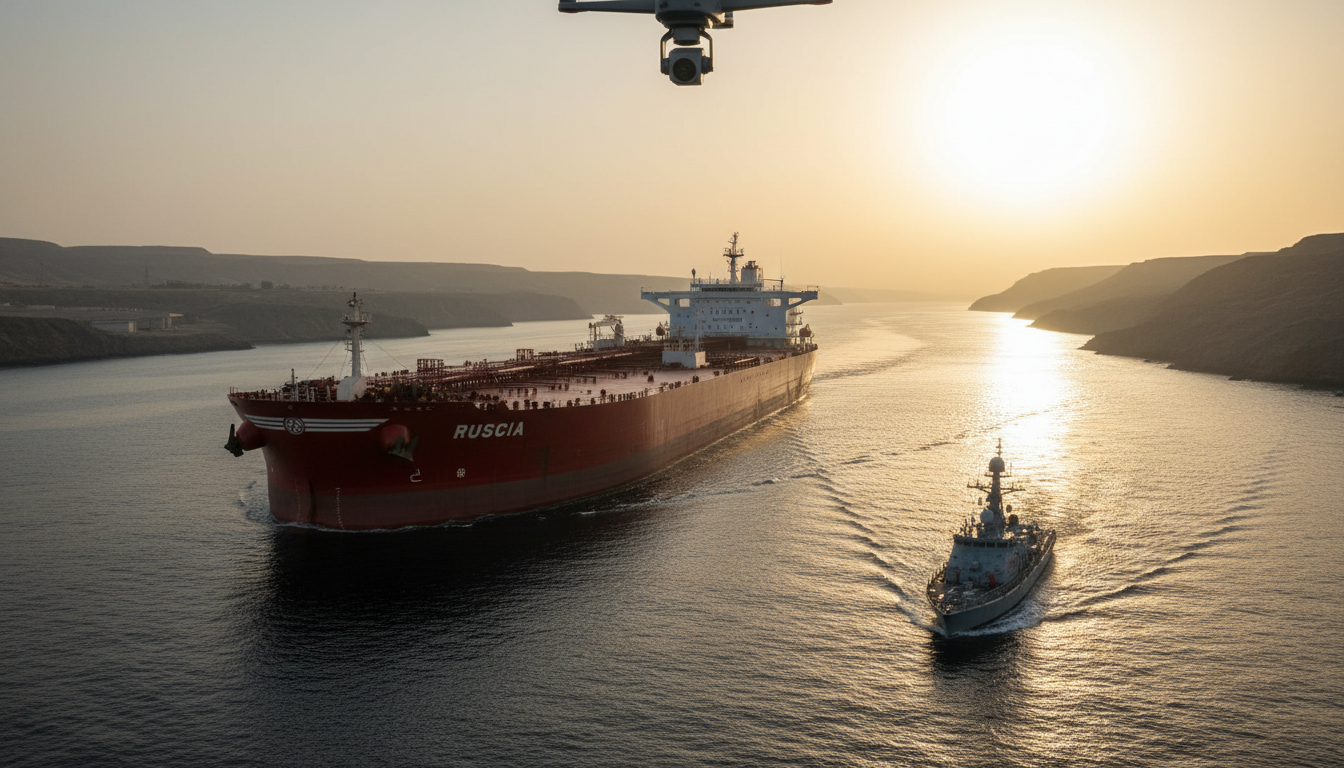
The recent transit of the Russian-flagged supertanker Arhimeda through the Strait of Hormuz has sent ripples through an already tense global oil market. While a single vessel’s passage might seem minor, this event, coupled with persistent restrictions in the vital chokepoint, underscores the deep-seated supply risks that continue to dominate investor sentiment. For those tracking the intricate dynamics of crude oil prices and seeking clarity on future market movements, the implications of this lingering uncertainty in Hormuz are profound, directly impacting everything from immediate price volatility to long-term supply chain strategies.
The Hormuz Bottleneck: A Persistent Geopolitical Premium
The Arhimeda, a Very Large Crude Carrier (VLCC) built in 2000, which hoisted the Russian flag in January of this year, made a notable entry into the Persian Gulf from the Strait of Hormuz late last Thursday. Its declared initial destination: Iran’s Kharg Island. This transit is particularly significant given the vessel’s past, operating under its previous name, Vizuri, and being blacklisted by the U.S. Treasury Department due to its documented links to Iranian oil trade. While the transit of a Russian-flagged vessel might suggest a loosening of restrictions, the broader picture indicates otherwise. Maritime intelligence firm Windward reports that, contrary to some market expectations following a recent ceasefire announcement, the Strait of Hormuz remains under tight control, with traffic volumes still low and highly selective. Thousands of vessels, approximately 3,200 in total, including around 800 tankers and cargo ships, reportedly remain stranded west of the Strait. Iran’s public statements about imposing toll fees for transiting vessels further complicate the operational landscape, adding a potential layer of cost and uncertainty for any operator considering the route. This sustained disruption and the explicit control exerted over the chokepoint continue to inject a significant geopolitical premium into global crude prices.
Navigating Current Market Volatility
The ongoing situation in the Strait of Hormuz is a primary driver of the significant volatility witnessed in oil markets. As of today, Brent Crude trades at $95.83 per barrel, marking a substantial 6.03% increase, with its daily range fluctuating between $92.77 and $97.81. Similarly, WTI Crude has seen a robust rally, now priced at $87.94, up 6.48%, after moving between $85.45 and $89.6. These daily gains come against a backdrop of a broader downward trend over the past two weeks, where Brent dipped from $112.78 on March 30th to $90.38 on April 17th, representing a nearly 20% decline. This whipsaw action perfectly illustrates the market’s sensitivity to supply-side risks. Investors are keenly focused on whether WTI, and crude prices generally, will sustain an upward trajectory or reverse course. The Arhimeda’s transit, while an isolated incident, serves as a potent reminder of the fragility of Middle Eastern oil flows. Any perceived escalation or further tightening of transit controls through Hormuz could quickly push prices higher, reflecting the immense economic cost of rerouting or delaying a significant portion of the world’s oil supply. Conversely, any genuine de-escalation could see prices retreat from these geopolitical highs, reflecting a reduction in the risk premium.
Supply Chain Rerouting and Long-Term Adjustments
The prolonged uncertainty in the Strait of Hormuz has forced a strategic rethinking among global energy players. Rather than waiting for a full resumption of normal traffic, a significant portion of maritime traffic flows has restructured, diverting to ports in Oman and along the east coast of the United Arab Emirates. While these alternative routes offer some operational flexibility, they invariably introduce increased transit times, higher logistical costs, and potential for new localized bottlenecks. The reluctance of major operators and established oil majors to resume activity through the Strait, as highlighted by maritime intelligence, underscores the severity of the perceived risk. Their cautious stance suggests that the current situation is not merely a temporary blip but rather a fundamental shift in regional shipping dynamics. For investors, this implies that even if the immediate geopolitical tensions were to ease, the structural changes already in motion—such as the investment in alternative port infrastructure and the re-evaluation of shipping contracts—could have lasting impacts on global supply chain efficiency and the cost of delivered crude, potentially supporting higher baseline prices for longer.
Forward Outlook: Key Events Shaping the Path Ahead
The trajectory of oil prices for the remainder of 2026 will be heavily influenced by how the Hormuz situation evolves and how key industry players respond. A critical event on the immediate horizon is the OPEC+ Joint Ministerial Monitoring Committee (JMMC) Meeting scheduled for April 20th, followed by the full OPEC+ Ministerial Meeting on April 25th. These gatherings will undoubtedly address the current market tightness and the geopolitical risk premium. Will the alliance maintain its current production cuts, potentially exacerbating supply concerns given the Hormuz disruptions, or will they signal an intention to increase output to stabilize prices? The market will be scrutinizing every statement. Furthermore, the weekly API and EIA inventory reports on April 21st, 22nd, 28th, and 29th will provide vital insights into U.S. crude and product stockpiles, offering a domestic counterpoint to the international supply concerns. Investors are actively questioning what the price of oil per barrel might be by the end of 2026. While definitive predictions are challenging amidst such volatility, continued instability in the Strait of Hormuz, coupled with restrained OPEC+ output, could keep prices elevated, potentially pushing Brent towards the upper end of its recent range or even higher. Conversely, a clear de-escalation of tensions, combined with a coordinated increase in supply from OPEC+ members, could see a significant re-evaluation of the risk premium, leading to downward pressure. The current gasoline price of $3.06 per gallon, up 4.44% today, is a tangible reminder of how these geopolitical risks translate directly to consumer costs, adding another layer of complexity for policymakers and market participants alike.


