The Black Sea’s Brief Halt: A Microcosm of Macro Energy Volatility
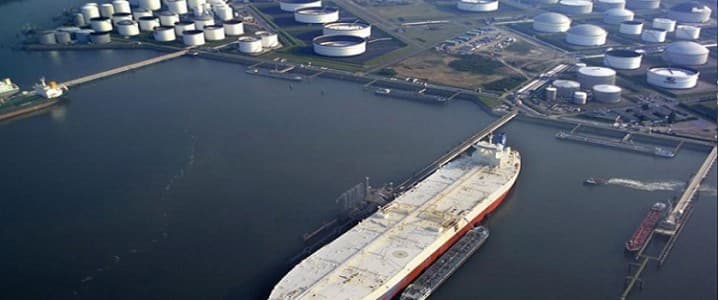
The immediate sigh of relief across oil markets following the swift resumption of loadings at Russia’s crucial Novorossiysk Black Sea terminals belies a deeper, more unsettling reality for energy investors. While operations at the Caspian Pipeline Consortium (CPC) terminal and Transneft’s Sheskharis facility were restored within hours after drone strikes forced a temporary halt, the incident serves as a stark reminder of the escalating geopolitical risks threatening global oil supply. For sophisticated investors, this isn’t merely a news item about a resolved disruption; it’s a critical signal about the persistent vulnerability of key export infrastructure and the potential for significant price volatility ahead. Our proprietary data and market insights suggest that while the physical flow of crude quickly recovered, the psychological impact on pricing and risk premiums is far from over, especially given the broader market dynamics at play.
Market Response and the Enduring Vulnerability of Key Trade Routes
The strategic importance of the Novorossiysk hub cannot be overstated. With the CPC terminal alone moving approximately 1.3 million barrels per day (bpd) of Kazakh crude, primarily destined for Mediterranean refiners, and the Sheskharis facility handling Russia’s cornerstone Urals blend, any interruption here sends immediate tremors through the market. These vital arteries, collectively accounting for a substantial share of Novorossiysk’s 2.5-3 million bpd export capacity, remain prime targets in an escalating conflict. Even short suspensions at such critical nodes can rapidly inflate freight rates, alter tanker schedules, and trigger a scramble for alternative supplies, introducing volatility into an already sensitive market.
Despite the swift resolution of the Novorossiysk outage, the broader market context underscores its sensitivity. As of today, Brent Crude trades at $90.38 per barrel, marking a significant 9.07% decline within a single day. WTI Crude followed a similar trajectory, falling 9.41% to $82.59 per barrel, while gasoline prices also dipped to $2.93, a 5.18% decrease. This sharp daily correction is not an isolated event; our proprietary 14-day Brent trend data reveals a broader downward pressure, with prices sliding from $112.78 on March 30th to $91.87 just yesterday, representing an 18.5% drop over two weeks. This suggests that while immediate supply fears from Novorossiysk eased, underlying demand concerns or other macro factors are currently dominating the narrative, potentially overshadowing geopolitical risk premiums in the short term. However, the potential for renewed disruptions keeps a floor under volatility, reminding investors that physical market tightness can emerge rapidly.
Escalating Geopolitical Risk and Widening Supply Chain Strain
The Black Sea incident is merely one facet of an intensifying campaign against Russia’s energy infrastructure. Ukraine has demonstrably expanded its drone operations, striking not only export terminals but also crucial refineries in Ryazan and Astrakhan, and attempting incursions against fuel storage depots in the Krasnodar and Belgorod regions. This sustained pressure aims to degrade Russia’s export logistics, disrupt its refining capacity, and ultimately strain its revenue streams – a critical factor for investors monitoring the long-term viability of Russian energy assets and the broader global supply picture.
Moscow’s response, including retaliatory strikes on Ukrainian power infrastructure, creates a dangerous feedback loop. Russia is increasingly compelled to divert valuable air defense assets to protect its vulnerable oil facilities, while Ukraine grapples with maintaining operational export corridors amidst rolling outages. For global energy markets, this translates to heightened risk premiums across the board. The constant threat of disruption, whether to pipelines, refineries, or export hubs, introduces an irreducible layer of uncertainty for supply chains, making investment decisions more complex and underscoring the need for robust risk assessment in energy portfolios. Traders note that repeated short suspensions at Novorossiysk, for instance, could push differentials for both Urals and CPC Blend higher, reflecting increased cost and risk for buyers.
Investor Sentiment: Navigating Uncertainty and Long-Term Price Predictions
Our proprietary reader intent data reveals a clear focus among OilMarketCap.com investors on the future trajectory of crude prices and the underlying factors influencing them. A recurring question asks, “What do you predict the price of oil per barrel will be by end of 2026?” This directly reflects the market’s current volatility, where daily double-digit percentage swings are becoming more common. The Black Sea incident, despite its quick resolution, feeds into this long-term uncertainty, highlighting how easily unforeseen geopolitical events can introduce significant supply-side shocks that challenge even the most sophisticated predictive models. Investors are keenly aware that such incidents can quickly shift market sentiment, even if the physical impact is brief.
Another key query from our investor community, “What are OPEC+ current production quotas?”, underscores the critical role of cartel policy in balancing these geopolitical risks. As physical supply remains vulnerable to attacks, OPEC+’s decisions on output levels become even more potent levers for price stability or disruption. Investors are clearly looking for clarity on how these two major forces – geopolitical supply threats and managed production – will interact to shape the market landscape through the remainder of 2026. The perceived interplay of these factors heavily influences sentiment around energy equities, particularly those with significant exposure to international shipping, refining, or upstream production in high-risk regions.
Upcoming Catalysts: OPEC+ Decisions and Inventory Dynamics
Beyond the immediate geopolitical headlines, the coming fortnight presents several critical market catalysts that demand investor attention. The most immediate are the OPEC+ Joint Ministerial Monitoring Committee (JMMC) meeting on April 18th, followed by the Full Ministerial Meeting on April 19th. These gatherings are pivotal, as our readers’ questions about current production quotas confirm. Any indication of changes in production policy, whether an extension of current cuts or a surprise adjustment, will significantly impact market sentiment, especially when viewed through the lens of ongoing supply vulnerabilities in the Black Sea and elsewhere. A decision to maintain current cuts could provide price support, while any hint of increased output might exacerbate the recent downward trend.
Furthermore, the API Weekly Crude Inventory reports on April 21st and 28th, coupled with the EIA Weekly Petroleum Status Reports on April 22nd and 29th, will offer crucial insights into the fundamental supply-demand balance in the world’s largest consumer. Significant draws or builds in U.S. crude stocks can either reinforce or contradict the geopolitical risk premiums currently embedded in prices. Finally, the Baker Hughes Rig Count on April 24th and May 1st will provide a real-time pulse on North American production trends, a key variable in the global supply equation. Investors should monitor these events closely, as their outcomes, in concert with the persistent threat of supply disruptions, will likely dictate short-to-medium term price direction and present actionable opportunities or risks across the energy sector. Navigating this complex interplay of geopolitics, fundamental data, and policy decisions will be paramount for successful energy investing in the current climate.