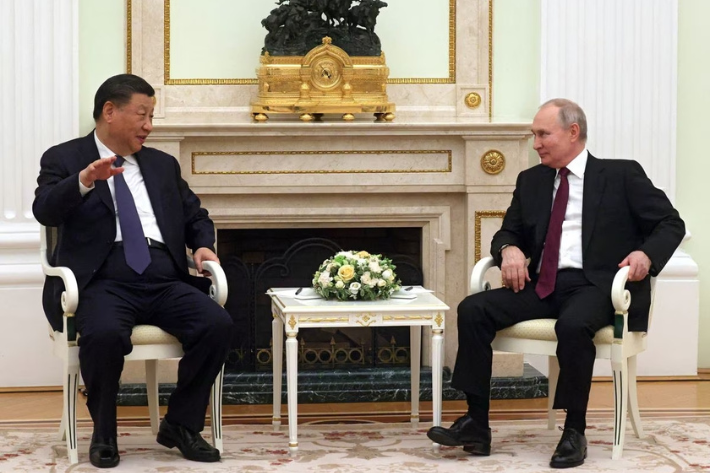
The intricate dance of global energy markets and geopolitical alliances takes center stage as Russia faces a notable downturn in its crucial trade relationship with China. Once a burgeoning lifeline after Western sanctions, bilateral trade volumes have recently dipped, setting a critical backdrop for President Vladimir Putin’s upcoming summit with President Xi Jinping. For investors monitoring the volatile oil and gas landscape, understanding the dynamics of this partnership, particularly amidst shifting market prices and looming energy events, is paramount. OilMarketCap’s proprietary data pipelines reveal a confluence of factors that make this high-stakes meeting a key determinant for Russia’s economic resilience and its impact on global energy flows.
The Shifting Sands of Sino-Russian Trade
Following Russia’s actions in Ukraine in February 2022, China emerged as an indispensable economic partner, absorbing Russian oil exports and supplying a wide array of goods from automobiles to electronics. This surge propelled bilateral trade to an unprecedented $245 billion in 2024. However, this robust growth has softened. Recent Chinese customs data indicates an 8.1% year-on-year decline in trade turnover from January to July 2025. This slump is primarily attributed to a decrease in Russian vehicle imports and a reduction in oil exports to China, signaling a significant concern for Moscow. China’s economic might, approximately nine times larger than Russia’s, positions Beijing as the dominant force in this “no limits” strategic partnership, a reality acutely felt in Moscow. With China accounting for the bulk of Russia’s export revenues and supplying crucial technology for its military, the health of this trade corridor is vital for Russia’s economic stability and its broader geopolitical ambitions.
Market Volatility and Russia’s Energy Lifeline
The timing of the trade slump is particularly challenging for Russia given current market dynamics. As of today, Brent crude trades at $90.38 per barrel, marking a significant 9.07% decline within the trading day. Similarly, WTI crude is priced at $82.59, down 9.41% from its open. This recent downturn extends a broader trend observed over the past two weeks, where Brent has shed approximately 18.5%, falling from $112.78 on March 30 to $91.87 just yesterday. Such pronounced volatility and a downward price trajectory directly impact Russia’s national budget, which heavily relies on oil and gas revenues. Lower global prices intensify the urgency for Moscow to secure stable, high-volume energy commitments from its key buyers. The upcoming discussions with China will undoubtedly focus on stabilizing and expanding energy trade, providing a crucial outlet for Russian crude and gas amidst a challenging global pricing environment. China’s sustained demand acts as a critical floor for Russian energy exports, influencing the perceived risk and pricing of its commodities on the international stage.
Geopolitical Chess and Upcoming Energy Catalysts
President Putin’s impending meeting with President Xi Jinping at the Shanghai Cooperation Organisation (SCO) summit in Tianjin, scheduled for Sunday and Monday, takes on heightened significance amidst these trade headwinds. Sources close to the preparations suggest that expanding trade, particularly in energy and agriculture, will be a top priority. This diplomatic push occurs alongside a critical period for global energy policy. Investors are keenly watching the upcoming OPEC+ Joint Ministerial Monitoring Committee (JMMC) meeting on Saturday, followed by the Full Ministerial meeting on Sunday. These OPEC+ gatherings, along with weekly API and EIA inventory reports and the Baker Hughes Rig Count, are pivotal market movers. The outcome of the Putin-Xi summit could directly influence Russia’s stance within OPEC+, potentially shaping future production quotas or export strategies. A solidified energy partnership with China might grant Russia greater leverage or flexibility, especially if it secures long-term volume commitments. Conversely, a failure to reinvigorate trade could pressure Russia to seek alternative solutions within the OPEC+ framework or explore new avenues for its energy exports, adding another layer of complexity to the global supply outlook.
Investor Concerns: Quotas, Prices, and Russian Resilience
Our proprietary investor intent data highlights prominent concerns among OilMarketCap readers, with frequent inquiries about OPEC+’s current production quotas and predictions for oil prices by the end of 2026. These questions underscore the market’s focus on supply-side management and future price stability, both of which are intimately linked to Russia’s strategic energy decisions. Russia’s ability to maintain robust energy exports, particularly to its largest trading partner, is directly tied to its adherence to OPEC+ agreements and its overall influence within the cartel. If the Putin-Xi meeting successfully revitalizes energy trade, securing new demand from China, it could empower Russia to advocate for more favorable production quotas or ensure its compliance doesn’t unduly restrict its crucial revenue streams. Conversely, a continued slump in trade could force Russia to reconsider its market strategies, potentially impacting global supply levels and, consequently, oil prices. China’s role as a consistent, large-scale buyer remains fundamental to Russia’s economic resilience, providing a vital market for its hydrocarbons that might otherwise struggle to find buyers under Western sanctions, thereby influencing the very questions investors are asking about the future of oil.