India’s Enduring Russian Oil Alliance: A Global Market Force
The global energy landscape continues to be reshaped by geopolitical tensions and economic realities. At the heart of this dynamic lies India’s steadfast commitment to sourcing Russian crude, a strategic decision born from necessity and cemented by significant financial advantages. This trade relationship, initiated when traditional suppliers redirected their volumes towards a sanctions-impacted Europe, has since become a deeply entrenched factor in international oil markets, influencing prices and supply chains worldwide. Despite increasing political pressure and calls for disengagement, New Delhi’s position remains resolute: prioritize domestic consumer interests through cost-effective energy procurement.
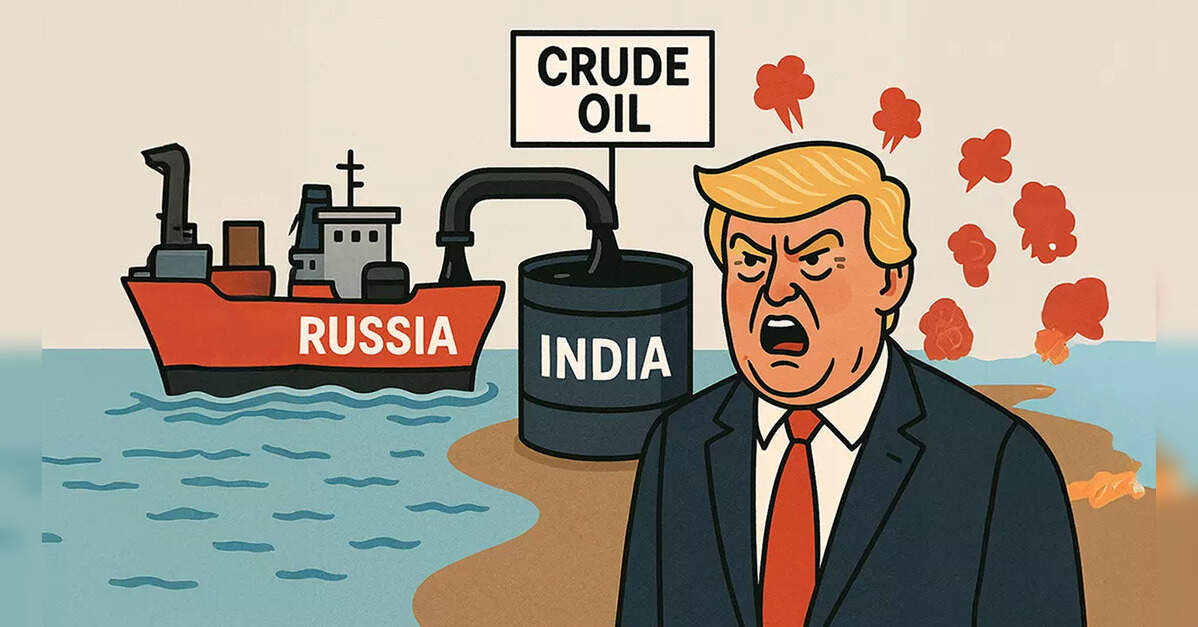
This unwavering stance is not without its critics. Former US President Donald Trump has vocally denounced India’s substantial purchases of Russian crude, characterizing the trade as “profiteering” and threatening punitive tariffs on Indian goods. Yet, India’s government has consistently articulated a clear economic rationale. Senior officials maintain that procurement decisions are driven solely by the best available pricing for their vast consumer base. If Russian crude offers a demonstrably cheaper alternative compared to supplies from West Asia or the United States, then it logically serves the nation’s economic interest to pursue it, safeguarding against increased domestic energy costs.
Economic Imperative Driving India’s Strategy
The financial incentives underpinning India’s engagement with Russian oil are compelling and multifaceted. Post-2022 Western sanctions on Moscow created a significant glut of discounted Russian crude, which India seized upon. This access to cheaper feedstock has directly translated into substantial cost savings for Indian refiners. These savings are not merely corporate windfalls; they play a crucial role in stabilizing domestic pump prices, providing a buffer against global crude price volatility and mitigating inflationary pressures for millions of Indian citizens. This direct benefit to the consumer is a cornerstone of India’s energy policy and a primary reason for its continued reliance on Russian barrels.
Beyond immediate domestic advantages, this trade flow has a fascinating ripple effect across the global energy ecosystem. India’s robust refining sector, fueled by discounted Russian crude, has ramped up its production of refined petroleum products. European nations, grappling with their own energy supply adjustments, have emerged as significant beneficiaries. Indian refiners are actively exporting considerable volumes of diesel and jet fuel, some of which ultimately find their way to European markets. This intricate network of trade highlights how global energy flows adapt and re-route in response to sanctions and market dislocations, demonstrating the interconnectedness of international supply chains.
Geopolitical Friction and Tariff Threats
The strategic economic benefits for India have, however, collided with geopolitical sensitivities, particularly from the United States. Donald Trump has escalated his criticism, accusing India not only of purchasing “massive amounts” of Russian oil but also of subsequently selling significant portions of refined products on the open market for “big profits.” He asserts that India’s actions demonstrate a disregard for the human cost of the conflict in Ukraine. In response, Trump has explicitly threatened to “substantially raise the Tariff paid by India to the USA.”
These threats are not merely rhetorical. Trump has already imposed a 25 percent tariff on certain Indian goods and has openly floated the possibility of increasing this to 100 percent if India does not cease its Russian oil imports. A specific deadline of August 7 has been set, linked to a potential ceasefire in Ukraine. Should Russia fail to agree to a cessation of hostilities by this date, Trump has indicated a willingness to impose secondary sanctions on countries, including India, China, and Brazil, that continue to engage in energy trade with Moscow. Such measures, if implemented, would represent a significant escalation in trade tensions and could introduce considerable uncertainty into global commodity markets.
Data Points: India’s Dominant Role in Russian Crude Offtake
Despite the looming threats, the sheer volume of India’s Russian oil intake underscores the deep commercial ties. According to Bloomberg data, India currently imports approximately 1.7 million barrels per day of Russian crude. This makes India one of the largest, if not the largest, single buyer of Russian oil, filling a void left by Western importers. This substantial procurement forms the backbone of India’s refining operations, which are increasingly critical to both its domestic energy security and its role as a regional and global supplier of refined products.
The scale of India’s refining output and export capacity further illustrates its pivotal role. In the first half of the current year, India exported an impressive 1.4 million barrels per day of refined fuels. A significant portion of these exports comprised essential transportation fuels: approximately 40 percent were diesel or gasoil, while another 30 percent consisted of petrol and various blending components. While refiners typically blend multiple crude sources to produce their final products, making it challenging to definitively attribute every exported barrel to Russian feedstock, the correlation between surging Russian crude imports and robust refined product exports is undeniable. The sheer volume speaks to the strategic integration of Russian crude into India’s refining complex and its impact on global product markets.
Market Implications and Investor Outlook
For investors monitoring the global oil and gas sector, India’s unwavering alliance with Russian crude represents a critical, enduring factor. The economic logic driving India’s procurement decisions is robust, anchored in consumer welfare and cost efficiency. This dynamic ensures a consistent demand floor for Russian barrels, even in the face of international pressure, thereby influencing global crude pricing and trade routes. Any significant disruption to this trade, whether through direct sanctions or escalating tariffs, would inevitably send ripples across the energy markets, potentially leading to increased volatility and supply reconfigurations.
The resilience of this trade relationship highlights the complex interplay between geopolitics, economics, and energy security. While political rhetoric and threats of tariffs may intensify, the underlying economic incentives for India to continue purchasing discounted Russian oil remain powerful. Investors should closely watch the August 7 deadline and any subsequent actions, as these could signal a new phase in international trade relations. However, given the deep discounts and strategic advantages, India’s commitment to this energy alliance appears fundamentally sound, positioning it as a key pillar in the re-aligned global oil market architecture for the foreseeable future.