The global energy landscape is undergoing a profound transformation, driven by geopolitical tensions and shifting alliances. A striking development demanding investor attention is the escalating defiance by Russia and China of Western sanctions on Russian energy exports. What was once a subtle workaround has evolved into an overt scaling up of “shadow” LNG deals, presenting both challenges and opportunities for the discerning energy investor. This analysis delves into the mechanics of this burgeoning trade, its implications for market dynamics, and the critical factors shaping the investment outlook.
The Expanding Footprint of Sanctioned LNG
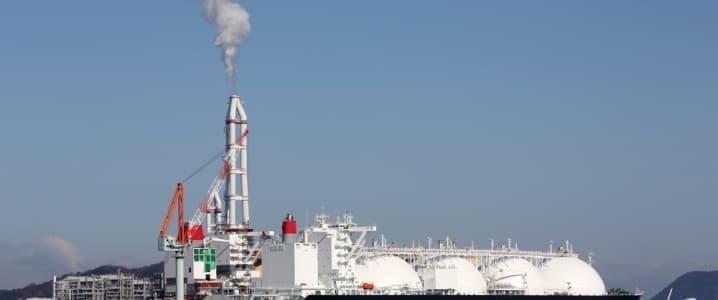
Recent developments paint a clear picture of Russia and China’s concerted efforts to circumvent Western restrictions. A prime example is the China-linked Kunpeng LNG carrier, which recently docked at Portovaya, a Gazprom-operated export facility on the Baltic Sea. This marks a significant milestone: the first instance of a Chinese tanker directly shipping LNG from a facility specifically sanctioned by the United States. Our proprietary vessel-tracking insights confirm that ownership and management of the Kunpeng were transferred earlier this year to less transparent companies in China and the Marshall Islands, a common tactic to obscure beneficial ownership and evade oversight.
This is not an isolated incident. Earlier this month, China received its inaugural shipment from Portovaya via the U.S.-blacklisted LNG tanker Valera, which delivered its cargo to China’s Beihai import terminal. The Valera had loaded LNG from Portovaya, Gazprom’s sole LNG export facility, in October. It’s crucial for investors to remember that Portovaya and its Russian operator, Gazprom SPG Portovaya Limited Liability Company, were sanctioned by the United States in January 2025 as part of a broader effort to degrade Russia’s energy sector. Beyond Portovaya, Russia has significantly ramped up exports from its Arctic LNG 2 project to China, with estimates showing China receiving over a dozen LNG cargoes this year alone, despite U.S., UK, and EU sanctions on the project and its servicing tankers. These increased shipments from Portovaya are particularly pertinent as thick ice conditions currently hinder exports from the Arctic project, highlighting the strategic flexibility Russia is employing to maintain its LNG market access.
Market Volatility and Investor Sentiment Amidst Geopolitical Shifts
These escalating shadow LNG deals unfold against a backdrop of considerable market volatility, demanding careful consideration from investors. As of today, Brent crude trades at $91.87, representing a notable 7.57% daily decline and marking a significant drop from $112.78 observed just two weeks prior. Similarly, WTI crude stands at $84, down 7.86% over the same period. This recent downward pressure, despite ongoing geopolitical tensions, suggests a complex interplay of factors, potentially including global demand concerns or a perception of sufficiently supplied markets, even with redirected flows.
Such price movements naturally fuel investor speculation. Our proprietary reader intent data reveals a consistent focus on future pricing, with a prominent question being, “what do you predict the price of oil per barrel will be by end of 2026?” The increasing volumes of sanctioned Russian LNG finding a home in China directly impact global supply-demand dynamics, albeit through opaque channels. While these cargoes may not be openly traded on global benchmarks, their very existence adds to the overall availability of natural gas, potentially dampening price spikes that might otherwise occur due to supply constraints or geopolitical events. For investors, understanding the true magnitude and routing of these ‘shadow’ volumes is key to accurate long-term price forecasting and assessing the efficacy of Western sanctions.
Navigating Upcoming Events and Supply Chain Resilience
The resilience of this new, informal energy trade network will be tested and observed in the coming weeks, coinciding with several critical energy market events. The OPEC+ Ministerial Meeting on April 18th is paramount, as investor interest remains high regarding production strategies. “What are OPEC+ current production quotas?” is a frequently asked question by our readers, underscoring the market’s sensitivity to coordinated supply management. How OPEC+ responds to global supply signals, including the growing Russian-Chinese energy nexus, could influence their output decisions, impacting global crude prices and, by extension, the broader energy complex.
Beyond OPEC+, the API Weekly Crude Inventory (April 21st and 28th) and the EIA Weekly Petroleum Status Report (April 22nd and 29th) will offer crucial insights into U.S. supply and demand. While these reports primarily reflect conventional market flows, they provide a baseline against which to evaluate the wider implications of the shadow trade. The Baker Hughes Rig Count (April 24th and May 1st) will further inform investor outlook on future production capacity. The increasing integration of Russian LNG into China’s energy matrix, facilitated by these shadow operations, demonstrates a clear intent to build alternative, sanction-resistant supply chains. This strategy poses a long-term challenge to the established global energy governance structures and necessitates that investors consider the potential for a more fragmented, multi-polar energy market where traditional supply-demand models may need recalibration.
Investment Implications and Risk Assessment
For investors, the proliferation of shadow LNG deals introduces both heightened risks and potential, albeit indirect, opportunities. The primary risk lies in the increasing complexity and opaqueness of global energy markets. Companies operating in the legitimate energy sector must navigate a labyrinth of evolving sanctions, with the constant threat of secondary sanctions for any perceived involvement, however tangential, with sanctioned entities or vessels. This necessitates robust compliance frameworks and a deep understanding of geopolitical risk, which can directly impact asset values and operational continuity.
On the opportunity side, this pivot reinforces the strategic importance of energy infrastructure in allied nations, particularly those facilitating these new trade routes. For instance, the continued expansion of LNG import terminals and associated gas pipeline networks in China will be crucial for managing these increased Russian flows. Investors might look for opportunities in companies that are indirectly benefiting from this strategic shift, such as those involved in building or upgrading energy infrastructure in non-sanctioning countries or those providing specialized services that can operate within a bifurcated global energy system. Furthermore, the sustained demand for LNG, even through unconventional channels, underscores the continued relevance of natural gas as a transition fuel, albeit with altered supply dynamics. Ultimately, the deepening energy partnership between Russia and China, driven by geopolitical necessity, is reshaping the very foundations of global energy trade, demanding a sophisticated and adaptive investment strategy.


