The global energy landscape is undergoing a profound transformation, with Russia and China pioneering a new financial architecture explicitly designed to circumvent traditional Western payment systems. This strategic development, centered on a sophisticated framework internally referred to as ‘The China Track,’ aims to insulate critical energy and commodity trade between Moscow and Beijing from the reach of Western sanctions and regulatory oversight. For astute oil and gas investors, comprehending the mechanics and far-reaching implications of this parallel financial pathway is crucial, as it underpins a significant and growing segment of global energy commerce operating independently of established Western channels.
Forging New Financial Pathways Beyond Western Influence
The impetus for this innovative system stems from significant challenges encountered in recent years. Despite facing formidable payment hurdles and transaction fees that sometimes escalated to an exorbitant 12%, trade volumes between Russia and China surged to an unprecedented $245 billion last year. This remarkable growth occurred even as many Chinese banks, acutely aware of their deep ties to the United States and the potential for secondary sanctions, exercised increasing caution when processing Russian transactions. This financial bottleneck underscored the urgent need for a robust, independent mechanism.
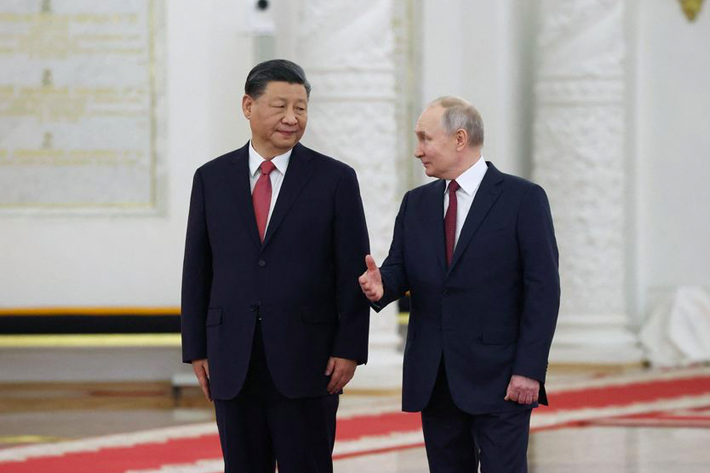
The strategic importance of resolving these payment issues was a central theme in discussions between Russian President Vladimir Putin and Chinese President Xi Jinping during Putin’s pivotal May 2024 visit to China. This high-level engagement sought to reinforce their declared ‘no-limits’ partnership, emphasizing mutual economic resilience. Further signaling this deepening alignment, President Xi’s anticipated attendance at Russia’s Victory Day parade arrives against a backdrop of escalating trade tensions between the U.S. and China. This geopolitical context amplifies the strategic value of robust trade relationships with Russia and other non-Western economies, creating a powerful incentive for the maturation of alternative financial systems.
Leading Russian business figures, such as Alexander Shokhin, who heads the influential Russian Union of Industrialists and Entrepreneurs (RSPP), have expressed confidence that as these new financial conduits mature and prove their reliability, Chinese financial institutions will progressively overcome their apprehension regarding exposure to potential secondary sanctions. This shift is not merely about bypassing existing restrictions but about establishing a long-term, resilient trade infrastructure for a multi-polar economic world.
‘The China Track’: A Resilient Settlement Mechanism Emerges
At its operational core, ‘The China Track’ functions as a decentralized yet intricately interconnected network. Major Russian banks, many of which are currently under international sanctions, have taken the lead in developing and implementing this system. They have established a carefully curated web of intermediary financial agents strategically positioned in nations that maintain friendly geopolitical relations with Russia. This architecture allows for transactions to flow through jurisdictions less susceptible to Western pressure, significantly de-risking the settlement process.
Crucially for investors seeking stability in cross-border trade, this parallel payment system has reportedly been in active operation for a considerable period, demonstrating its resilience without encountering any significant disruptions or technical setbacks. This proven track record provides a vital layer of confidence in its long-term viability and effectiveness. The system’s design is meticulous: each participating bank manages a diverse portfolio of verified payment agents, with responsibilities judiciously segmented between facilitating export and import transactions. This specialization enhances efficiency and mitigates single points of failure.
All financial flows are ultimately centrally netted at the primary Russian bank, ensuring that all counterparties, whether exporters or importers, receive their due funds promptly and efficiently. A cornerstone of ‘The China Track’s’ design is its complete independence from the global SWIFT messaging system. This means it operates without any reliance on accounts held within Western financial institutions, thus eliminating the most common points of leverage for Western sanctions. This strategic detachment is a game-changer for entities involved in energy and commodity trade seeking to avoid geopolitical entanglement.
Market participants and financial sources familiar with the system confirm that the participating banks provide robust guarantees for payment settlements. Furthermore, specialized financial instruments have been developed and integrated into the framework, specifically designed to insure against potential defaults by a payment agent or a counterparty. This comprehensive approach to risk management instills greater confidence among traders and investors, making the alternative system a genuinely viable and secure option for large-scale energy transactions.
Investor Implications: Navigating a Shifting Financial Landscape
For oil and gas investors, the emergence and maturation of ‘The China Track’ signal several critical shifts. Firstly, it indicates a deepening structural separation in global energy finance. Companies heavily involved in trade with Russia or China, particularly those in the energy sector, can expect increased stability and predictability in payment processing, reducing operational risks associated with geopolitical tensions. This could potentially unlock new investment opportunities in projects and supply chains that might otherwise be deemed too risky due to payment uncertainties.
Secondly, this development underscores the accelerating trend of de-dollarization in international commodity trade. As non-Western payment systems gain traction and prove their efficacy, the dominance of the U.S. dollar in energy transactions could gradually erode. Investors should consider the implications for currency exchange rate volatility, the pricing of commodities in non-dollar terms, and the potential for new financial hubs to emerge outside the traditional Western sphere.
Finally, ‘The China Track’ represents a concrete step towards the formation of a more resilient, multi-polar financial system. Its success could serve as a blueprint for other nations seeking to reduce their reliance on Western financial infrastructure, particularly those rich in natural resources. For long-term investors in energy and infrastructure, understanding these evolving geopolitical and financial dynamics is paramount for identifying both emerging opportunities and potential risks in a rapidly reconfiguring global market.