The Logistics Shift: Beyond Small Vans
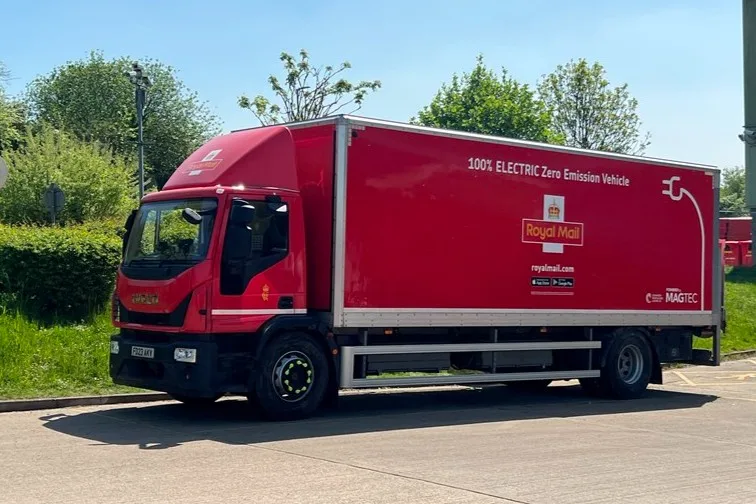
The electrification of commercial fleets is no longer a distant prospect but an accelerating reality, and for oil and gas investors, developments in heavy-duty logistics offer critical insights into future demand erosion. While much attention has focused on passenger EVs, the recent trial by a major UK postal operator of two 19-tonne electric heavy goods vehicles (HGVs) signals a significant expansion of decarbonization efforts into a crucial segment of road transport. This move follows an existing commitment to deploy over 7,000 smaller electric vans by 2027, demonstrating a clear strategic direction.
These Magtec MEV190 electric trucks are specifically designed for urban and regional deliveries, tasked with transporting mail and parcels between depots. This targets the “middle- and last-mile logistics” for heavier loads, a segment traditionally dominated by diesel. Each vehicle boasts an impressive range of up to 125 miles on a single charge, powered by five modular 60kWh battery packs, totaling 300kWh. Recharging is efficient, achieving a full charge in approximately three hours via a CCS2 interface rated up to 100kW. With a battery life expectancy of 2,500 cycles and 80 percent capacity retention, these vehicles represent a viable, durable alternative. Performance is capped at 90kph (56mph) by a 200kW motor, underscoring their intended use in regional networks rather than long-haul operations. For investors, understanding these technical specifications is paramount, as they define the immediate scope of diesel displacement.
Market Realities and Investor Concerns
As these micro-level shifts in logistics unfold, they collectively contribute to the macro demand picture, a key concern for our readers. We’ve noted a consistent stream of inquiries this week regarding the future trajectory of crude prices, with questions like “Build a base-case Brent price forecast for next quarter” and “What is the consensus 2026 Brent forecast?” These questions underscore investor anxiety about the long-term demand outlook. While a single postal service electrifying a portion of its fleet might seem negligible in the grand scheme of global oil demand, it’s the aggregation of such initiatives across countless operators and sectors that truly moves the needle.
The gradual but persistent erosion of diesel demand from commercial fleets directly impacts refining margins, particularly for distillates. Investors are keenly aware that sustained demand destruction, even if incremental, creates a structural headwind that traditional supply-side management by OPEC+ cannot entirely mitigate. The shift towards electrification in heavy logistics, backed by government grants like the £800,000 from Innovate UK for the Greenford Mail Centre trial, signals a broader national commitment to decarbonization. This commitment amplifies the underlying trend, prompting investors to reassess their exposure to companies heavily reliant on diesel consumption or refining output.
Current Market Dynamics and the Electrification Headwind
Against the backdrop of these structural demand shifts, the immediate crude market remains dynamic. As of today, Brent crude trades at $95.16, showing a modest increase of 0.39% within a daily range of $91-$95.79. This comes after a notable 14-day decline of $9, from $102.22 on March 25th to $93.22 yesterday. WTI crude, meanwhile, stands at $91.04, down 0.26%, while gasoline prices hold steady at $2.97 per gallon. These current price levels reflect a delicate balance of geopolitical tensions, supply concerns, and varying demand signals.
However, the electrification of heavy-duty logistics, as demonstrated by the UK postal service’s new EV HGV trial, introduces a persistent bearish undercurrent to this volatility. While short-term market movements might be driven by inventory reports or geopolitical events, the long-term structural erosion of demand from sectors like road transport adds a significant layer of complexity. Investors must differentiate between immediate market noise and the foundational shifts occurring beneath the surface. The move to electrify regional delivery networks directly targets a segment of diesel consumption that was once considered stable, forcing a re-evaluation of long-term demand growth projections even amidst current price strength.
Forward Look: Upcoming Events and Demand Signals
Looking ahead, the next two weeks are packed with key energy events that will provide immediate insights into the market’s pulse, though these must be viewed through the lens of ongoing structural changes like logistics electrification. We anticipate the Baker Hughes Rig Count on April 17th and 24th, offering a snapshot of upstream activity. More critically for supply-side management, the OPEC+ Joint Ministerial Monitoring Committee (JMMC) meets on April 18th, followed by the full Ministerial Meeting on April 20th. These gatherings will dictate near-term supply quotas, influencing crude prices significantly.
On the demand side, the API Weekly Crude Inventory reports (April 21st, 28th) and the EIA Weekly Petroleum Status Reports (April 22nd, 29th) will provide crucial data on stock levels and refinery utilization. While these reports will offer immediate market direction, the underlying trend of demand erosion from EV adoption, particularly in commercial fleets, remains a powerful long-term factor. Even if OPEC+ decides on production cuts, the sustained reduction in diesel consumption from widespread EV HGV adoption will continue to pressure future demand forecasts, making their supply management decisions increasingly complex in the medium to long term. Investors should consider how these structural demand shifts might influence OPEC+’s strategic outlook beyond just the next quarter.
Investment Implications: Navigating the Energy Transition
For discerning oil and gas investors, the electrification of heavy-duty logistics, exemplified by the UK postal operator’s 19-tonne EV HGV trial, presents a clear signal that the energy transition extends far beyond passenger vehicles. This shift into regional commercial transport directly challenges a core demand segment for refined products, particularly diesel. Investors should recognize that while geopolitical events or supply disruptions can cause short-term price spikes, the relentless march of electrification represents a structural headwind that will increasingly impact the long-term viability and profitability of certain oil and gas assets.
It is crucial to scrutinize portfolios for disproportionate exposure to refining operations heavily dependent on distillate sales or to upstream assets whose value relies on robust, growing global diesel demand. Diversification strategies, investments in renewable fuels, or a focus on sectors less susceptible to electrification (e.g., petrochemicals, aviation fuel for the foreseeable future) may become increasingly important. The strategic implications of companies electrifying their core distribution networks are not just about environmental sustainability; they are about fundamentally altering the demand landscape for traditional fuels, demanding a proactive and forward-thinking investment approach in the evolving energy market.


