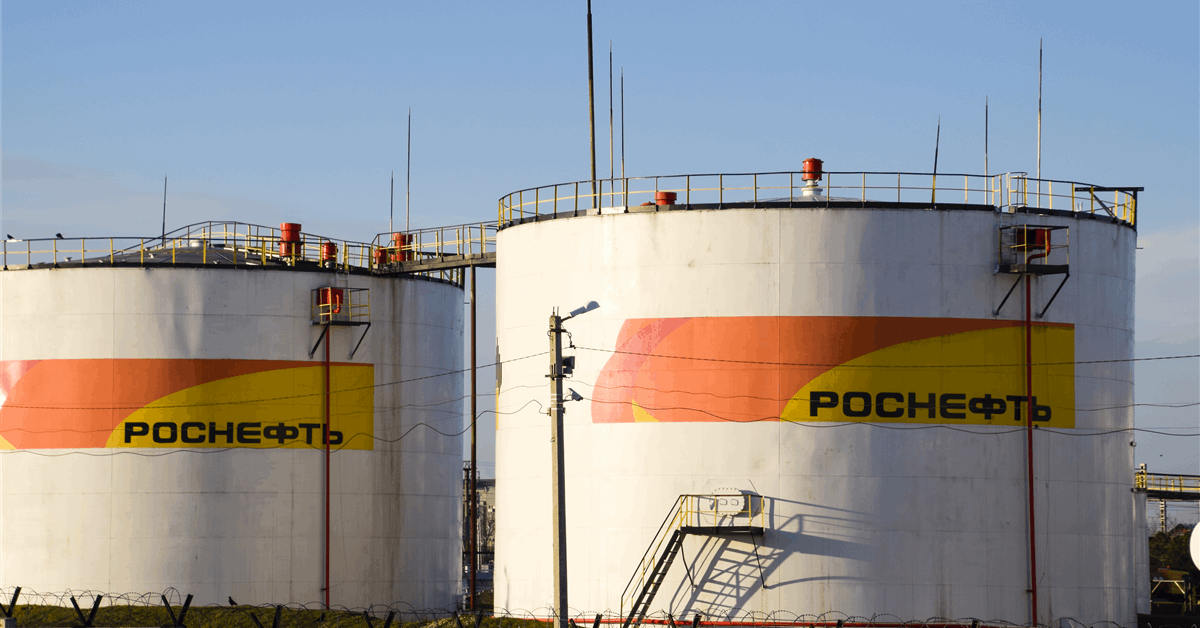
Rosneft’s first-quarter 2025 performance paints a clear picture of the prevailing pressures confronting integrated oil and gas giants operating under complex geopolitical and economic conditions. While the Russian state-owned behemoth maintained robust production levels, its top-line revenue dipped by 8.5 percent quarter-on-quarter to RUB 2.28 trillion ($28.85 billion), a direct consequence of weaker Urals crude prices and wider discounts. This revenue contraction, coupled with a significant 15.5 percent sequential drop in EBITDA to RUB 598 billion and an EBITDA margin of 26 percent, highlights the dual challenge of declining revenues and escalating operational costs. For energy investors, Rosneft’s results offer a critical lens into the resilience and vulnerabilities within the Russian oil sector, signaling key areas of focus for the remainder of 2026.
Urals Price Erosion and Its Broader Market Implications
The primary driver behind Rosneft’s Q1 2025 revenue decline was unequivocally the deteriorating pricing environment for Urals crude. The company explicitly cited “lower prices and wider discounts” for its flagship export blend, a trend that continues to shape profitability. As of today, Brent crude trades at $96.08 per barrel, marking a 1.36 percent increase for the day, while WTI sits at $92.70, up 1.56 percent. However, our proprietary market data indicates a notable softening in the broader crude market, with Brent having experienced an 8.8 percent decline over the past 14 days, falling from $102.22 on March 25th to $93.22 on April 14th. This recent downward trajectory in international benchmarks underscores the persistent volatility that Rosneft, and indeed all global producers, must contend with. While the Q1 2025 results reflect a specific period, the ongoing pressure on crude benchmarks, especially for discounted grades like Urals, suggests that pricing headwinds remain a dominant factor for Rosneft’s future financial performance. Investors are keenly scrutinizing how these discounts evolve, especially given the current global supply dynamics and geopolitical landscape.
Production Resilience Meets Escalating Cost Pressures
Despite the revenue challenges, Rosneft demonstrated considerable operational fortitude in Q1 2025, delivering 3.68 million barrels per day (bpd) of liquid hydrocarbons. This output was achieved amidst “challenging weather conditions in Central Russia” and compliance with “oil production cap in accordance with the decisions of the Russian Government.” Gas production also remained strong, averaging 1.37 million barrels of oil equivalent (boe) per day, totaling 20.2 billion cubic meters. The company’s strategic focus on greenfield projects, particularly in the Yamal-Nenets Autonomous District, which now accounts for approximately a third of its gas production, and the commissioning of over 600 new wells (76 percent horizontal), highlights an ongoing commitment to maintaining and enhancing its production base. However, this operational resilience was overshadowed by a significant increase in costs. Total expenditures rose 5.4 percent to RUB 1.93 trillion, with Rosneft’s CEO pointing to rising transportation expenses due to tariff indexation by natural monopolies. Transneft oil transportation tariffs, for instance, increased by 9.9 percent since January 2025, and petroleum product tariffs surged by 13.8 percent since late 2024. These rising input costs, outstripping inflation in many cases, are a critical margin squeeze that investors must factor into their valuation models for Rosneft.
OPEC+ Decisions and the Forward Supply Outlook
A key question on many investors’ minds, as reflected in our reader intent data this week, centers on the future trajectory of Brent crude prices and the broader consensus 2026 Brent forecast. Rosneft’s operational future is inextricably linked to the decisions made by the Organization of the Petroleum Exporting Countries and its allies (OPEC+). The recent announcement of a total increase of 411,000 bpd for July production from Russia and seven other OPEC+ members, accelerating the gradual return of 2.2 million bpd of voluntary cuts, introduces a new dynamic to the global supply equation. This forward-looking shift will be a central topic at the upcoming OPEC+ Joint Ministerial Monitoring Committee (JMMC) meeting on April 18th and the full Ministerial Meeting on April 20th. These events are critical calendar markers for the energy market, as they will provide further clarity on the cartel’s strategy for managing supply into Q3 and beyond. Should OPEC+ proceed with or further adjust these increases, it could exert downward pressure on crude prices, intensifying the pricing challenges already faced by Rosneft. Conversely, any unexpected hold or cut could support prices, offering some relief. Investors should closely monitor these meetings for signals on supply discipline, which will be paramount in shaping the next quarter’s crude price environment.
Refining Optimization, Domestic Demand, and Strategic Positioning
Rosneft’s refining volumes in Q1 2025 totaled 19.5 million metric tons, a quarter-on-quarter decrease attributed to “optimization of refinery utilization in view of the current pricing environment and demand, and the need for maintenance and repair works.” This strategic curtailment reflects a prudent approach to managing refining margins in a volatile market. The company’s ability to sell 2.2 million metric tons of gasoline and diesel on the St Petersburg International Mercantile Exchange, 1.7 times the required volume, indicates robust domestic demand and effective market penetration within Russia. For investors assessing Rosneft’s integrated model, the interplay between upstream production, refining throughput, and domestic sales is crucial. While international crude price discounts impact upstream revenue, a strong domestic market for refined products can partially offset these pressures and provide a stable revenue stream. The question of how Chinese “tea-pot” refineries are running this quarter, a query frequently posed by our readers, highlights the global interconnectedness of refining capacity and demand. Rosneft’s optimization strategy must be viewed within this broader context, as global refining utilization and demand signals will inevitably influence the profitability of its downstream operations in the coming quarters. The company’s ability to adapt its refining strategy to both domestic needs and international market conditions will be key to its overall financial health.


