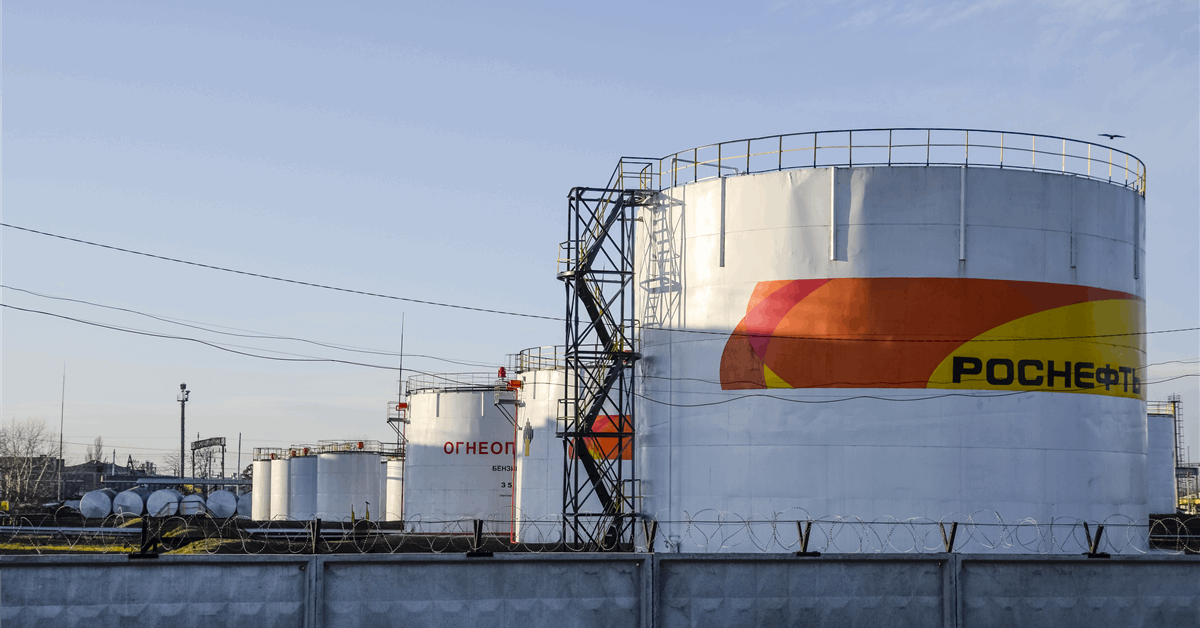
Rosneft’s Halved Earnings Signal Deeper Headwinds for Oil & Gas Investors
PJSC Rosneft’s recent reporting of a 68.3 percent year-on-year decline in net income to RUB 245 billion ($3.04 billion) for the first half of 2025 sends a clear signal to the global oil and gas investment community: even state-backed giants are struggling against a confluence of market and geopolitical pressures. This dramatic reduction in profitability, coupled with a 36.1 percent drop in EBITDA to RUB 1.05 trillion and a 17.6 percent decline in revenue to RUB 4.26 trillion, underscores the challenging environment faced by producers operating under sanctions and within complex domestic fiscal regimes. While the immediate impact is on Rosneft, the underlying factors — lower oil prices, geopolitical restrictions, and increasing operational costs — resonate across the broader energy sector, demanding a closer look from investors navigating volatile crude markets and shifting supply dynamics.
The Persistent Pressure of Global Oil Prices and Sanctions
Rosneft attributes a significant portion of its financial downturn to lower oil prices and the ongoing impact of Western sanctions. This is a crucial point for investors, as it highlights how global pricing trends intersect with specific geopolitical realities. As of today, Brent crude trades at $98.38, reflecting a 1.02% decrease, while WTI crude is at $89.96, down 1.33% in current trading. This current market data provides a snapshot of the persistent pressure, a trend that saw Brent prices decline by over 12% in the two weeks leading up to April 15, moving from $108.01 on March 26 to $94.58. Such volatility and downward pressure directly erode profit margins for even the largest producers. For Rosneft, the issue is compounded by wider discounts on Russian crude due to tighter EU and US sanction restrictions, effectively reducing the realized price for its exports compared to global benchmarks. This dual challenge of a softer global price environment and specific discounts creates a particularly tough operating landscape, making revenue generation significantly more difficult.
Production Declines and an Oversupplied Market Outlook
Rosneft’s operational performance also reflects these challenges, with hydrocarbon production averaging 4.99 million barrels of oil equivalent a day (MMboed) in 1H 2025, a noticeable decrease from 5.36 MMboed in 1H 2024. While the company noted some growth in international projects, particularly in Venezuela, Iraq, and Egypt, these gains were not enough to offset domestic declines. Refining volumes also fell, totaling 38.7 million tons for 1H 2025 compared to 40.9 million tons from Russian refining in 1H 2024, attributed to maintenance, repairs, and optimization in response to pricing, logistics constraints, and demand. Rosneft Chair and CEO Igor Sechin directly points to an “oil oversupply” as the primary driver of lower prices, citing active production build-up by OPEC+ nations like Saudi Arabia, UAE, Iraq, and Kuwait, alongside non-OPEC producers such as Brazil. His forward-looking analysis projects a substantial oil market surplus of 2.6 MMbpd in 4Q 2025 and 2.2 MMbpd in 2026. This outlook of sustained oversupply should prompt investors to critically assess their long-term crude price assumptions and portfolio allocations within the energy sector.
Investor Focus: OPEC+ Actions and Future Market Balance
The market outlook presented by Rosneft’s leadership naturally ties into what investors are currently asking, with frequent inquiries directed to our platforms regarding OPEC+ current production quotas and the factors powering Brent crude prices. Given Sechin’s forecast of a significant market surplus, the upcoming OPEC+ Joint Ministerial Monitoring Committee (JMMC) meeting on April 18, followed by the Full Ministerial meeting on April 20, becomes a pivotal event for energy market participants. Investors will be keenly watching for any signals of adjustments to production quotas or strategies aimed at rebalancing the market, especially with Brent crude currently trading just under $100. Should OPEC+ maintain its current course, or if output from other producers continues to expand, the projected surplus could materialize, potentially exerting further downward pressure on crude prices into 2026. This forward-looking analysis, anchored to these crucial calendar events, will be central to shaping investment strategies in the coming weeks and months, as the market seeks clarity on supply-side management amidst anticipated demand dynamics.
The Compounding Effect of Domestic Fiscal and Operational Burdens
Beyond global price fluctuations and international sanctions, Rosneft’s report illuminates significant domestic pressures unique to its operating environment in Russia. The “significant ruble strengthening” is cited as directly impacting the financial results of exporting companies, with Sechin noting that non-market formation of the national currency rate leads to non-transparent oil pricing both domestically and internationally. Furthermore, the company highlighted the “outstripping growth in natural monopolies tariffs,” which imposes additional pressure on the oil industry. Specifically, Transneft transportation tariffs for crude oil increased by 9.9 percent and oil products by 13.8 percent since the beginning of the year. Similarly, RZhD freight rail transport tariffs rose by 13.8 percent, and Gazprom’s regulated wholesale gas tariffs also saw indexation. These escalating internal costs, coupled with high Russian taxation and central bank rates, create a formidable headwind for profitability, demonstrating how a complex interplay of macroeconomic, fiscal, and logistical factors can severely impact even a vertically integrated giant like Rosneft, offering a unique perspective on the challenges of oil and gas investing in specific geographies.


