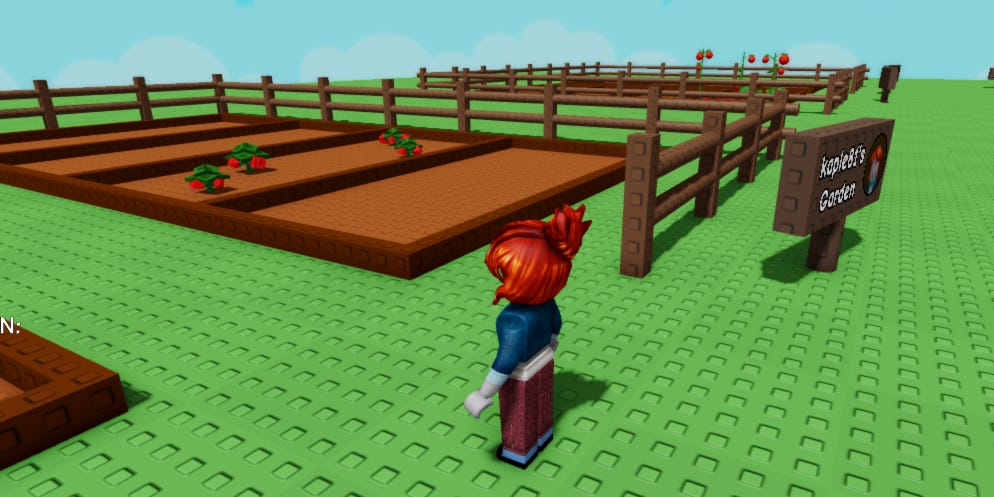
The digital landscape is constantly evolving, throwing up unexpected trends that, upon closer inspection, can reveal subtle but significant shifts in underlying energy demand. One such phenomenon gaining massive traction this spring is the Roblox game “Grow a Garden.” This virtual farming simulation captivated over 2.2 million concurrent players on a recent Thursday, peaking at an astonishing 9 million concurrent users over a weekend in late May – a platform record. While seemingly a benign pastime for a user base where 40% are under 13, this explosion in digital engagement isn’t just a cultural footnote. It represents a substantial, growing draw on global energy resources, a factor that sophisticated oil and gas investors must increasingly consider alongside traditional supply-demand metrics.
The Gigawatt Cost of Digital Gardens
The sheer scale of “Grow a Garden’s” popularity, with millions of players cultivating virtual crops and even trading digital items on robust secondary markets worth millions of dollars weekly, underscores the massive computational infrastructure required to support such platforms. Every virtual seed planted, every harvest collected, every transaction processed translates into active servers, cooling systems, and network bandwidth. This isn’t merely about the energy consumed by individual user devices; it’s about the continuous, high-intensity operation of data centers globally. These server farms, the backbone of the digital economy, require vast amounts of electricity, often sourced from a mix of natural gas, coal, and renewables. As of today, the broader energy market is showing significant volatility, with Brent Crude trading at $90.38, reflecting a substantial -9.07% drop from yesterday’s close, and WTI at $82.59, down -9.41%. Gasoline prices have also seen a decline to $2.93, a -5.18% decrease. This recent downturn, part of a wider trend where Brent has fallen from $112.78 on March 30th to $91.87 on April 17th, highlights a complex market where traditional demand drivers are under scrutiny, making the less visible, yet growing, digital energy footprint even more critical to understand.
Data Center Demand: A Silent Energy Catalyst
The business model of Roblox, allowing users like the reported 16-year-old creator of “Grow a Garden” to build and monetize games using Robux, ensures a constant churn of new, engaging content that drives sustained user activity. This persistent engagement means data centers operate 24/7, with ever-increasing processing and cooling demands. The energy intensity of these facilities is immense, and their expansion shows no signs of slowing down. Many investors are currently asking about the long-term trajectory of crude oil prices, with a recurring question being what the price per barrel will be by the end of 2026. While geopolitical events and macroeconomic indicators typically dominate these forecasts, the accelerating demand from data centers represents a tangible, often underestimated, upward pressure on electricity grids. This indirectly impacts the consumption of natural gas, which is a primary fuel for power generation in many regions, and can even influence crude oil demand for backup generators in critical infrastructure. Ignoring this burgeoning digital demand would be to overlook a significant, structural shift in the energy landscape.
Upcoming Events and the Evolving Demand Picture
Looking ahead, the energy market is bracing for a series of key events that will shape near-term supply-demand dynamics, but investors should contextualize these within the broader shifts in energy consumption. The upcoming OPEC+ Joint Ministerial Monitoring Committee (JMMC) meeting on April 18th, followed by the full Ministerial meeting on April 19th, will be crucial for assessing crude oil production quotas. Similarly, the API and EIA Weekly Petroleum Status Reports on April 21st/22nd and April 28th/29th, respectively, along with the Baker Hughes Rig Count on April 24th and May 1st, will provide vital snapshots of traditional inventory levels and drilling activity. However, even as these traditional metrics are scrutinized, the underlying demand for electricity to power the digital economy, exemplified by record-breaking gaming platforms, continues its relentless growth. This sustained digital energy appetite serves as a fundamental, non-cyclical demand driver that acts as a floor under natural gas prices and, by extension, can influence broader energy markets irrespective of OPEC+ decisions or inventory fluctuations. Savvy investors are not just asking about current OPEC+ production quotas; they are also considering how diversified energy companies, like those our readers often inquire about regarding their performance by April 2026, are positioning themselves to capitalize on this evolving demand for grid stability and increased natural gas supply.
Investment Implications: Beyond the Barrel
The phenomenon of “Grow a Garden” on Roblox, and the broader digital entertainment and service sector it represents, serves as a powerful indicator for energy investors. It highlights a persistent, growing demand for electricity that is largely immune to traditional economic cycles. This isn’t just a niche trend; it’s a proxy for the expanding digital infrastructure that underpins everything from AI to cloud computing. For oil and gas investors, this means considering companies with robust natural gas portfolios, as natural gas often serves as the flexible fuel of choice for electricity generation. Furthermore, investments in power generation, transmission infrastructure, and even companies providing reliable backup power solutions (which can include diesel) to data centers could see sustained growth. The market’s current volatility, with significant daily swings in Brent and WTI, underscores the need for a nuanced understanding of all demand drivers, both traditional and emerging. The energy footprint of our increasingly digital world, symbolized by millions tending virtual gardens, is no longer an ancillary consideration but a fundamental component of the global energy demand equation.


