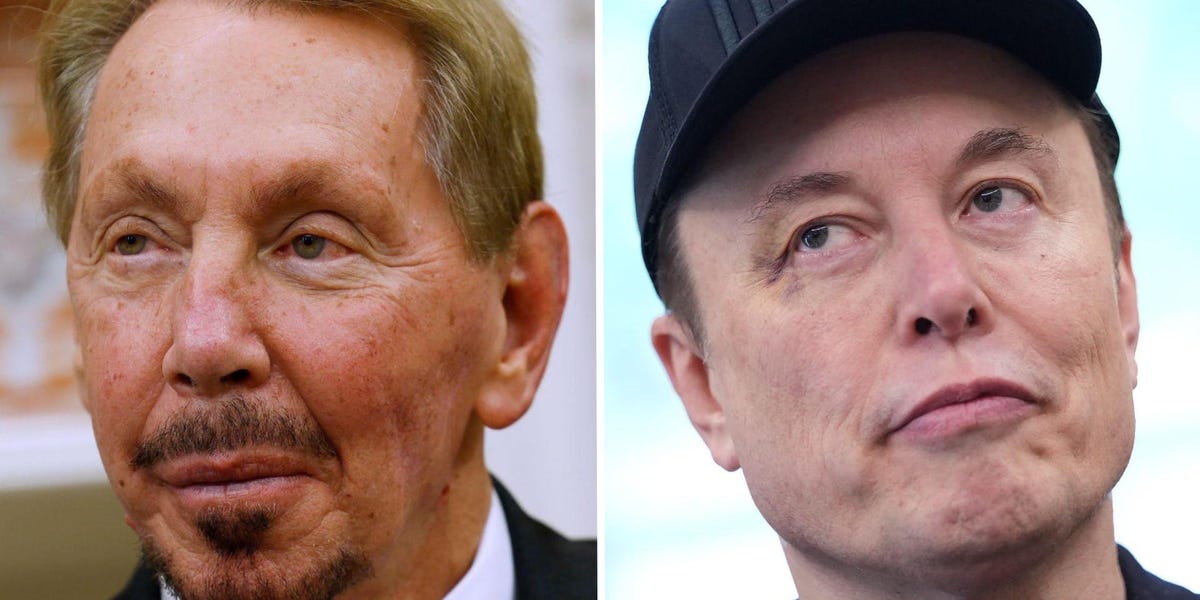
The recent headlines detailing some of the world’s wealthiest individuals making significant forays into media ownership might, at first glance, appear tangential to the intricate world of oil and gas investing. Larry Ellison’s financing of his son David’s ambition to acquire Warner Bros. Discovery, following an earlier stake in Paramount, echoes Elon Musk’s high-profile takeover of Twitter (now X) in 2022. These mega-acquisitions, driven by a blend of strategic influence, personal vision, and substantial capital deployment, offer a fascinating lens through which to examine broader market dynamics, capital allocation strategies, and the evolving risk appetite of ultra-high-net-worth investors. For the astute energy investor, understanding these parallel movements is crucial, as they reflect underlying economic currents and strategic plays that can subtly but significantly impact the investment landscape for crude, natural gas, and refined products.
Capital Flows and Strategic Diversification in a Volatile Market
The sheer scale of capital being directed towards media assets by figures like Ellison, who command vast fortunes, speaks volumes about contemporary investment priorities and the search for value and influence beyond traditional sectors. While these billionaires pivot to media, the energy market continues its characteristic volatility. As of today, Brent Crude trades at $90.38 per barrel, marking a significant 9.07% decline from its open, with a day range between $86.08 and $98.97. Similarly, WTI Crude stands at $82.59, down 9.41%, having fluctuated between $78.97 and $90.34. This sharp daily correction underscores the persistent unpredictability that energy investors face, prompting questions about capital preservation and strategic diversification.
Looking at the broader trend, Brent Crude has experienced a substantial downturn over the past two weeks, dropping from $112.78 on March 30th to $91.87 yesterday, representing an 18.5% erosion of value. This kind of rapid depreciation in benchmark prices makes the seemingly stable, long-term strategic plays in media by the super-rich appear almost counter-cyclical. Are these moves a form of hedging against the volatility in more traditional asset classes, or do they represent a deeper conviction in the power of information and narrative control as a form of wealth creation and preservation? For oil and gas companies and their investors, this trend highlights the imperative of robust financial planning and considering how capital is allocated across different risk profiles.
Influence, Narrative Control, and the Energy Sector’s Future
A key driver behind the acquisition of influential media platforms, as seen with Musk’s reshaping of X and Ellison’s pursuit of Warner Bros. Discovery, is the quest for influence and control over information narratives. This has direct, albeit often indirect, implications for the energy sector. The public discourse around climate change, renewable energy transition, and the role of fossil fuels is heavily shaped by media portrayals. As our readers frequently inquire about the long-term outlook, asking “what do you predict the price of oil per barrel will be by end of 2026?”, it’s clear that future oil prices aren’t solely determined by supply and demand fundamentals but also by evolving regulations, public sentiment, and geopolitical narratives – all of which can be swayed by media influence.
Billionaire-backed media outlets can amplify certain perspectives or challenge others, potentially altering the regulatory environment or investor perception of energy companies. For instance, strong narratives around decarbonization could accelerate divestment pressures on traditional oil and gas, impacting capital access and project financing. Conversely, a more balanced or pro-energy security narrative could provide a tailwind. Understanding who controls these powerful communication channels, and what their underlying agendas might be, becomes an increasingly important consideration for energy investors looking beyond quarterly earnings to the structural forces shaping the industry’s future.
Navigating Market Uncertainty: Lessons for Oil & Gas Investors
In an environment where global benchmarks like Brent are experiencing significant swings, and where gasoline prices have also dipped to $2.93 per gallon today (down 5.18%), oil and gas investors must remain hyper-focused on fundamental drivers and upcoming catalysts. The strategic moves of ultra-wealthy individuals into media, while financially distinct, underscore a high-stakes, long-term strategic vision. For energy investors, this translates into a need for similar foresight, coupled with acute responsiveness to market signals.
Critical to navigating the current uncertainty are the upcoming energy calendar events. This weekend, the OPEC+ Joint Ministerial Monitoring Committee (JMMC) meets on April 18th, followed by the full OPEC+ Ministerial Meeting on April 19th. These gatherings are paramount, as our readers are keenly aware, often asking “What are OPEC+ current production quotas?”. Any decisions regarding production levels could dramatically alter the supply outlook and directly impact price stability following recent declines. Furthermore, investors will be closely monitoring the API Weekly Crude Inventory report on April 21st and the EIA Weekly Petroleum Status Report on April 22nd, which will provide crucial demand-side insights. These reports, along with the Baker Hughes Rig Count on April 24th and May 1st, offer tangible data points to assess market balance and inform investment decisions in a world where broader capital flows are increasingly complex.
While the richest individuals may be pouring capital into media for influence or diversification, the core lesson for the energy investor remains steadfast: vigilance, deep fundamental analysis, and a keen eye on the calendar of events that directly shape our sector’s fortunes are non-negotiable for success.


