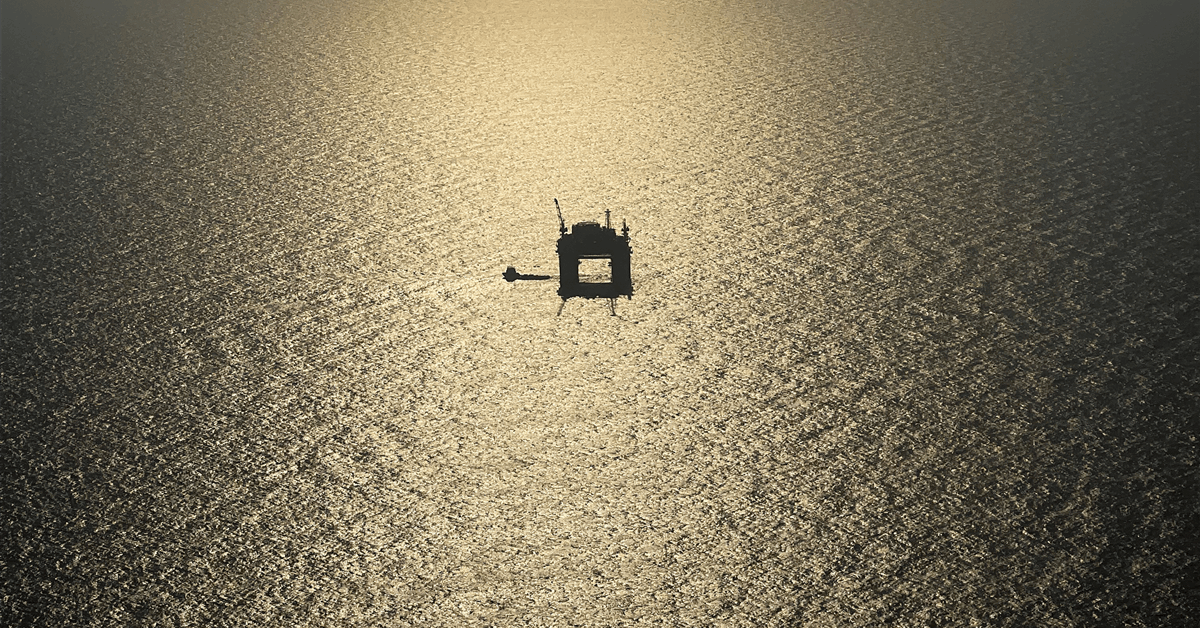
Repsol’s recent announcement of first oil production from its Leon-Castille development in the US Gulf of Mexico marks a significant milestone for the Spanish energy giant and the broader deepwater sector. This project, which integrates the Salamanca floating production unit, is not just about adding barrels to Repsol’s portfolio; it represents a strategic move to optimize existing infrastructure and expand its footprint in a crucial energy basin. For investors, this new deepwater output, coupled with Repsol’s broader US growth strategy, offers a compelling long-term value proposition, even as the global oil market grapples with pronounced short-term volatility.
Strategic Production Comes Online Amid Market Volatility
The startup of the Leon-Castille development, operating in approximately 6,400 feet of water in the Keathley Canyon, introduces substantial new production capacity. The Salamanca FPU is engineered for an initial throughput of 60,000 barrels per day (bpd) of crude oil and 40 million cubic feet a day (MMcfd) of natural gas. Repsol holds a 50 percent ownership stake in the Leon field, 35.62 percent in Castille, and 2.5 percent in the FPU, with LLOG Exploration Offshore LLC serving as the operator. This substantial injection of production arrives at a pivotal moment for the energy market. As of today, Brent crude trades at $90.38, marking a sharp 9.07 percent decline within the day, with WTI crude similarly pressured at $82.59, down 9.41 percent. This continues a downward trend for Brent, which has shed $22.40, or nearly 20 percent, over the past 14 days from its $112.78 high on March 30th. Such price movements underscore the inherent volatility in the global oil market. However, for a deepwater project like Leon-Castille, which typically involves long investment horizons and lower decline rates, the long-term economics often outweigh short-term price fluctuations, allowing Repsol to capitalize on future market upswings and secure consistent cash flows for decades.
Phased Expansion and Sustainable Operations
The Leon-Castille project is designed for phased growth, ensuring a steady ramp-up of output. Following the initial startup, a second well in Leon and the inaugural well in the adjacent Castille field are anticipated to come online in the coming months. Looking further ahead, a third Leon well and a second Castille well are projected to begin production next year. This methodical approach to increasing output provides investors with a clear trajectory for production growth and revenue generation. Notably, the Salamanca FPU stands out as the first refurbished production facility in the US Gulf, a critical aspect that aligns with modern ESG imperatives. Repsol highlights that this refurbishment strategy delivers an estimated 87 percent reduction in emissions compared to constructing a brand-new unit. This commitment to operational efficiency and environmental stewardship not only minimizes the project’s carbon footprint but also potentially reduces capital expenditure and operational risks, making it a more attractive asset in an increasingly sustainability-focused investment landscape. These “better barrels,” as Repsol frames them, demonstrate a commitment to both profitability and responsible resource development.
Repsol’s Expanding US Footprint and Strategic Plan
The Leon-Castille development reinforces the United States’ strategic importance within Repsol’s global portfolio, aligning with the company’s 2024-27 Strategic Plan. This project complements Repsol’s existing and future assets across the US. In the Gulf of Mexico, Repsol already holds significant stakes in the Buckskin oil and gas field (22.5 percent), which commenced production in 2019, and the mature Shenzi oil and gas field (28 percent), onstream since 2009. Beyond the Gulf, Repsol is a key partner in the Pikka Phase I oilfield project in Alaska, holding a 49 percent interest in an asset anticipated to come online at the beginning of 2026 with a gross capacity of 80,000 bpd. This diversified portfolio across established US basins, from deepwater Gulf assets to Alaskan frontier developments, positions Repsol for sustained energy production growth. Furthermore, Repsol is advancing its first carbon capture and storage (CCS) project, having leased 140,000 acres of pore space offshore Texas, signaling a forward-looking approach to energy transition and future revenue streams.
Navigating Market Headwinds and Addressing Investor Queries
Investors are keenly observing market dynamics and Repsol’s positioning, with frequent questions emerging around the company’s performance and the broader oil price trajectory. Many are asking about Repsol’s potential performance through April 2026, and crucially, what the price of oil per barrel might be by the end of 2026. The recent downturn in crude prices, with Brent dropping nearly 20 percent in the last two weeks, certainly creates headwinds. However, forward-looking analysis suggests several factors could influence Repsol’s outlook. The upcoming OPEC+ Ministerial Meeting on April 19th is a critical event, as any decisions on production quotas could significantly impact market supply and price stability. Investors are understandably curious about current OPEC+ production quotas, as these directly inform future supply expectations. Beyond OPEC+, weekly data points such as the API Weekly Crude Inventory (April 21st, April 28th) and the EIA Weekly Petroleum Status Report (April 22nd, April 29th) will provide crucial insights into demand trends and inventory levels. The Baker Hughes Rig Count (April 24th, May 1st) will also offer a pulse on US drilling activity. While near-term volatility persists, Repsol’s long-life, lower-emission deepwater assets like Leon-Castille, combined with a diversified portfolio and strategic CCS initiatives, offer a degree of resilience against market fluctuations and position the company favorably for a potential recovery in crude prices later in 2026 and beyond.
Investment Outlook: Long-Term Value in Deepwater Growth
In conclusion, Repsol’s startup of the Leon-Castille project is more than just an operational success; it’s a strategic affirmation of its commitment to the US as a core growth region and its focus on delivering high-value, lower-emission barrels. Despite the current market’s significant price pressures, evidenced by Brent’s recent decline to $90.38, deepwater projects with long production lives and phased development plans are designed for resilience. The integration of refurbished infrastructure and a strong emphasis on emissions reduction further enhances the project’s long-term appeal. For investors seeking exposure to a diversified energy company with a growing footprint in established and strategically important basins, Repsol’s expanding US portfolio, anchored by this new Gulf of Mexico production and complemented by Alaskan developments and future-proof CCS initiatives, presents a compelling case for sustained value creation over the coming years.


