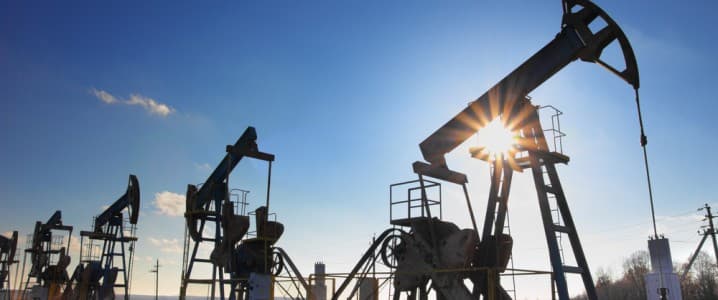
The United States’ energy landscape is undergoing a profound transformation, with federal onshore territories emerging as a dominant force in crude oil production. Recent data from the U.S. Energy Information Administration (EIA) and the Department of the Interior reveals that onshore federal lands achieved a remarkable milestone in 2024, pumping out an average of 1.7 million barrels of oil per day (bpd). This staggering figure represents a sixfold expansion in output from these specific regions since 2008, dramatically outpacing the broader national crude production growth, which nearly tripled to 13.2 million bpd over the same period.
For savvy investors, this shift signals a critical re-evaluation of where the true growth opportunities lie within the domestic oil and gas sector. The narrative of American energy independence is increasingly being written on federal acreage, particularly in one dynamic state.
New Mexico Fuels the Onshore Boom
At the heart of this unprecedented surge is New Mexico, specifically its prolific share of the Permian Basin. This state has quietly but decisively become the epicenter of federal onshore oil and gas development. From fiscal year 2020 through fiscal year 2023, New Mexico consistently accounted for the overwhelming majority of drilling permits approved and new well bores initiated on federal lands. This sustained activity has not been accidental; it’s the result of a powerful confluence of factors.
Geologically, New Mexico’s Permian acreage is exceptionally rich, boasting multiple stacked pay zones that offer tremendous recoverable reserves. Beyond the subsurface bounty, the state benefits from relatively favorable permitting conditions, which, when combined with established infrastructure for extraction, processing, and transportation, creates an attractive environment for exploration and production (E&P) companies. Investors tracking companies with significant exposure to New Mexico’s federal lands are likely observing robust operational efficiencies and strong production growth trajectories.
Offshore Production Lags in Growth
In stark contrast to the explosive growth witnessed on federal onshore properties, the trajectory of federal offshore oil production paints a different picture. While output from the Gulf of Mexico, the nation’s primary offshore hub, did see a marginal increase, it held steady at approximately 1.8 million bpd in 2024. This level, while slightly exceeding federal onshore volumes, reflects a significantly more sluggish growth profile. The disparity underscores a fundamental shift in capital allocation and operational focus within the industry, with E&P firms increasingly prioritizing the speed, flexibility, and often lower upfront costs associated with onshore drilling.
The challenges inherent in deepwater exploration and development, including higher capital expenditure, longer project timelines, and increased regulatory hurdles, have contributed to this divergence. For investors, this suggests that while offshore operations remain crucial for overall U.S. supply, the most dynamic growth and potentially higher returns are currently situated within the terrestrial federal plays.
Natural Gas: A Modest Onshore Reversal
The natural gas sector on federal lands also presents an intriguing narrative. Onshore federal territories produced 4.2 trillion cubic feet (Tcf) of natural gas in 2024, a notable increase from the 3.2 Tcf recorded in 2020. This upward trend closely mirrors the broader national growth in natural gas output, which climbed from 33.8 Tcf to 37.8 Tcf over the same four-year period. What makes this particularly noteworthy is that the share of U.S. natural gas originating from onshore federal lands experienced a modest yet significant reversal, rising from 9.6% in 2020 to 11% in 2024. This marks a departure from a long-term decline in federal onshore gas’s contribution to the national supply, indicating renewed interest and success in these areas.
This resurgence in federal onshore natural gas production adds another layer to the investment thesis surrounding these regions. Companies with integrated oil and gas operations in areas like the Permian Basin are benefiting from both liquids-rich and dry gas plays, enhancing their overall resource base and revenue streams.
The Fading Offshore Gas Footprint
Conversely, federal offshore natural gas production continues its pronounced decline, reaching a mere 0.8 Tcf in 2024. To put this into perspective, this volume is less than one-third of the levels seen in 2005, highlighting a dramatic and sustained retrenchment from offshore gas development. The reasons are multifaceted, including the depletion of legacy fields, the economic attractiveness of onshore shale gas plays, and the often associated nature of offshore gas production with declining oil output.
This persistent downturn firmly establishes that the frontier for new growth in American hydrocarbon production is not beneath the ocean waves, but rather beneath the vast, arid plains and mountainous regions of the Western United States. For energy investors, this data underscores a pivotal strategic shift: the future of U.S. oil and gas expansion, particularly on federally managed acreage, is overwhelmingly onshore. Companies with robust land positions, efficient drilling operations, and favorable regulatory environments in regions like New Mexico are poised to lead this next chapter of American energy prosperity.