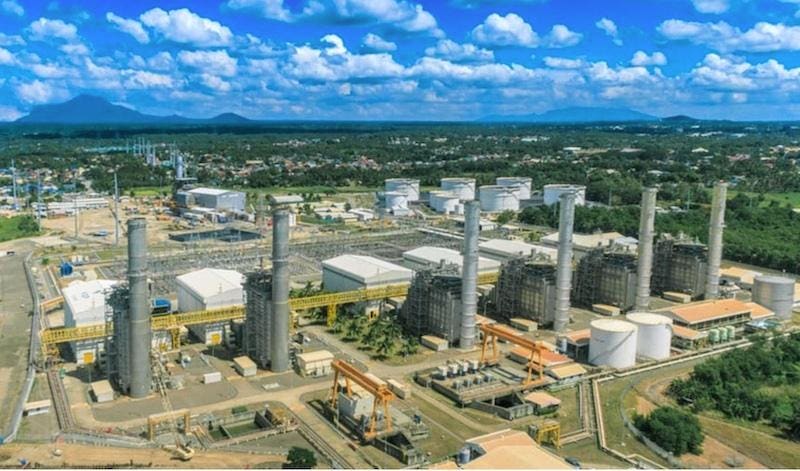
A monumental shift is underway in the Philippine energy landscape as billionaire Enrique Razon Jr.’s Prime Infrastructure Holdings strikes an $896 million deal to acquire a commanding 60% stake in the crucial natural gas assets of the Lopez family’s First Gen Corporation. This landmark transaction signals a strategic realignment for both energy titans, with significant implications for the nation’s power security and the broader investment community.
The agreement, formalized through a comprehensive term sheet, outlines Prime Infrastructure’s controlling interest in a formidable portfolio of energy infrastructure. This encompasses four operational gas-fired power plants, alongside a fifth planned facility, collectively boasting an impressive generation capacity of 3,247 megawatts. Crucially for the nation’s energy future, the acquisition also includes an offshore liquefied natural gas (LNG) terminal, all strategically located in the energy hub of Batangas province, south of Manila.
Prime Infra’s Strategic Expansion in Natural Gas
For Prime Infrastructure, a company already making significant waves in the country’s energy sector, this acquisition represents a formidable expansion of its natural gas footprint. The move seamlessly integrates with its existing substantial interest in the Malampaya gas field, a critical domestic energy source. Prime Infra is not merely acquiring assets; it is actively investing in future output, committing an estimated $800 million towards drilling and exploration efforts aimed at revitalizing Malampaya’s declining production. This aggressive investment underscores a commitment to fortifying the Philippines’ energy independence and leveraging natural gas as a foundational component of its energy mix.
Enrique Razon Jr., with a real-time net worth reported at $12 billion, commands a diversified global empire spanning ports (ICTSI) and integrated resorts (Bloomberry). His strategic vision for Prime Infrastructure extends beyond gas, encompassing a growing portfolio of renewable energy assets. The company’s existing power generation capabilities include two operational solar farms with a combined output of 128 megawatts, alongside two hydroelectric plants projected to deliver a substantial 2,000 megawatts upon completion. This diversified approach positions Prime Infra as a comprehensive energy player, capable of balancing baseload power with cleaner alternatives.
First Gen’s Ambitious Renewable Energy Pivot
Conversely, First Gen Corporation, a long-standing power generation leader with 55% of its current capacity derived from natural gas, views this partial divestment as a pivotal enabler for its ambitious renewable energy transition. The substantial capital infusion from the 50 billion Philippine pesos ($896 million) sale will directly fuel First Gen’s staggering $9 billion investment plan, targeting a quadrupling of its clean energy capacity to an impressive 13 gigawatts by 2030. This bold move signals a decisive pivot towards wind, solar, hydro, and geothermal sources, aligning with global trends towards decarbonization.
The company’s commitment to this green transformation is already evident in its recent capital expenditures. In 2024, First Gen allocated approximately $1.2 billion, which included the significant acquisition of the 165-megawatt Casecnan hydro power facility in Nueva Ecija. Looking ahead, an additional $601 million is earmarked for capital expenditures this year, with a significant 90% dedicated to expanding its geothermal capacity by 140 megawatts. The remaining funds are allocated to a 50-megawatt solar project, further solidifying its renewable energy pipeline. For investors, this clear strategic direction offers a compelling narrative of future growth in the burgeoning clean energy sector.
A Shifting Landscape for Philippine Energy Investors
This landmark Razon-Lopez transaction is not an isolated event but rather the latest seismic shift reshaping the Philippine energy sector. It follows other significant strategic alliances that highlight a dynamic period of consolidation and expansion. Notably, billionaire Ramon Ang’s San Miguel Corporation recently announced a formidable $3.3 billion gas and LNG joint venture with Aboitiz Power and a subsidiary of Manila Electric Company. Such large-scale collaborations underscore the intensifying competition and the immense capital being deployed to secure the nation’s energy future.
The Philippines, a rapidly growing economy, faces increasing energy demands, making investments in power generation and infrastructure critically important. The strategic partnerships and significant capital outlays by players like Prime Infrastructure and First Gen are direct responses to this demand, aiming to bolster the country’s energy security and provide reliable power for industrial and residential consumption. Investors closely monitoring the Asia-Pacific energy market will recognize the Philippines as a hotbed of activity, driven by both traditional fossil fuels and an accelerating transition to renewables.
Beyond his energy ventures, Enrique Razon Jr.’s Prime Infrastructure also operates in water utility and waste management services, showcasing a broad infrastructure focus. While a planned IPO for Prime Infra in 2022 was postponed due to unfavorable market conditions, the company’s aggressive acquisition strategy and organic growth initiatives suggest continued long-term value creation. Similarly, the Lopez family, with a net worth of $230 million, maintains diverse interests, including a controlling stake in ABS-CBN, once the country’s largest broadcaster, which has successfully pivoted to online streaming and content sharing following a franchise non-renewal in 2020.
In conclusion, the $896 million deal between Prime Infrastructure and First Gen represents a pivotal moment for Philippine energy. It strategically bolsters Prime Infra’s natural gas portfolio and commitment to energy independence while simultaneously providing First Gen with the financial firepower to accelerate its ambitious renewable energy expansion. For investors tracking the global oil and gas and power generation sectors, this transaction offers a clear example of how established players are navigating the dual imperatives of securing reliable baseload power and aggressively pursuing a cleaner energy future.