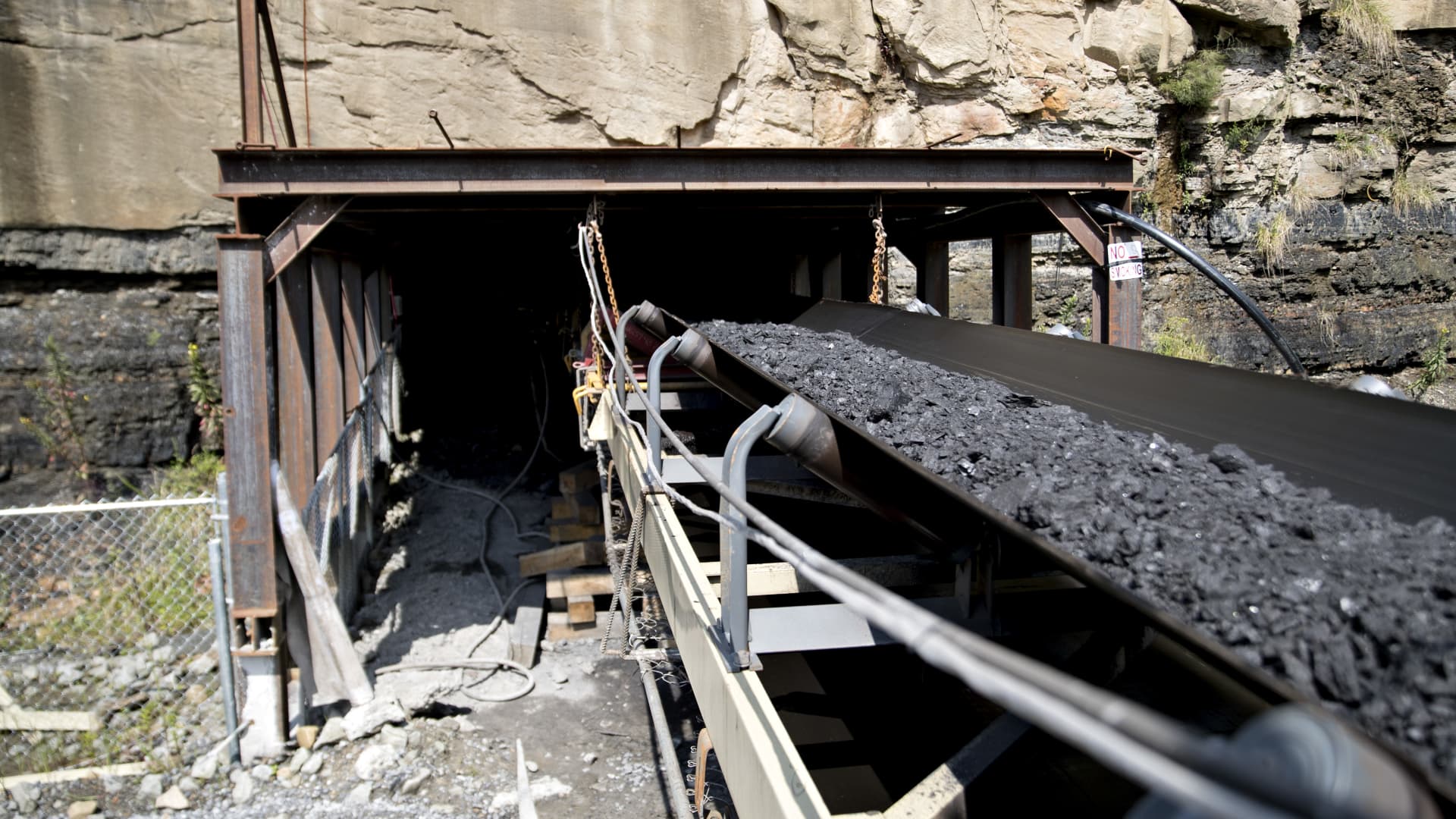
Ramaco’s Rare Earth Bonanza: A Catalyst for US Resource Independence
In a significant development poised to reshape America’s strategic mineral landscape, Ramaco Resources, a Kentucky-headquartered company primarily known for its metallurgical coal operations, has stumbled upon a colossal trove of rare earth elements (REEs) in Wyoming. This unexpected discovery at its Brook Mine could drastically alter the company’s trajectory and represents a crucial step toward mitigating the United States’ heavy reliance on foreign nations, particularly China, for these indispensable materials.
The find, which emerged in 2023 from a property acquired for a modest $2 million, places Ramaco at the forefront of a burgeoning domestic critical minerals sector. An analysis conducted this month by mining consultant Weir International estimates the Brook Mine, located near Sheridan, contains an astounding 1.7 million tons of rare earth oxides. For a company with a current market capitalization around $571 million, this discovery carries monumental implications, promising a potential re-rating and diversification that extends far beyond its traditional coal mining operations in West Virginia and Virginia, which primarily supply steel production.
A Strategic Imperative: Securing Critical Mineral Supply Chains
The United States faces a stark reality regarding its rare earth supply chain. In 2023, the nation consumed approximately 10,000 metric tons of rare earths, with the U.S. Geological Survey (USGS) indicating that nearly all of this demand was met through imports. China alone accounted for a staggering 70% of these critical material imports. This overreliance creates a significant geopolitical vulnerability, a fact underscored by Beijing’s implementation of export controls on seven specific rare earth elements in April, a retaliatory measure following earlier U.S. tariffs.
These minerals are not merely industrial commodities; they are fundamental to national defense and advanced technological industries. Modern weaponry, such as the F-35 warplane, incorporates over 900 pounds of rare earth elements, according to the Defense Department. Ensuring a secure, domestic supply of these materials is therefore not just an economic priority but a matter of national security, directly impacting the operational readiness and technological superiority of the U.S. military.
Ramaco CEO Randall Atkins emphasized the national importance of the Brook Mine, stating on the company’s first-quarter earnings call, “From a national security standpoint, we will never need to ship our ores to China or any other country for processing.” This vision directly addresses what Atkins describes as an “acute national strategic supply shortfall” of the precise rare earths and critical minerals now identified within Ramaco’s holdings.
Pioneering Domestic Processing Capacity
The United States currently operates only one significant rare earth mining and processing facility, located at Mountain Pass, California. The Brook Mine project, if successful, would mark the first new rare earth facility to commence operations in the U.S. in over seven decades. Ramaco anticipates an annual production capacity of approximately 1,400 metric tons of rare earths from this new venture, a substantial contribution towards alleviating the nation’s import dependency.
Ramaco’s development strategy is ambitious, leveraging its existing coal operations to support the nascent rare earth venture. The company plans to initiate large-scale coal production at the Brook Mine in June. Concurrently, construction of a pilot plant dedicated to rare earth extraction is slated to begin this summer. CEO Atkins articulated the synergistic approach: “In simple terms, the coal sales will help us lower the overall cost of the rare earth mining so that we will have an extremely low mine cost basis in the critical minerals.” This integrated approach aims to create a cost-efficient pathway for domestic rare earth production.
The pilot plant is projected to commence operations in 2026, running for approximately a year. This crucial phase will inform the design and engineering of the full-scale commercial facility. Following successful pilot operations, Ramaco aims to break ground on the commercial processing plant as early as late 2026, with full refining and processing capabilities expected to come online by 2028. This aggressive timeline underscores the urgency and strategic importance Ramaco attaches to the project.
Investment Outlook and Strategic Challenges
While the potential for Ramaco is immense, the path forward involves significant capital investment and operational challenges. The precise cost of developing the full-scale rare earth extraction and processing facility remains undisclosed. Securing the necessary funding and technical expertise will be critical for Ramaco, a company historically focused on coal mining, to successfully execute this complex diversification into high-tech mineral processing. The involvement of engineering firms like Fluor suggests the scale and complexity of the undertaking, requiring substantial investment in infrastructure and specialized technology.
For investors monitoring the broader energy and resource sectors, Ramaco’s rare earth discovery presents a compelling narrative. It highlights the potential for existing resource companies to uncover new avenues of value creation within the critical minerals space, driven by national security priorities and the global energy transition. The ability to produce essential materials domestically, particularly those vital for defense and advanced electronics, offers a strategic advantage that transcends conventional commodity market dynamics.
The Brook Mine project signifies more than just a new revenue stream for Ramaco; it represents a tangible step towards fortifying American industrial resilience and technological sovereignty. As global supply chains remain volatile and geopolitical tensions simmer, domestic sources of critical minerals like those found in Wyoming become increasingly invaluable. Investors will be keenly watching Ramaco’s progress, not only for its financial performance but also for its pivotal role in helping the U.S. secure its future resource independence.