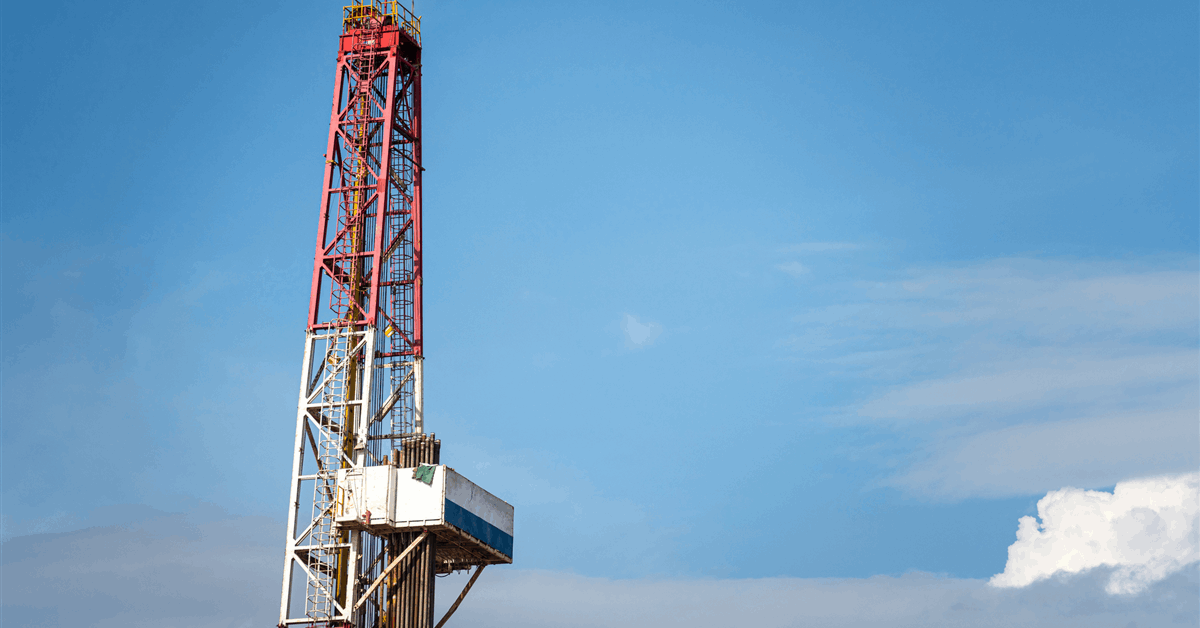
The recent two-year extension granted for the Rafael gas and condensate project in Western Australia’s Canning Basin marks a significant, albeit expected, development for Buru Energy. Pushing the deadline for a production license application to July 2027, this approval from Western Australia’s Mines, Petroleum and Exploration Department provides crucial breathing room for Buru and its strategic partner, Clean Energy Fuels Australia (CEFA), to de-risk and mature a project poised to become a vital long-term energy supplier for the region. For investors, this isn’t merely a delay; it’s a strategic realignment that underscores the complexities of bringing substantial new energy resources online, while also highlighting key milestones that will dictate the project’s ultimate success and valuation.
Strategic De-risking and Partnership Synergy
The license extension directly facilitates the completion of critical technical and commercial work, a necessity for a project of Rafael’s scale and regional significance. Rafael, located in Exploration Permit 428, holds a unique position as the only confirmed source of conventional gas and liquids onshore Western Australia north of the prolific North West Shelf Project. Assessed with contingent and unrisked gross recoverable volumes ranging from 85 to 523 Bscf of gas and 1.8 to 10.6 MMstb of condensate, the project targets a robust 20-year production life, primarily intending to supply trucked liquefied natural gas (LNG) and liquids to the Pilbara and Northern Territory markets. This regional focus, coupled with the substantial resource base, positions Rafael as a potential cornerstone for energy security and industrial development in a rapidly growing part of Australia.
Central to this de-risking strategy is the partnership with CEFA, formalized in a strategic development agreement earlier this month. This collaboration outlines a clear division of labor and financial responsibility: Buru will manage the upstream financing, construction, and operation, while CEFA is set to fully finance, build, own, and operate the downstream components, including an LNG plant with capacity up to 300 tonnes per day and associated condensate infrastructure. CEFA’s strong financial backing and established presence in the Western Australian domestic LNG market are invaluable, effectively insulating Buru from the substantial capital expenditure typically associated with downstream infrastructure. This structural arrangement significantly reduces Buru’s upfront capital commitments and transfers a considerable portion of execution risk, making the project’s upstream economics potentially more attractive to investors.
Market Headwinds, Investor Focus, and Rafael’s Value Proposition
Investors are currently navigating a dynamic energy market, with a keen eye on global crude benchmarks and regional gas prices. As of today, Brent crude trades at $94.8 per barrel, showing a modest daily increase of 0.01% within a day range of $91 to $96.89. WTI crude, meanwhile, sits at $90.87, experiencing a slight dip of 0.45% within a daily range of $86.96 to $93.3. These figures reflect a robust, albeit recently softening, oil price environment; the 14-day trend for Brent shows a decline from $102.22 on March 25 to $93.22 on April 14, highlighting recent volatility. Gasoline prices have also seen an uptick, currently at $3 per gallon.
Our proprietary data indicates that investors are actively seeking insights into future price trajectories, with common inquiries centering on building a base-case Brent price forecast for the next quarter and understanding the drivers behind Asian LNG spot prices this week. These questions are directly pertinent to Rafael’s investment thesis. The condensate component of Rafael’s production will directly benefit from strong crude prices, while the project’s core LNG output will depend on the health of regional gas markets, which are heavily influenced by broader Asian LNG dynamics. The project’s strategy to supply trucked LNG to the Pilbara and Northern Territory aims to tap into localized demand, potentially providing some insulation from the most extreme global spot price fluctuations, but the overall sentiment in the Asian LNG market remains a critical barometer for investor confidence in gas-focused projects.
Upcoming Milestones and Market Catalysts
While the license extension provides a longer runway, Buru faces critical near-term milestones that will directly impact the project’s progression and investor sentiment. The company is actively pursuing funding options for its 2025 Rafael 1 well recompletion and testing program, which is essential for supporting independent certification of Rafael’s reserves. This reserves certification is a key condition precedent for solidifying binding agreements with CEFA, currently anticipated by late 2025. Following this, Buru plans to drill a development well in 2026, targeting a final investment decision (FID) in 2027 and first production in 2028.
Against this backdrop, the broader energy calendar holds potential market catalysts. Investors will be closely watching the upcoming OPEC+ Joint Ministerial Monitoring Committee (JMMC) meeting on April 18, followed by the Full Ministerial OPEC+ Meeting on April 20. Outcomes from these meetings could significantly influence global crude supply and, consequently, prices for Rafael’s condensate. Additionally, weekly indicators such as the Baker Hughes Rig Count (due April 17 and April 24), API Weekly Crude Inventory (April 21 and April 28), and the EIA Weekly Petroleum Status Report (April 22 and April 29) will offer ongoing insights into supply/demand balances and overall industry activity, shaping the general investment climate for upstream ventures like Rafael. The successful navigation of these internal project milestones, alongside a favorable external market environment, will be paramount for Buru’s ability to attract the necessary capital and execute its development plan.
Investment Outlook and Risk Considerations
For investors eyeing exposure to Western Australia’s growing energy needs, Rafael presents a compelling, albeit long-dated, opportunity. The two-year license extension is a clear positive, transforming a looming deadline into a strategic advantage for robust project maturation. The partnership with CEFA substantially mitigates Buru’s capital risk on the downstream side, allowing it to focus on its core upstream strengths. The project’s significant resource base and its strategic location as an onshore conventional gas source provide a strong fundamental underpinning.
However, key risks remain. Buru’s ability to secure financing for its upstream work, particularly the 2025 recompletion and 2026 development well, is an immediate hurdle. Delays in reserves certification could impact the timeline for binding agreements with CEFA. While the market for regional LNG in Western Australia is strong, global energy price volatility, particularly for crude and LNG, will continue to influence project economics and investor sentiment. The long development timeline, with FID targeted for 2027 and production for 2028, also introduces a degree of execution risk and exposure to future market shifts. Ultimately, Rafael’s journey from discovery to production will be a testament to diligent execution and strategic financial management, offering significant upside for those investors with a long-term horizon and appetite for growth in regional energy supply.


