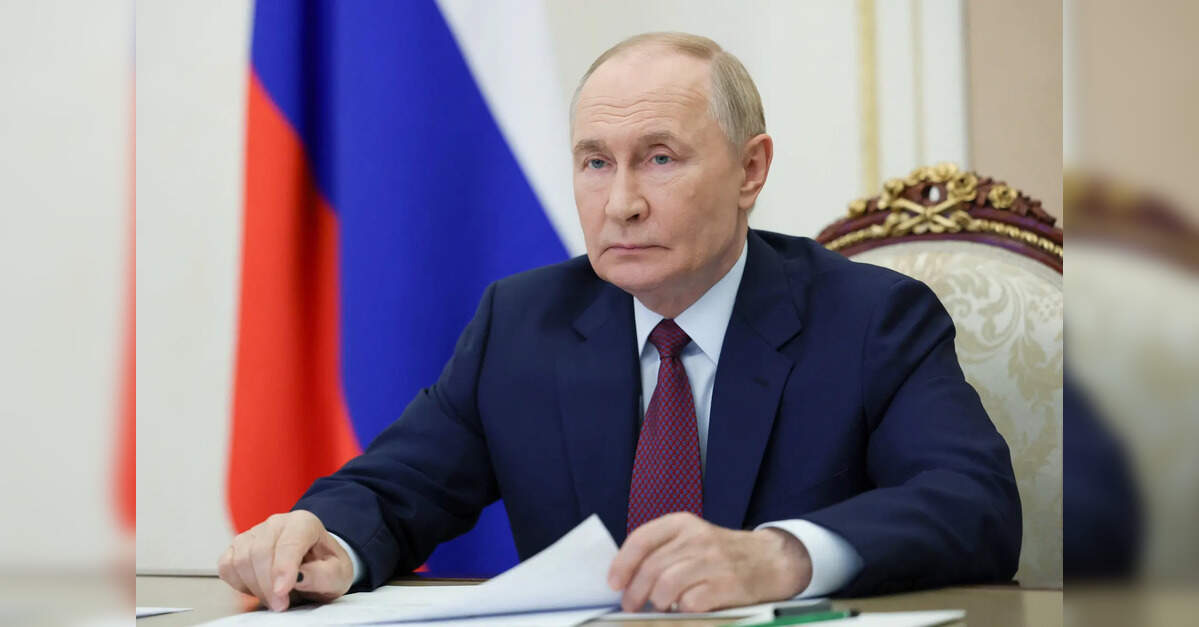
The global oil market is a complex web of supply, demand, and geopolitical maneuvering. A significant thread in this tapestry is the evolving economic relationship between Russia and India, particularly in the energy sector. Recent statements from Russian President Vladimir Putin underscore a deliberate strategic shift: Moscow aims to rebalance its substantial crude oil exports to New Delhi by increasing imports of Indian agricultural products and pharmaceuticals. This initiative is not merely about evening out trade ledgers; it’s a profound move with far-reaching implications for global crude flows, pricing stability, and the investment landscape. As India solidifies its position as a critical buyer of Russian crude, bypassing traditional Western pressures, investors must analyze how these bilateral agreements will reshape energy security and market dynamics, especially against a backdrop of fluctuating prices and impending supply-side decisions.
Geopolitical Realignment and Diversified Energy Flows
The deepening energy ties between Russia and India represent a powerful geopolitical realignment, challenging established norms in global energy trade. India’s decision to maintain and even increase its imports of Russian crude, despite significant pressure from Western nations, has been a defining feature of the past year. This move, lauded by Russian leadership, reflects India’s prioritization of its national economic interests and energy security. The rationale is clear: securing discounted crude helps cushion the impact of global energy inflation and insulate the domestic economy from punitive tariffs imposed by the U.S. on other fronts. This strategic independence has not only provided India with a significant economic advantage but also bolstered its standing as a sovereign nation capable of making autonomous foreign policy decisions.
However, this robust energy trade has created a notable imbalance, with Russia importing significantly less from India than it exports. To address this, President Putin has directed his government to devise measures to soften this asymmetry, specifically by boosting purchases of Indian agricultural products and medicinal pharmaceuticals. This initiative, anticipated to be a key discussion point during his early December visit to India, aims to build a more equitable and sustainable trade relationship. Beyond crude, this push for diversified trade signals a long-term commitment to a “special strategic privileged partnership,” a relationship that has endured since the Soviet era and continues to be characterized by mutual respect and close coordination on international affairs. For investors, this signifies a strengthening of an alternative trade axis, potentially creating new opportunities in sectors beyond energy, such as agriculture and healthcare, while further cementing Russia’s ability to reroute its energy exports.
Current Market Realities and Price Volatility
The backdrop for this evolving trade dynamic is a crude oil market currently experiencing considerable volatility. As of today, Brent crude trades at $92.73 per barrel, reflecting a modest daily decline of 0.9%. This minor dip comes after a more significant downward trend over the past two weeks, during which Brent prices fell from $112.57 on March 27th to $98.57 on April 16th, representing a notable decrease of $14, or 12.4%. WTI crude has followed a similar trajectory, currently priced at $89.87, down 1.43% for the day. Gasoline prices, in contrast, remain relatively stable at $3.09 per gallon. This recent correction in crude prices provides a critical context for understanding the implications of a stable Russia-India energy corridor.
Investors are keenly observing these price movements, and a common question we’ve seen from our readers centers on “What is the current Brent crude price and what model powers this response?” The answer lies in the real-time, robust data pipelines we maintain, which reflect global supply-demand fundamentals alongside geopolitical premiums. The sustained flow of Russian crude to India, often at a discount, has a direct impact on global supply availability and, consequently, on benchmark prices like Brent. While not the sole driver of the recent price correction, the redirection of significant volumes of Russian oil away from traditional European markets and towards Asian buyers like India contributes to overall market fluidity. This established trade route helps stabilize Russian export volumes, which, in turn, influences the global supply picture and, by extension, the price discovery mechanisms for all market participants. Understanding these interconnected dynamics is crucial for any investor tracking crude oil market trends.
Addressing Logistics, Payments, and Investor Confidence
While the political will to deepen Russia-India trade is evident, the practicalities of execution present a range of challenges, primarily in financing, logistics, and payment mechanisms. These bottlenecks, explicitly acknowledged by President Putin, are crucial hurdles that need resolution to fully unlock the vast potential for economic cooperation. Overcoming these issues involves developing robust alternative payment systems that circumvent Western sanctions, establishing efficient shipping routes, and ensuring reliable insurance coverage for cargo. Progress on these fronts is paramount for solidifying the existing energy trade and expanding into other sectors like pharmaceuticals and agriculture.
From an investor perspective, these operational challenges translate into risks and opportunities. A key concern for many of our readers, reflected in questions such as “What are OPEC+ current production quotas?”, highlights the broader anxiety about supply stability. If Russia can effectively mitigate these logistical and payment issues with India, it ensures a more stable outlet for its crude exports, potentially easing global supply concerns and reducing the pressure for other producers to fill perceived gaps. This stability could influence future OPEC+ decisions, as a reliable flow of Russian oil to a major consumer like India alters the global supply-demand balance. Furthermore, the proposed idea of a joint fund to develop AI and other cutting-edge technology signals a deeper, long-term commitment to technological and economic collaboration, which could further underpin the strategic partnership and provide innovative solutions to current trade impediments, ultimately bolstering investor confidence in the resilience of this bilateral relationship.
Forward-Looking Implications and Upcoming Market Catalysts
The strategic reorientation of Russia-India trade carries significant forward-looking implications for the global energy market, with several upcoming calendar events poised to provide further clarity and potential catalysts. The anticipated visit of President Putin to India in early December stands as a pivotal diplomatic event. This visit is expected to formalize or expand upon the initiatives to rebalance trade, potentially leading to concrete agreements on financing, logistics, and increased bilateral trade volumes beyond crude. Such developments could further embed India as a cornerstone of Russian energy exports and solidify new trade corridors.
Closer on the horizon, the oil market will be closely watching the OPEC+ Joint Ministerial Monitoring Committee (JMMC) meeting on April 17th, followed by the Full Ministerial Meeting on April 18th. These gatherings are crucial for assessing the group’s stance on production quotas amid a volatile price environment and evolving global supply dynamics. The stability of Russian crude flows to India directly impacts the global supply equation that OPEC+ considers. If Russian exports remain robust due to steady Indian demand, it could influence OPEC+’s decisions regarding output adjustments. Furthermore, the weekly API Crude Inventory report on April 21st and the EIA Weekly Petroleum Status Report on April 22nd will offer critical insights into U.S. crude stockpiles and demand, providing a snapshot of the world’s largest consumer market. These reports, alongside the Baker Hughes Rig Count on April 24th, will allow investors to gauge the overall market health and calibrate their expectations for how the Russia-India trade relationship will integrate into the broader energy narrative, shaping investment strategies for the coming months.


