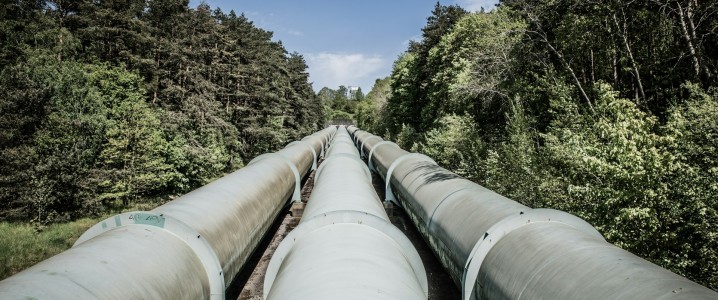
The proposed Western Gateway Pipeline, a joint venture between refining stalwart Phillips 66 (PSX) and pipeline giant Kinder Morgan (KMI), is rapidly gaining traction, poised to significantly reshape the refined product landscape for the U.S. West Coast. This ambitious project, targeting completion by 2029, promises to forge a critical new artery for gasoline, diesel, and jet fuel, moving these essential commodities from the abundant Midwest refining hub all the way to California. With robust backing from various political and industry stakeholders, the Western Gateway represents a strategic long-term play in energy infrastructure, addressing persistent supply challenges and regional price disparities, particularly in the Golden State, which consistently grapples with America’s highest fuel costs and an increasingly constrained refining capacity.
Strategic Imperative Amidst Market Volatility
The Western Gateway Pipeline’s strategic importance becomes clearer when viewed against the backdrop of current market dynamics. As of today, Brent crude trades at $91.87, representing a significant daily dip of 7.57% from its open, while WTI crude mirrors this decline at $84, down 7.86%. This volatility extends to refined products, with gasoline prices currently at $2.95, a 4.85% decrease. However, this short-term dip comes after a recent 14-day trend where Brent shed over $20, falling from $112.78 to its current level. Despite these fluctuations, the Western Gateway project addresses a structural inefficiency: the persistently high gasoline prices on the U.S. West Coast, particularly in California. These prices often remain elevated relative to national averages, even amidst broader market declines, due to limited pipeline connectivity and stringent environmental regulations that have led to refinery closures. By connecting Midwest refineries to California, the pipeline offers a direct solution to these regional price gaps, providing a more reliable and cost-effective supply route that could stabilize fuel markets and mitigate the impact of local supply disruptions.
Project Mechanics and Long-Term Value Creation
The architecture of the Western Gateway Pipeline is both innovative and expansive. It involves the construction of a new pipeline section stretching from Borger, Texas, to Phoenix, Arizona. Crucially, it also includes the reversal of Kinder Morgan’s existing Santa Fe Pacific Products (SFPP) West Line, which currently flows from Colton, California, to Phoenix, to enable an east-to-west flow directly into California markets. Furthermore, Phillips 66’s Gold Pipeline, currently transporting fuels from Borger to St. Louis, will also be reversed to feed product into the Western Gateway system from the Midcontinent. This multi-pronged approach leverages existing infrastructure while strategically adding new capacity, maximizing efficiency and minimizing greenfield development challenges where possible. The binding open season for the project, which concludes on December 19, is a critical milestone. Phillips 66 CEO Mark Lashier has indicated strong interest, noting the company itself plans to be a substantial shipper. The results of this open season will dictate the final sizing and scope of the pipeline, but the confidence expressed by the project proponents underscores a robust market appetite for this vital infrastructure. The targeted 2029 completion date positions the Western Gateway as a resilient, long-term asset, capable of generating stable cash flows for decades.
Navigating the Regulatory Landscape and Investor Sentiment
Large-scale energy infrastructure projects invariably face complex regulatory hurdles and public scrutiny. However, the Western Gateway Pipeline appears to be navigating this terrain effectively, garnering strong support from federal, state, and local entities. Notably, the executive leadership of Phillips 66 has confirmed buy-in from local communities, including those near Mescalero Apache land in New Mexico, a critical factor for successful project execution. This broad base of support is vital for obtaining the necessary approvals and maintaining momentum toward the 2029 target. Our proprietary reader intent data reveals a consistent investor focus on long-term price predictions and fundamental market drivers. Questions like ‘what do you predict the price of oil per barrel will be by end of 2026?’ and ‘What are OPEC+ current production quotas?’ underscore the industry’s preoccupation with future supply/demand balances. The Western Gateway Pipeline, while a midstream infrastructure play, directly addresses the *delivery* aspect of this equation, particularly for refined products in a supply-constrained region. It’s a bet on sustained regional demand, even as broader crude dynamics shift, offering a potential hedge against the volatility implied by such forward-looking price inquiries. The project demonstrates a commitment to meeting enduring energy needs, even as energy transition narratives dominate headlines.
Upcoming Catalysts and Investment Outlook
Investors monitoring the energy sector are keenly aware of a busy calendar ahead. The upcoming OPEC+ Ministerial Meeting on April 18th, followed by critical API and EIA inventory reports on April 21st/22nd and April 28th/29th, and the Baker Hughes Rig Count on April 24th and May 1st, will undoubtedly dictate short-term market sentiment. While these events drive near-term price discovery for crude and refined products, the Western Gateway project represents a long-term strategic play. Its success is less about day-to-day inventory shifts and more about enduring regional demand and infrastructure resilience. For investors in Phillips 66 and Kinder Morgan, the pipeline signifies a significant value driver. Phillips 66 stands to benefit not only from its stake in the pipeline but also as a “substantial shipper,” enhancing the connectivity and profitability of its Midwest refining assets. Kinder Morgan, as a prominent pipeline operator, leverages its expertise and existing network to expand its footprint in a high-demand corridor. This project’s ability to alleviate chronic supply issues and reduce price volatility in a major consumption market positions it as a resilient asset, capable of delivering consistent returns even in evolving energy landscapes. The Western Gateway is more than just a pipeline; it’s a strategic investment in the fundamental logistics of energy supply, addressing real market needs with a long-term vision.


