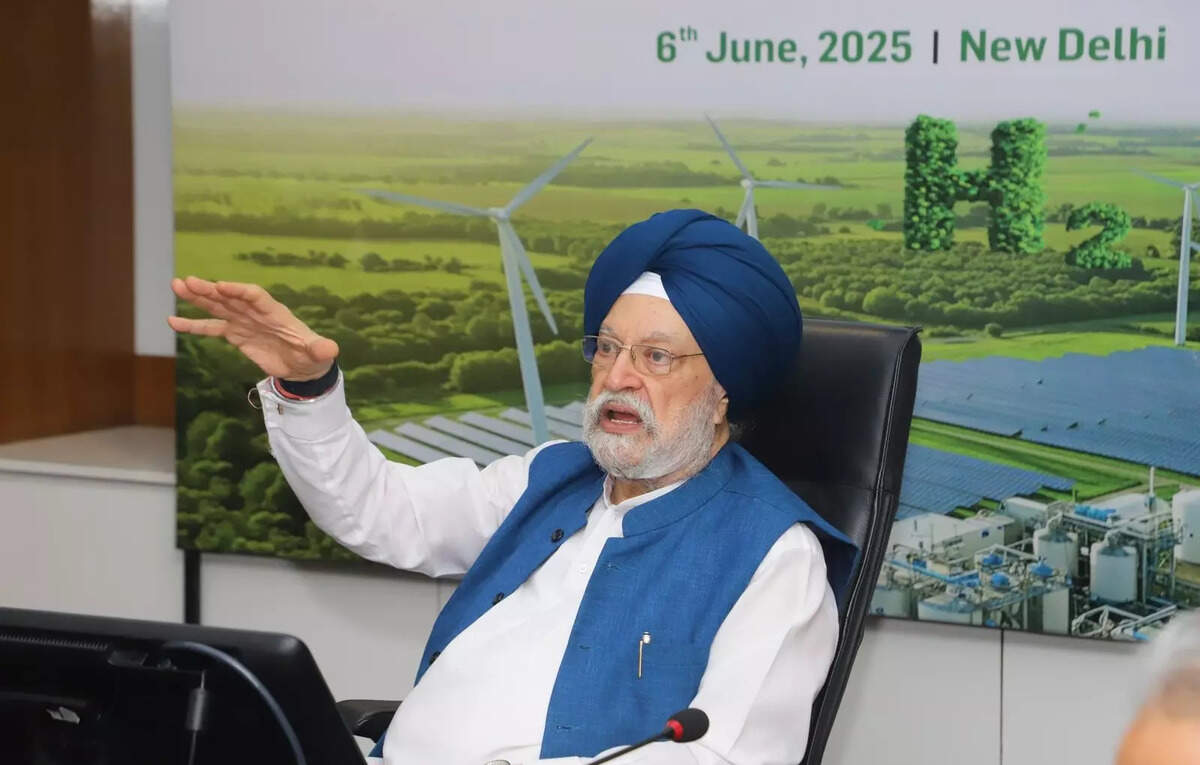
India’s public sector undertakings (PSUs) are embarking on an ambitious journey into green hydrogen, signaling a profound strategic pivot in the nation’s energy landscape. With an estimated ₹2,00,000 crore already earmarked for initiatives, this commitment extends beyond mere exploration, encompassing the construction of multiple R&D and demonstration plants. This substantial investment not only underscores a national drive for energy security and decarbonization but also presents a compelling, long-term re-evaluation for investors tracking the transition away from traditional fossil fuels. The proactive stance by major oil and gas players like Indian Oil, GAIL, HPCL, and BPCL highlights a shift that will redefine their operational portfolios and unlock new avenues for capital deployment across the energy value chain.
India’s ₹2 Trillion Green Hydrogen Bet Takes Shape
The scale of India’s green hydrogen push is staggering, with Union Minister Hardeep Singh Puri having confirmed ₹2,00,000 crore initiatives already in motion. This robust financial commitment is translating into tangible infrastructure: nine R&D and demonstration plants are currently under construction, while four others have already been successfully commissioned by key PSUs, including Indian Oil, GAIL, HPCL, and BPCL. These early projects serve as crucial testbeds for the nascent industry, spanning the critical verticals of production, transportation, storage, and application. Already, tenders for 42 kilotonnes per annum (KTPA) of green hydrogen capacity have been floated by refineries. This initial phase is merely the beginning, as the Minister indicated plans for an additional 128 tenders to be issued by PSU refineries, contingent on the successful outcomes and learnings from the current projects. This phased approach allows for critical evaluation and optimization, ensuring that the subsequent, larger wave of investments is built on solid operational experience. For investors, this represents a multi-year capital expenditure cycle, creating a predictable pipeline of opportunities in technology, infrastructure, and specialized services.
Market Volatility Fuels Decarbonization Urgency
The current market environment provides a stark backdrop against which India’s strategic pivot to green hydrogen gains even greater urgency. As of today, Brent Crude trades at $90.38 per barrel, marking a significant 9.07% decline within the day, with its range fluctuating between $86.08 and $98.97. Similarly, WTI Crude stands at $82.59, down 9.41%. This intraday volatility follows a more pronounced trend; Brent has shed $20.91, or 18.5%, from its $112.78 high just two weeks ago on March 30th. Such dramatic swings in traditional fossil fuel markets underscore the inherent risks and unpredictability of relying solely on conventional energy sources. Our reader data indicates significant investor concern regarding future oil prices, with many asking for predictions on crude prices by the end of 2026. This volatility, coupled with the broader global drive towards decarbonization, makes substantial investments in green hydrogen a compelling proposition for energy security. By diversifying their energy mix, nations like India aim to insulate their economies from geopolitical tensions and commodity price shocks, making the ₹2,00,000 crore outlay not just an environmental imperative but a shrewd economic strategy for long-term stability and growth.
OPEC+ Decisions to Shape Green Hydrogen’s Competitive Edge
The next few weeks are particularly critical for the global energy complex, with a series of high-impact events set to influence market dynamics and, by extension, the competitive landscape for green hydrogen. The OPEC+ Joint Ministerial Monitoring Committee (JMMC) convenes tomorrow, April 18th, followed by the Full Ministerial Meeting on April 19th. Our reader inquiries highlight significant interest in OPEC+’s current production quotas and their future stance. Any decision by the cartel to adjust output levels will directly impact crude prices, potentially altering the economic calculus for accelerating or decelerating green energy projects. Should OPEC+ opt for tighter supply to support prices in the wake of recent declines, the cost advantage of domestic green hydrogen production could become even more pronounced, bolstering the case for the 128 additional tenders planned by PSU refineries. Beyond OPEC+, weekly data releases from the API and EIA, alongside the Baker Hughes Rig Count on April 24th and May 1st, will offer continuous insights into short-term supply and demand fundamentals. These reports, while focused on fossil fuels, provide essential context for energy market sentiment, indirectly influencing the pace and perceived necessity of green energy investments. The outcomes of these events will be closely watched by investors positioning themselves in the evolving energy transition narrative.
Navigating the Green Hydrogen Investment Wave: Beyond PSUs
For discerning investors, India’s green hydrogen push offers more than just a headline; it presents a clear, long-term investment horizon with multiple entry points. The ₹2,00,000 crore commitment, combined with the phased rollout of 42 KTPA tenders and the promise of 128 more, establishes a robust framework for sustained capital deployment over the coming decade. While the PSUs themselves (Indian Oil, GAIL, HPCL, BPCL) are direct beneficiaries and drivers of this transition, the ecosystem required to support such an ambitious undertaking extends far beyond their immediate balance sheets. Opportunities abound for technology providers specializing in advanced electrolyzers, fuel cells, and hydrogen storage solutions. Companies focused on developing and manufacturing specialized infrastructure for green hydrogen transportation – be it pipelines or cryogenic tanks – stand to gain significantly. Engineering, Procurement, and Construction (EPC) firms with expertise in large-scale industrial projects will find a steady stream of contracts. Furthermore, the imperative for ‘green’ hydrogen necessitates vast expansion in renewable energy generation, creating direct investment opportunities in solar and wind power developers. Investors seeking to diversify their portfolios away from the inherent volatility of crude oil markets, as evidenced by recent price drops, will find compelling growth prospects in this emerging sector, aligning with global trends towards decarbonization and sustainable investing. This initiative is not merely about alternative fuels; it represents a foundational shift in industrial strategy, offering a new frontier for value creation.


