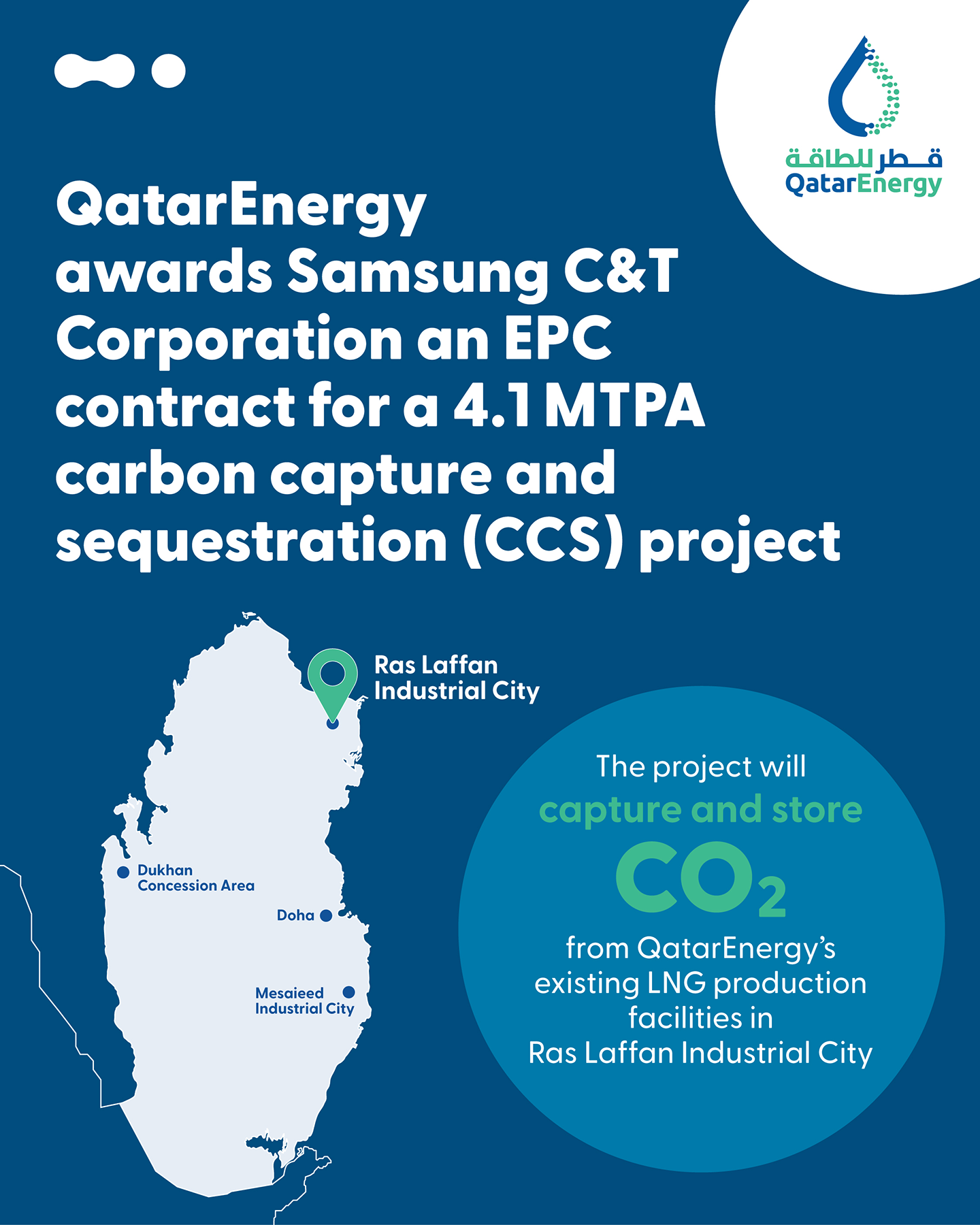
The global energy landscape is undergoing a profound transformation, and nowhere is this more evident than in the strategic moves of major producers to decarbonize their operations while meeting persistent energy demand. A recent announcement detailing a new carbon capture and sequestration (CCS) project in Qatar, designed to capture and store an impressive 4.1 million tons of CO2 per annum, marks a significant milestone. This initiative not only positions Qatar at the forefront of large-scale carbon capture deployment but also signals a clear direction for investment in the future of lower-carbon energy infrastructure. For investors navigating complex market dynamics, understanding the implications of such projects, alongside real-time market shifts and upcoming geopolitical events, is crucial for identifying long-term value in the energy sector.
Qatar’s Strategic Bet on Lower-Carbon LNG & CCS Scale-Up
QatarEnergy’s commitment to large-scale carbon capture is a cornerstone of its long-term strategy, aimed at reinforcing its position as a reliable supplier of affordable, lower-carbon energy. This new 4.1 MTPA project, a collaboration with Samsung C&T Corporation, significantly expands the nation’s existing capabilities. It builds upon a foundation laid with QatarEnergy’s first CCS project in 2019, which currently sequesters 2.2 MTPA of CO2. Furthermore, two other ongoing CCS projects are slated to serve the massive North Field East and North Field South LNG expansion initiatives, designed to capture an additional 2.1 MTPA and 1.2 MTPA of CO2, respectively. This cumulative effort underscores a bold ambition: to capture over 11 million tons of CO2 per annum by 2035. For investors, this represents a tangible commitment to integrating environmental aspects into core energy production, potentially de-risking future LNG investments in an increasingly carbon-conscious world. These projects are critical not just for Qatar’s National Climate Change Action Plan but also for meeting growing global demand for LNG with a reduced carbon footprint, aligning with evolving ESG mandates.
Market Dynamics & the Price Volatility Conundrum
While long-term decarbonization strategies unfold, immediate market conditions demand constant attention from investors. As of today, Brent crude trades at $90.38, reflecting a significant 9.07% decline from its opening, with a day range between $86.08 and $98.97. Similarly, WTI crude has seen a sharp drop, currently priced at $82.59, down 9.41% within a range of $78.97 to $90.34. This acute volatility is not an isolated incident; our proprietary data reveals that Brent crude has plummeted by $22.4, or nearly 19.9%, from $112.78 on March 30th to its current level on April 17th. This sharp downturn highlights the sensitivity of global oil markets to a myriad of factors, from demand outlooks to geopolitical headlines. Investors are keenly asking about the future trajectory, with many querying “what do you predict the price of oil per barrel will be by end of 2026?” While precise predictions are challenging, the current price action signals a market grappling with supply-demand balances and macroeconomic uncertainty. This volatility directly impacts the profitability of traditional upstream projects and influences the capital allocation decisions for energy transition investments like CCS, where long-term price stability can underpin project economics.
Upcoming Events and Their Impact on Energy Investment
The immediate horizon holds several critical events that could further shape energy market sentiment and price action. Investors should closely monitor the upcoming OPEC+ Joint Ministerial Monitoring Committee (JMMC) Meeting on April 19th, followed by the full OPEC+ Ministerial Meeting on April 20th. These gatherings are pivotal, as they will determine future production quotas and strategies. Our reader intent data shows significant investor interest in “What are OPEC+ current production quotas?”, indicating the market’s focus on potential supply adjustments. Any decision to alter production levels, whether through cuts or increases, will have an immediate and substantial impact on crude prices. Beyond OPEC+, the weekly inventory reports provide crucial short-term insights. The API Weekly Crude Inventory reports on April 21st and April 28th, alongside the EIA Weekly Petroleum Status Reports on April 22nd and April 29th, will offer a granular view of U.S. supply and demand dynamics. These reports often trigger significant intra-week price movements. Furthermore, the Baker Hughes Rig Count on April 24th and May 1st will provide an indication of future drilling activity and potential supply growth. For investors in energy infrastructure, these events are not just about short-term trading; they inform the long-term capital expenditure plans and risk assessments for projects like Qatar’s expansive CCS facilities, which rely on a stable, albeit evolving, oil and gas market.
Investor Sentiment and the Future of Energy Infrastructure
The dual pressures of energy security and decarbonization continue to shape investor sentiment, creating a complex environment for capital deployment. The substantial investment by QatarEnergy into carbon capture, exemplified by the new 4.1 MTPA project, demonstrates how major energy producers are proactively addressing environmental concerns to future-proof their operations. This strategy is particularly relevant given investor questions about the long-term viability of hydrocarbon assets and the broader energy transition. Projects like these, which integrate advanced CCS technologies directly into LNG expansion, offer a pathway for traditional energy companies to provide “lower-carbon energy” that aligns with global climate goals. This is not merely an environmental undertaking but a strategic business imperative that enhances the attractiveness of long-term investments in LNG and associated infrastructure. As the world grapples with balancing energy demand growth and climate commitments, companies that can demonstrate tangible reductions in greenhouse gas emissions through scalable projects are likely to secure a premium in investor confidence. The ongoing evolution of the energy market, marked by both price volatility and strategic decarbonization efforts, demands an agile and informed investment approach, focusing on companies that are building resilient, future-ready energy portfolios.