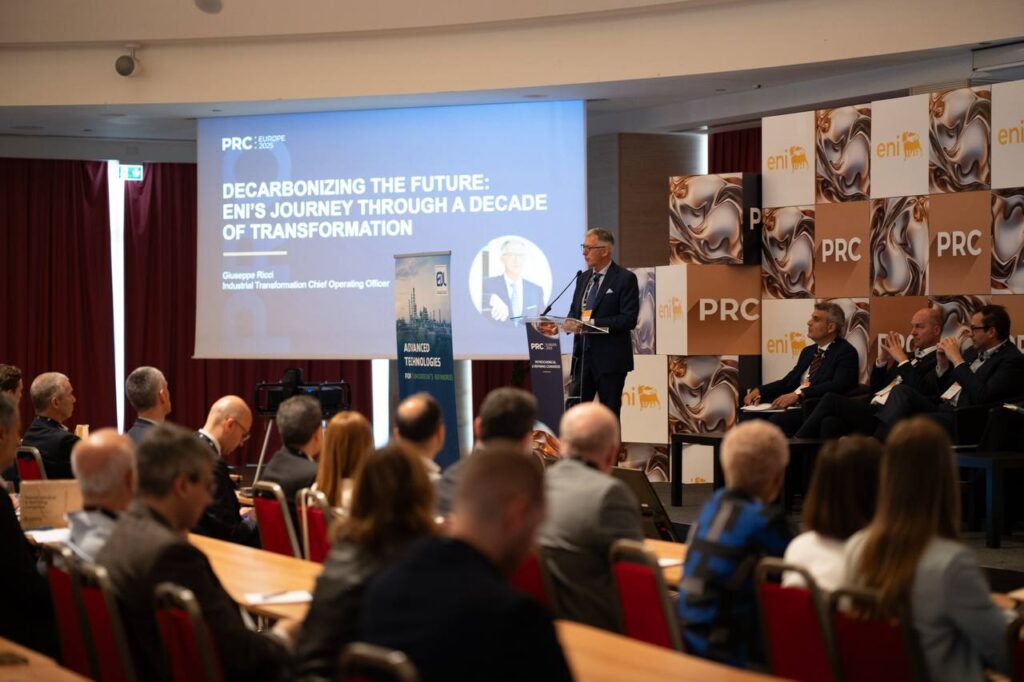
The European energy landscape, a critical battleground for capital allocation and technological innovation, recently saw its focus shift to Milan from May 19th to 21st. The occasion was PRC Europe 2025, a pivotal gathering that convened over 400 leaders and specialists from across the downstream sector. This event was not merely a conference; it served as a strategic forum for forging essential partnerships and architecting solutions poised to redefine the petrochemical and refining industries for the coming era.
Supported by industry giants such as Host Sponsor Eni S.p.A., and Regional Partners including Technip Energies, Sonatrach Raffineria Italiana S.r.l., Wood, and Saras S.p.A., the Congress underscored a collective commitment to navigating the sector’s profound transformation. For investors tracking the evolution of European energy assets, the insights gleaned from this event offer a clear signal of the strategic priorities shaping future profitability and sustainability.
Charting the Course for Downstream Investment
The tone for PRC Europe 2025 was set with an ambitious declaration by Angelina Nizamova, Project Department Director at BGS Group, who stated, “Our industry stands at the crossroads of transformation, and it is our shared commitment to innovation and sustainability that define the next chapter for downstream in Europe.” Alongside Raffaele Perrone, Vice President – Head of Research and Development at S.E.A. Srl, Nizamova’s opening remarks underscored the imperative for modernization and collaborative efforts – keywords for any investor assessing long-term value in the sector. The robust attendance, with over 400 delegates representing the full spectrum of the refining and petrochemical value chain, highlighted the industry’s acute awareness of the challenges and opportunities ahead. The meticulously curated agenda, featuring panels, roundtables, and keynote presentations, provided a comprehensive overview of the trends poised to reshape energy processing in Europe.
Key themes resonated throughout the discussions, directly impacting investment theses. These included advanced decarbonisation strategies, the intricate integration of circular economy principles, breakthroughs in petrochemicals production, and the accelerating development of sustainable fuels. Each of these areas represents significant capital expenditure, potential for disruptive technologies, and evolving regulatory frameworks that will dictate future market leaders.
Day One: The Hydrogen Economy Takes Center Stage
The first day of the Congress sharpened its focus on the burgeoning low-carbon hydrogen ecosystem – a critical area for energy transition investment. Discussions delved into the technological advancements driving clean hydrogen production and the strategic integration of critical infrastructure projects. This included detailed exploration of green hydrogen initiatives and Carbon Capture, Utilisation, and Storage (CCUS) technologies, particularly their application within existing industrial facilities. For investors, these conversations highlighted the tangible progress being made in scaling nascent technologies into viable commercial operations.
Salvatore Giammetti from Eni S.p.A. offered compelling insights into Eni’s Ravenna site, positioning it as a vanguard for carbon neutrality and a potential blueprint for CCUS deployment across Europe. Such projects are vital indicators of significant capital commitment from major players. Furthermore, Hammad Chowdhury of Watlow presented an innovative electrical thermal solution designed for hydrogen production and process heat electrification. This technology exemplifies the drive towards greater efficiency and sustainability, areas where investors seek clear returns and competitive advantages. The session also featured contributions from other key industry stakeholders, including Karl-Heinz Hammes from NEUMAN & ESSER Deutschland GmbH & Co KG, Philip Cooper from Petrofac, Debashis Thakur from Numaligarh Refinery Limited, and Federico Zanellotti from Saipem, collectively painting a picture of an industry actively investing in and building out this transformative infrastructure.
Day Two: Repositioning Refineries for Future Returns
The second day pivoted to tackle the pressing challenges facing refineries and the strategic pathways for their evolution. Discussions centered on critical themes such as repurposing feedstock streams, charting a sustainable trajectory to meet energy transition goals, and unlocking the vast, often untapped, potential within petrochemical products. These are not merely operational concerns but direct financial considerations impacting asset valuations, operational expenditures, and future revenue diversification for downstream companies. The emphasis was on how traditional refining assets can be strategically adapted to remain relevant and profitable in a decarbonizing world.
The Congress culminated with a forward-looking panel dedicated to the present and future of sustainable fuels. This session delved into the latest innovations and explored the possibilities that can significantly accelerate the sector’s decarbonisation efforts. For investors, the sustainable fuels market represents a dynamic growth area, driven by evolving consumer demand, stringent environmental regulations, and technological breakthroughs. Understanding the trajectory of these innovations is crucial for identifying companies poised for leadership in this rapidly expanding segment of the energy market. PRC Europe 2025 unequivocally signaled that the European downstream sector is not merely adapting but actively transforming, presenting both challenges and compelling opportunities for strategic investment in the evolving global energy landscape.