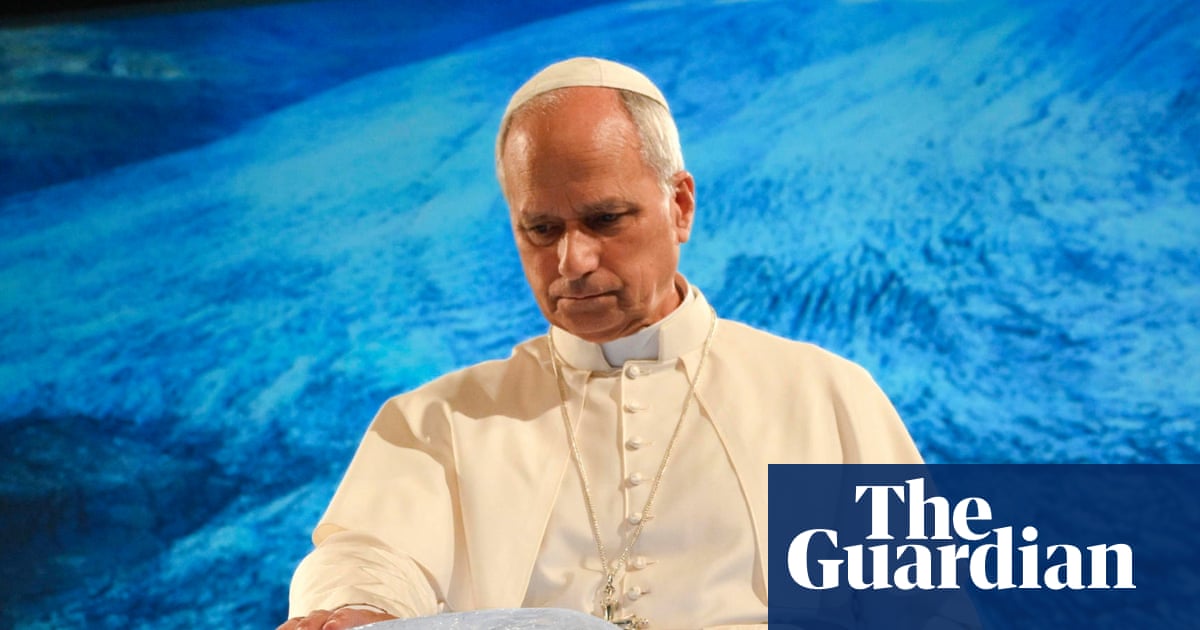
The global oil and gas investment landscape is perpetually shaped by a complex interplay of geopolitics, economic fundamentals, and increasingly, societal pressures. In a recent development that reverberated across environmental circles, Pope Leo XIV delivered a powerful and unequivocal address, reinforcing the Vatican’s commitment to climate action and directly challenging those who “ridicule those who speak of global warming.” This assertive stance, made during the 10th-anniversary celebration of Pope Francis’s landmark ecological encyclical, Laudato Si, carries significant weight, signaling an escalated moral imperative for environmental stewardship that investors in the energy sector cannot afford to ignore. While not a direct market mover, such high-profile endorsements of climate action contribute to the long-term narrative shaping policy, capital allocation, and ultimately, the future demand for hydrocarbons.
The Vatican’s Renewed Climate Mandate and ESG Pressures
Pope Leo XIV’s embrace of Pope Francis’s ecological legacy is more than symbolic; it represents a deepening institutional commitment to the climate cause. Presiding over a gathering south of Rome with 1,000 representatives from environmental and Indigenous groups, Leo urged attendees to pressure national governments for tougher standards to mitigate environmental damage. His hope that the upcoming UN climate conference “will listen to the cry of the Earth and the cry of the poor” underscores the ethical dimensions now firmly integrated into the climate debate. This renewed mandate, coupled with his strong rebuke of climate skeptics – echoing Francis’s 2023 encyclical challenging leaders to commit to binding targets – solidifies the Vatican’s role as a prominent moral voice advocating for a rapid energy transition. For oil and gas investors, this translates into intensified ESG (Environmental, Social, Governance) scrutiny. Institutional investors, increasingly guided by ESG principles, will face heightened pressure to divest from or push for more aggressive decarbonization strategies within their O&G holdings. The Vatican itself is putting its money where its mouth is, giving its blessing to a plan to transform an agricultural field north of Rome into a vast solar farm, a tangible example of prioritizing renewable energy.
Market Volatility Amidst Long-Term Transition Signals
While the Pope’s words set a long-term moral and policy direction, the immediate market remains driven by shorter-term supply and demand fundamentals, though often with a nervous eye on future energy transition impacts. As of today, Brent Crude trades at $90.38, reflecting a significant 9.07% drop within a single day, with its range fluctuating between $86.08 and $98.97. Similarly, WTI Crude has seen a steep decline, currently standing at $82.59, down 9.41%, having traded between $78.97 and $90.34. Gasoline prices mirrored this downward trend, settling at $2.93, a 5.18% decrease. This recent downturn is particularly stark when considering the 14-day Brent trend, which shows a dramatic decrease from $112.78 on March 30th to today’s $90.38 – a nearly 20% decline. This substantial retreat in crude prices signals investor apprehension, potentially stemming from global demand concerns, easing geopolitical tensions, or simply profit-taking after previous highs. While not directly caused by the Vatican’s pronouncements, such market volatility underscores the challenging environment for oil and gas companies, which now must navigate both cyclical price swings and an overarching, growing pressure to transition away from fossil fuels. Investors are asking: how do these short-term market dynamics reconcile with the long-term decarbonization imperative championed by influential global figures?
Upcoming Energy Events and Short-Term Price Catalysts
Against this backdrop of high-level climate advocacy and market volatility, several critical events on the horizon will offer more immediate insights into the trajectory of crude prices. The most prominent is the OPEC+ Full Ministerial Meeting scheduled for April 19th. Our proprietary data indicates that investor interest in OPEC+’s current production quotas is exceptionally high, a clear signal that the market is keenly awaiting any decisions regarding supply adjustments. With Brent having fallen nearly 20% in the past two weeks, will OPEC+ consider further cuts to stabilize prices, or maintain current levels, signaling confidence in eventual demand recovery? Any outcome will have significant ramifications for short-term price action. Following this, the API Weekly Crude Inventory reports on April 21st and 28th, and the EIA Weekly Petroleum Status Reports on April 22nd and 29th, will provide crucial data on U.S. crude stockpiles, refining activity, and product demand. High inventory builds could exacerbate downward price pressure, while draws might offer some respite. Furthermore, the Baker Hughes Rig Count on April 24th and May 1st will offer insights into North American production trends, a key determinant of global supply. These events represent tangible catalysts that could significantly impact oil prices in the coming weeks, providing investors with concrete data points to assess market direction, even as the broader narrative of energy transition continues to evolve.
Investor Sentiment and the Long-Term Outlook for O&G
Our first-party reader intent data reveals a keen investor focus on both immediate market movements and the long-term viability of specific energy investments. Questions such as “what do you predict the price of oil per barrel will be by end of 2026?” highlight the tension between short-term trading and strategic, multi-year positioning. Similarly, inquiries like “How well do you think Repsol will end in April 2026?” demonstrate a granular interest in how individual companies are navigating this complex environment. While no analyst can offer a crystal ball, Pope Leo XIV’s strong stance adds another layer of consideration to these long-term forecasts. His unequivocal call for a “change of heart” and his assertion that Christians “cannot love God… while despising his creatures” is not merely spiritual guidance; it’s a moral framework that will increasingly influence consumer behavior, government policy, and corporate governance. For oil and gas companies, this means the ‘license to operate’ is not just about regulatory compliance but also about social acceptance and demonstrable commitment to decarbonization. Those firms that proactively invest in cleaner technologies, carbon capture, and diversified energy portfolios are likely to be better positioned to attract capital and sustain value in a world increasingly swayed by powerful voices advocating for a rapid shift away from fossil fuels. The Vatican’s own solar farm project serves as a clear signal of the direction in which even traditional institutions are heading.


