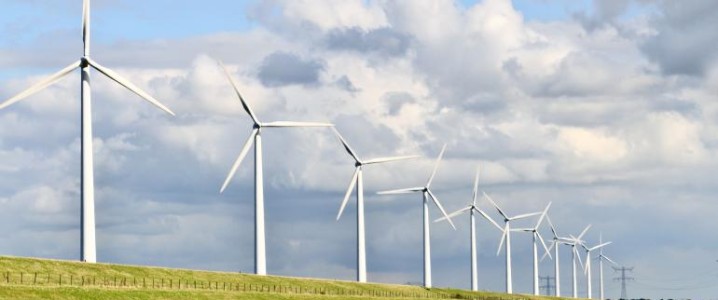
Poland’s Veto: A Setback for Green Transition, a Signal for Fossil Fuel Investors
The recent political maneuvering in Poland has sent a clear, albeit complex, signal to the global energy market. President Karol Nawrocki’s inaugural veto, blocking a bill designed to accelerate onshore wind farm development while bundling it with an energy price freeze, underscores the political friction inherent in Europe’s green transition. This action, framed by the President as countering “blackmail” from the parliamentary majority, creates immediate uncertainty for Poland’s renewable energy targets and, by extension, could prolong the region’s reliance on traditional fossil fuels. For investors, this incident highlights the volatile interplay between ambitious climate goals, national energy security, and domestic political agendas, forcing a re-evaluation of long-term energy investment strategies in a market currently experiencing significant price volatility.
Polish Politics Slows the Green Shift, Sustains Coal Reliance
President Nawrocki’s decision to block legislation aimed at easing the construction of onshore wind farms is a significant development for Poland’s energy landscape. The bill sought to reduce the required distance of wind farms from residential areas and offered incentives for municipalities to expand renewable capacity, all critical steps towards boosting the nation’s clean energy output. While the President indicated support for the bill’s provision to freeze energy prices, his objection to its bundling with wind development rules has effectively stalled progress on renewable expansion. This political impasse means Poland, which still relies on coal for 54% of its electricity in 2024 (down from 70% in 2022 but still dominant), will struggle to meet its ambitious goal of sourcing at least 50% of its electricity from renewables by the end of the decade. Prime Minister Donald Tusk’s sharp criticism, labeling the veto as a move that could lead to “more expensive electricity for all Poles,” further emphasizes the immediate economic and strategic implications. For energy investors, this situation suggests a potentially longer runway for conventional power generation assets in Poland and the broader Central European region, where energy independence and affordability often compete with decarbonization efforts.
Navigating a Volatile Market: Immediate Bearishness Amidst Long-Term Policy Shifts
Even as Poland grapples with its energy transition roadmap, the broader global crude market presents a starkly different picture of immediate price action. As of today, Brent Crude trades at $90.38 per barrel, marking a significant 9.07% decline within the day, with its range spanning $86.08 to $98.97. Similarly, WTI Crude has fallen to $82.59, down 9.41%, trading between $78.97 and $90.34. This sharp downturn is not an isolated event; the 14-day Brent trend reveals a substantial drop from $112.78 on March 30th to $91.87 on April 17th, representing an 18.5% decrease. This immediate bearish sentiment, potentially driven by global demand concerns or an evolving supply outlook, stands in contrast to the longer-term implications of Poland’s delayed renewable build-out. While a slower green transition in a significant European economy might, in theory, support sustained fossil fuel demand over time, the current market dynamic underscores that macro-economic factors and global supply-demand balances are dictating short-term price movements. Investors must therefore contend with both the immediate market volatility and the nuanced, region-specific policy shifts that create diverging signals for different segments of the energy sector.
Investor Focus: Decoding Future Oil Prices and Supply Dynamics
Our proprietary reader intent data reveals a consistent theme this week: investors are keenly focused on the future trajectory of oil prices and the global supply landscape. Questions like “What do you predict the price of oil per barrel will be by end of 2026?” are top of mind, alongside inquiries into “What are OPEC+ current production quotas?” These questions underscore the market’s attempt to synthesize various inputs – from geopolitical risks and economic indicators to policy decisions like Poland’s veto – into a coherent outlook. While Poland’s actions might marginally prolong regional demand for coal and potentially natural gas, the dominant drivers for global crude prices remain firmly rooted in the supply decisions of major producers and the health of the world economy. OPEC+ production levels, influenced by geopolitical stability and demand forecasts, are critical variables. The ongoing internal debates within European nations regarding the pace and cost of decarbonization add another layer of complexity, suggesting that some regions may sustain higher fossil fuel consumption for longer than previously anticipated, even if this impact is overshadowed by broader global dynamics.
Forward Outlook: Key Events Shaping the Energy Landscape
Looking ahead, the energy market’s direction will be heavily influenced by several pivotal upcoming events, providing crucial data points for investors. The immediate focus shifts to the OPEC+ Joint Ministerial Monitoring Committee (JMMC) meeting on April 18th, followed by the full OPEC+ Ministerial Meeting on April 19th. These gatherings are critical for understanding potential shifts in production quotas, which directly impact global crude supply. Further insights into the US market will come from the API Weekly Crude Inventory reports on April 21st and 28th, and the more comprehensive EIA Weekly Petroleum Status Reports on April 22nd and 29th. These inventory figures offer a vital snapshot of US supply and demand dynamics. Additionally, the Baker Hughes Rig Count on April 24th and May 1st will provide an indication of future drilling activity and potential production growth in North America. For investors, these scheduled events offer tangible opportunities to assess the fundamental drivers of the oil and gas market, providing a necessary counterpoint to the political machinations playing out in specific regions like Poland. While political decisions can introduce long-term structural shifts, these immediate data releases will likely dictate the market’s near-term volatility and price direction.


