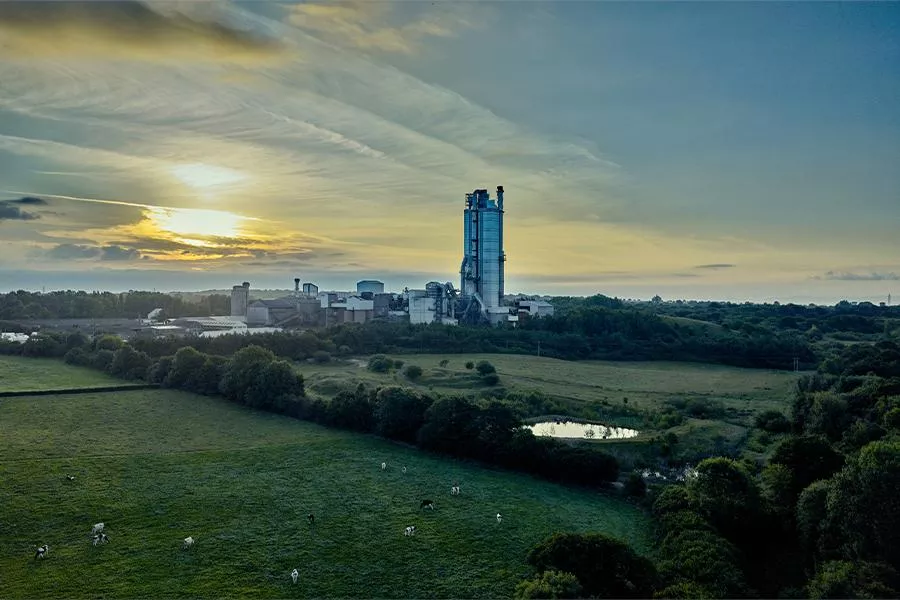
The global energy landscape is undergoing a profound transformation, yet the fundamental infrastructure of oil and gas continues to prove its indispensable value in novel ways. While the world grapples with decarbonization targets, savvy investors are identifying significant opportunities within the oil and gas sector’s pivot towards carbon capture, utilization, and storage (CCUS). Specifically, the strategic repurposing and expansion of pipeline networks for CO2 transport are unlocking new revenue streams and long-term asset value. The recent strides made by Heidelberg Materials, in collaboration with MHI and Worley, on the Padeswood CCS project in the UK serve as a compelling blueprint for how traditional industrial players, backed by engineering expertise, are integrating into the broader energy transition, creating a powerful investment narrative for those looking beyond conventional upstream plays.
Pipeline Infrastructure: The New Backbone of Decarbonization
The Padeswood CCS project, slated to become the UK’s first full-scale carbon capture facility in the cement sector, exemplifies the critical role of pipeline infrastructure in achieving industrial decarbonization. At its core, this initiative relies on the efficient transport of captured CO2 via pipeline for permanent storage in depleted gas fields beneath Liverpool Bay, as part of the wider HyNet North West cluster. This isn’t merely about capturing emissions; it’s about establishing a robust logistics network capable of handling significant volumes of CO2. Cement production, responsible for 7-8% of global CO2 emissions, presents a unique challenge because a substantial portion of these emissions stems from the chemical process of calcination, not just energy consumption. This makes carbon capture the only viable pathway to full decarbonization for the industry. For oil and gas investors, this project highlights a burgeoning market for companies involved in pipeline construction, operation, and maintenance, as well as those specializing in reservoir engineering for CO2 storage. The expertise in managing complex subsurface assets, traditionally a cornerstone of the O&G industry, is now being directly applied to environmental solutions, creating a new layer of value within existing corporate structures.
Navigating Market Volatility with Long-Term CCS Investments
In an energy market characterized by persistent volatility, long-term strategic investments in carbon capture offer a potential hedge and a new growth vector. As of today, Brent Crude trades at $91.87, reflecting a significant downturn of 7.57% within the day, with WTI Crude similarly experiencing a 7.86% drop to $84. This daily fluctuation compounds a broader trend, with Brent having declined by approximately 12.4% from $112.57 on March 27 to $98.57 just yesterday. Such swings naturally prompt investors to ask, “What do you predict the price of oil per barrel will be by end of 2026?” While forecasting short-term price movements remains challenging, the Padeswood project, with its final investment decision made in September 2025 and an operational target of 2029, underscores the long-term commitment required for energy transition projects. These multi-year development cycles, often supported by government initiatives like the UK’s CCUS cluster sequencing program, provide a degree of stability and visibility that can be attractive in a turbulent commodity market. Investing in the infrastructure and technology underpinning CCS allows portfolios to capture growth in the burgeoning green economy without entirely abandoning the foundational expertise of the oil and gas sector.
Upcoming Milestones and Catalysts for the CCS Landscape
The timeline for the Padeswood project offers valuable insights into the gestation period for major CCUS initiatives and potential future catalysts. With the facility set to be operational in 2029, and engineering and procurement phases now underway following a 2024 FEED study, the project’s progression provides tangible milestones for tracking the industrial decarbonization trend. Beyond this specific project, the broader energy calendar continues to shape investor sentiment and strategic decisions. Investors are keenly watching events such as the upcoming OPEC+ Joint Ministerial Monitoring Committee (JMMC) meeting on April 17th and the full Ministerial meeting on April 18th. While these directly address crude production quotas, their outcomes indirectly influence the financial capacity and strategic priorities of major oil and gas producers, many of whom are also exploring or investing in CCUS. Furthermore, regular updates like the EIA Weekly Petroleum Status Report and Baker Hughes Rig Count, scheduled for April 22nd and April 24th respectively, provide crucial context on traditional energy supply and demand dynamics. As the regulatory and incentive landscape for carbon capture solidifies, we anticipate more FIDs on projects leveraging pipeline networks, creating a steady pipeline of engineering, procurement, and construction opportunities that can be tracked alongside these conventional energy market indicators.
Addressing Investor Intent: Value Creation in a Decarbonizing World
Our proprietary reader intent data reveals a consistent theme among investors: a desire to understand long-term value creation in the context of energy transition. Questions like “What do you predict the price of oil per barrel will be by end of 2026?” and “What are OPEC+ current production quotas?” highlight a focus on traditional market drivers, but also an underlying search for resilience. The Padeswood project directly addresses this by demonstrating how existing oil and gas expertise can secure and create value. The project is expected to create approximately 50 new permanent jobs and secure over 200 existing roles, showcasing a tangible economic impact. For companies like Worley, delivering engineering, procurement, and construction management, and MHI, providing advanced CO2 capture technology, these projects represent significant contract wins and a diversification of their service offerings. Oil and gas investors should consider the growing market for specialized services and technologies that facilitate industrial decarbonization. Companies successfully adapting their core competencies – from pipeline integrity management to subsurface storage assessment – to the CCUS sector are positioning themselves for sustainable growth, potentially offering more predictable revenue streams than pure commodity plays and attracting capital increasingly focused on ESG performance.