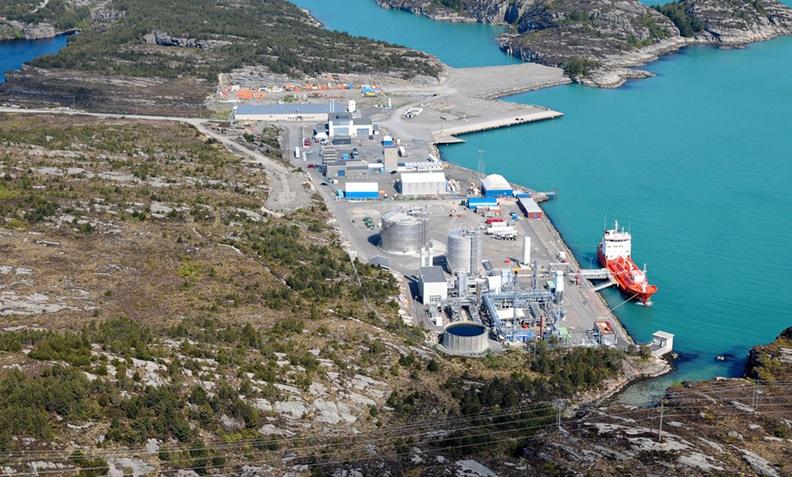
The European energy transition landscape just received a significant boost with the announcement of a groundbreaking direct air capture (DAC) initiative in Norway. Pioneering technology firm Phlair, in conjunction with project developer Carbon Removal and its subsidiary NorDAC Kollsnes AS, has unveiled plans for what is poised to become Europe’s most substantial DAC carbon removal and geological storage facility. This landmark project, situated in Øygarden, Norway, marks a pivotal step in scaling up critical climate mitigation technologies and presents a compelling opportunity for investors tracking the burgeoning carbon management sector.
Europe’s Carbon Capture Horizon Expands with Landmark Norwegian DAC Project
The new facility is strategically positioned adjacent to the existing Northern Lights carbon transportation and storage project, a critical piece of infrastructure designed to facilitate industrial decarbonization across Europe. Initial projections for the DAC plant target an impressive capacity of 60,000 tonnes of atmospheric CO2 removal per year. This ambitious first phase is merely a stepping stone, with plans already in motion to significantly expand operations to an expected 500,000 tonnes annually in the project’s subsequent phase. This scalability underscores the long-term vision and commitment to establishing a robust carbon removal industry capable of making a material impact on global emissions targets.
Direct air capture technology, recognized by the International Energy Agency (IEA) as an indispensable component of achieving a net-zero energy system, functions by extracting carbon dioxide directly from the ambient air. Once captured, this CO2 can either be utilized as a raw material in various industrial processes, fostering a circular carbon economy, or permanently sequestered in geological formations, ensuring its removal from the atmosphere. This dual utility enhances the economic viability and environmental impact of DAC solutions, positioning them as a critical asset in the portfolio of global decarbonization strategies.
The Technology Driving Decarbonization: Phlair’s Innovative DAC Solution
At the heart of this venture lies Phlair’s proprietary DAC system, engineered for optimal efficiency and sustainability. A key differentiator of Phlair’s technology is its design to operate exclusively on solar electricity. This integration with renewable energy sources not only minimizes the operational carbon footprint but also aligns with the broader objectives of sustainable energy development. Furthermore, the system boasts load-flexibility, a feature that allows it to adapt to fluctuating grid conditions, thereby supporting the stability of the electricity network while simultaneously maintaining low CO2 removal costs. This strategic synergy between carbon capture and renewable energy infrastructure is expected to serve as a powerful demonstration of how DAC can achieve sustainable scale, attracting further investment and innovation in the field. The captured carbon is earmarked for permanent geological storage or for transformation into CO2-negative chemicals, opening diverse revenue streams and environmental benefits.
Malte Feucht, Phlair’s CEO, articulated the strategic importance of this development, stating, “Europe stands at a critical juncture and possesses the potential to emerge as a global leader in carbon management. We are actively laying the groundwork for widespread, enduring carbon removal solutions.” His comments highlight the strategic intent behind the project – not just to implement a technology, but to carve out a leadership position for Europe in the evolving carbon economy.
Strategic Location and Infrastructure Advantage: Norway’s Edge in Carbon Management
The selection of Norway as the site for this pioneering project is far from arbitrary. The region offers unparalleled advantages, primarily its existing, robust infrastructure for CO2 storage, epitomized by the Northern Lights project. This ready access to secure geological sequestration sites significantly de-risks the project’s long-term viability and operational efficiency. Moreover, Norway benefits from a national electricity grid powered entirely by renewable sources, primarily hydropower. This 100% renewable power grid provides a clean energy input for the DAC process, ensuring that the carbon removal operations are themselves carbon-neutral, a crucial factor for environmental integrity and investor confidence in ESG-focused ventures.
Eirik Lilledahl, Founder and Chair of Carbon Removal, expressed strong conviction in the venture, remarking, “We hold profound belief in the promising future of DAC within Norway and its significant potential as a large-scale contributor to the global battle against climate change.” His sentiment underscores the strategic alignment of the project with both national climate goals and international decarbonization efforts, positioning it as a key player in the carbon solutions market.
Partnership Dynamics and Market Implications: A Blueprint for Industrial Scale Carbon Removal
The partnership delineates clear roles for each entity, fostering an efficient execution framework. Phlair will contribute its cutting-edge hydrolyzer modules, along with comprehensive engineering services, installation expertise, and commissioning support. Meanwhile, NorDAC will assume responsibility for the broader infrastructure development, overall project management, and operational oversight. A significant facet of this agreement is the exclusivity clause, designating Carbon Removal as Phlair’s sole DAC customer in Norway for the duration of the contract period. This arrangement provides Phlair with a secure market foothold and Carbon Removal with privileged access to advanced DAC technology within the Norwegian market.
For investors, this project signals a maturation of the carbon capture, utilization, and storage (CCUS) market, particularly in the DAC segment. The scale of this initiative, moving from an initial 60,000 tonnes to half a million tonnes per year, demonstrates a clear pathway to industrial-scale deployment, which is critical for driving down costs and making carbon removal economically competitive. The integration with renewable energy and existing storage infrastructure creates a powerful value proposition, mitigating risks often associated with nascent technologies. The potential for generating high-quality carbon removal credits, coupled with the production of CO2-negative chemicals, opens diverse revenue streams that could attract significant capital from institutional investors and venture capitalists focused on sustainable technologies and the circular economy.
Investor Outlook: Opportunities in the Emerging Carbon Economy
As governments and corporations worldwide commit to ambitious net-zero targets, the demand for verifiable and scalable carbon removal solutions like DAC is set to skyrocket. This Norwegian project, with its robust technological foundation, strategic location, and experienced partners, offers a compelling investment thesis in the rapidly expanding carbon economy. It not only addresses an urgent environmental imperative but also creates significant economic opportunities in technology development, project deployment, and carbon asset management.
The successful execution and scaling of this project could serve as a blueprint for future large-scale DAC deployments globally, further de-risking the technology and attracting a broader spectrum of investors. For those looking to capitalize on the energy transition and the burgeoning market for sustainable solutions, this development in Norway represents a tangible and forward-looking investment in the future of net-zero. The strategic collaboration between Phlair and Carbon Removal, leveraging Norway’s unique advantages, is poised to unlock substantial value and accelerate the global journey towards a decarbonized future.


