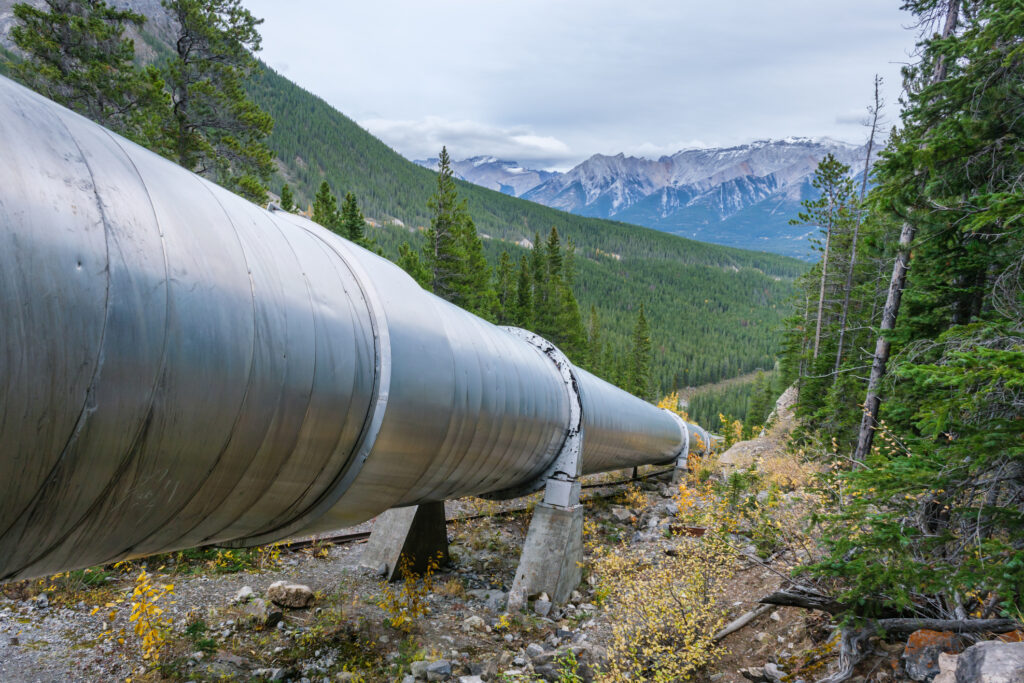
The proposed Western Gateway Pipeline, a collaborative effort between refining powerhouse Phillips 66 and pipeline giant Kinder Morgan, is rapidly solidifying its position as a critical piece of North American energy infrastructure. Designed to transport refined petroleum products from Midwest refineries directly to the demanding California market, this ambitious project addresses long-standing supply chain inefficiencies and promises to reshape regional fuel dynamics. With significant industry, state, and federal backing already secured, and its binding open season recently concluded, the Western Gateway initiative underscores a strategic commitment to energy security and market stability in the face of ongoing regional challenges. Our analysis delves into the project’s strategic importance, its resilience against current market volatility, and its long-term investment appeal, providing critical insights for investors navigating the complex oil and gas landscape.
Strategic Imperative: Bridging Western Fuel Deficits
The Western Gateway Pipeline is poised to become one of the world’s largest conduits for refined petroleum products, drawing parallels to the vital Colonial Pipeline serving the Eastern Seaboard. At its core, the project involves a new-build pipeline segment stretching from Borger, Texas, to Phoenix, Arizona. This new infrastructure will seamlessly integrate with strategic reversals of existing lines: Kinder Morgan’s Santa Fe Pacific Products (SFPP) West Line, currently flowing west-to-east, will be reconfigured to facilitate east-to-west flows into California, while Phillips 66’s Gold Pipeline, presently moving product from Borger to St. Louis, will also be reversed to feed fuels into the Western Gateway system. This comprehensive network is engineered to deliver gasoline, diesel, and jet fuel directly to California, a state notorious for the highest gasoline prices in the nation. The impetus for this project is clear: California’s aggressive policies against the oil and gas sector have led to refinery closures, exacerbating supply constraints and price volatility. With a target completion by 2029, the Western Gateway offers a long-term solution to these structural deficits, promising enhanced reliability and potentially more stable fuel costs for consumers in the Western states.
Navigating Market Volatility: A Long-Term Infrastructure Play
While the broader energy market has recently experienced significant price fluctuations, the strategic importance of projects like the Western Gateway Pipeline remains undiminished. As of today, Brent Crude trades at $91.87 per barrel, reflecting a notable 7.57% decline, with its daily range spanning $86.08 to $98.97. Similarly, WTI Crude stands at $84.00, down 7.86% within a $78.97 to $90.34 daily range. This short-term volatility is also evident in the gasoline market, where prices currently sit at $2.95 per gallon, down 4.85% today. The 14-day trend for Brent crude further illustrates this dynamic, showing a substantial drop from $112.78 on March 30th to $91.87 on April 17th, an 18.5% decrease. However, these market movements underscore, rather than negate, the need for robust infrastructure. Refined product pipelines like the Western Gateway act as a long-term hedge against regional price disparities, ensuring critical supply reaches demand centers irrespective of transient crude price swings. California’s consistently elevated gasoline prices, largely due to isolated supply, highlight the project’s enduring value proposition, providing stability that transcends daily commodity market gyrations.
Securing Support and Investor Confidence
The viability of major infrastructure projects often hinges on securing broad-based support, and the Western Gateway Pipeline has demonstrated remarkable success on this front. Phillips 66 Chief Executive Mark Lashier has publicly affirmed the strong endorsements received from federal, state, and industry circles. The project has garnered significant federal backing, alongside support from states surrounding California, which recognize the economic and logistical benefits of improved fuel distribution. Crucially, local communities, including those near Mescalero Apache land in New Mexico where a new section of the pipeline will cross, have also provided buy-in, mitigating potential social and environmental hurdles. The binding open season for the Western Gateway, which concluded on December 19th, reportedly “went quite well,” according to Lashier. Phillips 66 itself has committed to being a “substantial shipper” on the pipeline, signaling strong internal conviction and providing a foundational revenue stream. This robust and multi-faceted support significantly de-risks the project for investors, indicating a high probability of successful permitting and execution, and reinforcing confidence in its 2029 target completion.
Forward Outlook: Infrastructure Resilience Amidst Event-Driven Markets
Investors frequently grapple with the immediate impact of global energy events on their portfolios, but the long-term perspective offered by strategic infrastructure like the Western Gateway is invaluable. The coming weeks present several key market catalysts: the highly anticipated OPEC+ Ministerial Meeting on April 18th will dictate global crude production quotas, potentially influencing prices. This will be closely followed by the API Weekly Crude Inventory reports on April 21st and 28th, and the EIA Weekly Petroleum Status Reports on April 22nd and 29th, which provide crucial insights into short-term supply and demand balances. Additionally, the Baker Hughes Rig Count on April 24th and May 1st will offer a glimpse into upstream activity. While these events can trigger significant short-term market reactions, the Western Gateway Pipeline, with its 2029 completion target, operates on an entirely different timeline. Its value is derived from addressing fundamental, long-term regional supply constraints and price differentials, offering a layer of resilience and predictable cash flows that are less susceptible to week-to-week market news. This long-cycle investment strategy provides a counterbalance to the inherent volatility of commodity markets, focusing on sustained operational benefits.
Addressing Investor Concerns: Long-Term Value in a Dynamic Sector
Our proprietary reader intent data reveals a clear focus among investors on both short-term performance and long-term price outlooks, with common questions including “what do you predict the price of oil per barrel will be by end of 2026?” and “What are OPEC+ current production quotas?”. These inquiries underscore a desire for certainty in an often unpredictable market. While precise long-term crude price forecasts are inherently challenging, investments in critical energy infrastructure like the Western Gateway Pipeline offer a compelling defensive strategy. Such projects provide durable revenue streams by facilitating the movement of essential refined products, thereby reducing regional price volatility and addressing structural supply gaps. Even if global crude prices fluctuate due to OPEC+ decisions or broader economic shifts—concerns clearly on our readers’ minds—the demand for gasoline, diesel, and jet fuel in a market like California remains robust. Phillips 66 and Kinder Morgan’s initiative is not merely a play on commodity prices; it’s an investment in the indispensable logistics of energy delivery. This foundational role ensures that despite market uncertainties and the dynamic nature of the energy sector, well-supported, essential infrastructure projects like the Western Gateway maintain strong and stable investment appeal, providing a tangible answer to long-term value creation.