The AI Energy Boom: A New Structural Driver for Oil & Gas Investors
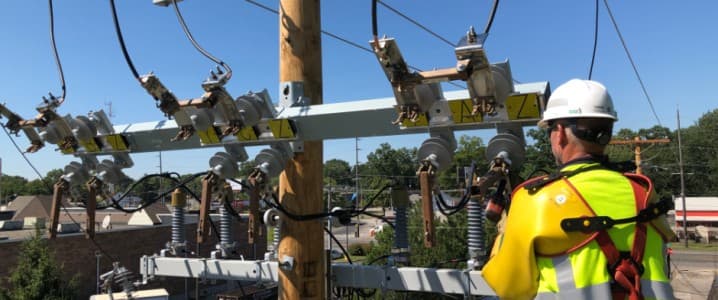
The energy landscape is undergoing a profound transformation, driven not by traditional industrial growth, but by the insatiable appetite of artificial intelligence and cloud computing. While many oil and gas investors focus on geopolitical tensions or supply-side dynamics, a silent, yet seismic shift in electricity demand is emerging as a critical long-term factor. Pacific Gas and Electric’s recent unveiling of a staggering $73 billion grid overhaul plan through 2030 in California highlights this paradigm shift. This massive capital expenditure is a direct response to the projected 10 gigawatts of new load from data centers expected in its service territory, signaling that AI’s energy footprint is no longer a fringe concern but a dominant force reshaping utility planning and, by extension, the broader energy market.
AI’s Power Hunger: A Game Changer for Baseload Generation
The scale of AI’s energy demands is genuinely unprecedented. A single hyperscale AI campus can consume as much power as a small city, putting immense strain on existing grids already grappling with renewable intermittency and increasing climate-related risks like wildfires. California’s grid operator, CAISO, projects peak demand will climb from approximately 46,094 megawatts in 2025 to nearly 52,940 MW by 2030, a 15% increase even before accounting for speculative AI loads. Critically, their 2025 assessment indicates only 2,163 MW of new capacity coming online by mid-year, primarily batteries (1,654 MW) and solar (354 MW). This buildout simply cannot keep pace with AI data center growth trajectories, which are not just confined to California but are being reported by utilities from Virginia to Texas. This creates a clear and immediate need for reliable, dispatchable baseload power, a role increasingly filled by natural gas. For oil and gas investors, this translates into a significant, long-term demand pull for natural gas, potentially underpinning prices and driving investment in upstream production and midstream infrastructure.
Navigating Current Market Volatility Amidst Long-Term Shifts
While the long-term structural demand for energy is clearly trending upwards due to AI, current market dynamics for crude oil show a different picture. As of today, Brent crude trades at $90.38, reflecting a notable decline of 9.07% within its daily range of $86.08 to $98.97. Similarly, WTI crude stands at $82.59, down 9.41% for the day. This recent softening in crude prices, which has seen Brent drop nearly 20% from $112.78 on March 30th to its current level, often leads investors to question the broader energy outlook. Many are asking about the trajectory of oil prices by the end of 2026. This disconnect between a robust, growing electricity demand forecast and a volatile crude market highlights the importance of distinguishing between short-term macro pressures and fundamental, structural changes. While crude prices react to immediate supply-demand balances and geopolitical events, the relentless growth in AI’s energy consumption represents a more enduring, foundational shift, particularly for natural gas and associated infrastructure.
Upcoming Events and Their Impact on Investment Strategy
For investors focused on the near-term, critical events are on the horizon. The OPEC+ Full Ministerial Meeting on April 19th will be a key determinant of crude supply policy and market sentiment. Decisions on production quotas directly influence global oil prices and can introduce significant volatility. Following this, the API Weekly Crude Inventory reports on April 21st and 28th, along with the EIA Weekly Petroleum Status Reports on April 22nd and 29th, will offer crucial insights into U.S. supply and demand balances. These weekly data points, alongside the Baker Hughes Rig Count on April 24th and May 1st, provide a pulse on production activity and can cause short-term price fluctuations. While these events are vital for tactical trading and short-term positioning, the strategic investor must consider them within the context of the larger energy transition and structural demand drivers like AI. The ongoing need for reliable power to fuel data centers reinforces the long-term utility of natural gas, offering a compelling investment thesis irrespective of immediate crude price swings.
Investment Implications: Beyond the Barrel for Energy Infrastructure
The implications for oil and gas investors extend beyond simply predicting crude prices. The massive grid upgrades in California, with PG&E’s $73 billion plan and the state’s estimated $30 billion in additional transmission and distribution needs, underscore a huge capital expenditure cycle in energy infrastructure. This creates significant opportunities for companies involved in natural gas production, transportation, and storage, as natural gas often serves as the crucial bridge fuel for baseload power generation in a rapidly expanding electricity market. Furthermore, the focus on grid hardening and undergrounding projects, while addressing wildfire risks, is now being folded into a broader grid expansion blueprint driven by AI. This suggests that investment in resilient, high-capacity energy delivery systems will be a priority. For sophisticated energy investors, the challenge is to identify companies that are well-positioned to benefit from this dual need for increased electricity generation capacity and the robust infrastructure required to deliver it reliably. This long-term trend could offer substantial returns for those who look beyond the immediate headlines and invest in the foundational energy solutions powering the future of AI.


