PetroChina’s Dagang Refinery Achieves Landmark 1,000 Days of Advanced Alkylation Operation
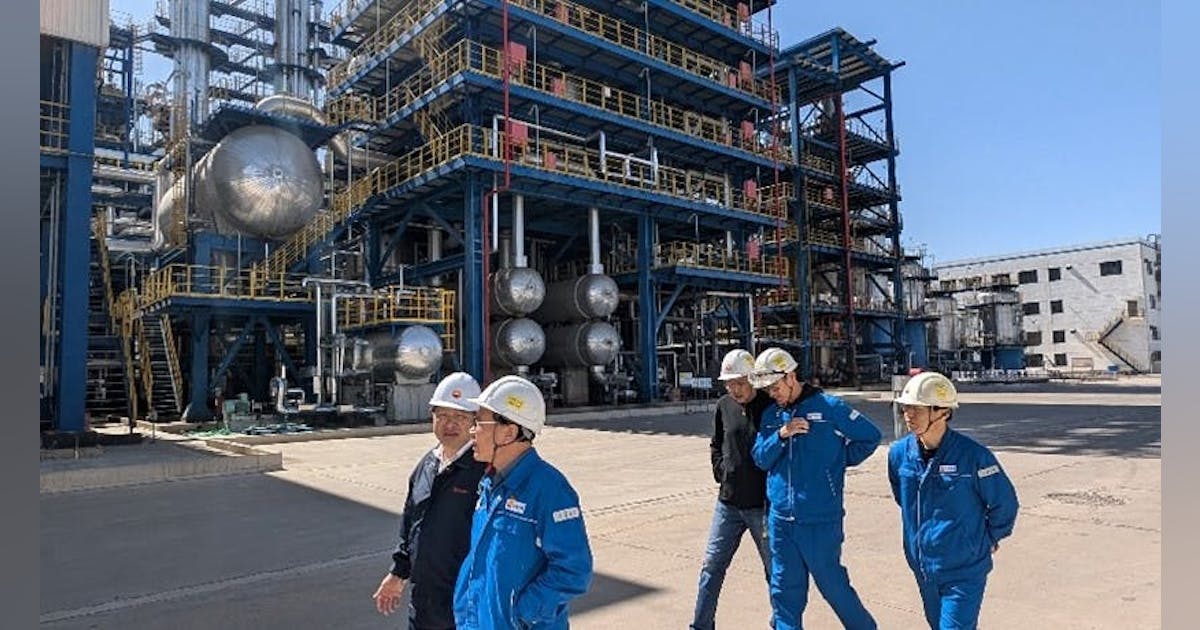
PetroChina Dagang Petrochemical Co. has marked a significant operational achievement, successfully completing 1,000 consecutive days of continuous production on its cutting-edge Ionikylation unit. This facility, powered by Composite Ionic Liquid (CIL) alkylation technology, is pivotal for manufacturing high-octane alkylate at the company’s 5-million tonne per year (tpy) refinery situated in Dagang, Tianjin, along China’s northeastern Bohai Sea coast. This milestone, reached on May 12, underscores the robust performance and reliability of advanced refining processes crucial for meeting evolving fuel standards and enhancing profitability in the global energy market.
Driving Clean Fuel Production and Market Competitiveness
Commissioned in mid-August 2022, the 150,000-tpy CIL unit is a cornerstone of Dagang’s fuel production strategy. Its primary role is to produce alkylate with an impressive Research Octane Number (RON) of 98, a critical component that enables the refinery’s 1.5-million tpy gasoline output to consistently meet China’s stringent National VI emission standards, equivalent to Euro 6. This compliance is not merely regulatory; it’s a strategic advantage, ensuring PetroChina’s products remain competitive and desirable in a market increasingly prioritizing cleaner energy solutions. The sustained, high-quality production from this unit directly supports PetroChina’s market position and revenue stability by minimizing the need for costly blending components or non-compliant product adjustments.
Innovation in Catalyst Technology Signals Future Efficiency Gains
The operational success extends beyond mere uptime. Well Resources Inc., the global licensor of the CIL technology, also revealed promising advancements in catalyst efficiency. Field testing of a next-generation CIL catalyst formulation, initiated in late 2023, has already demonstrated a remarkable 35% reduction in the unit’s catalyst-consumption rate compared to its original design specifications. This significant improvement translates directly into lower operational expenditures for PetroChina, bolstering the unit’s economic viability and enhancing profit margins. Reduced catalyst usage also often implies less waste generation and potentially extended maintenance cycles, further contributing to the refinery’s overall sustainability and efficiency profile. Investors should view such technological enhancements as direct drivers of long-term asset value and operational resilience.
Strategic Process Optimization and Environmental Leadership
PetroChina Dagang Petrochemical, a key subsidiary of the publicly listed PetroChina Co. Ltd. (itself an arm of state-owned China National Petroleum Corp.), is not resting on its laurels. Discussions are actively underway with Well Resources Inc. to explore additional process-optimization initiatives for the CIL-configured alkylation unit. These forward-looking efforts aim to further enhance the unit’s performance, efficiency, and potentially its capacity, signaling a continuous commitment to innovation and operational excellence. The Ionikylation process, developed by Beijing-based China University of Petroleum, is inherently designed for environmental stewardship. It utilizes a proprietary CIL catalyst that fundamentally eliminates the reliance on highly corrosive and hazardous chemicals like hydrofluoric (HF) and sulfuric acids, which are traditionally used in alkylation. This safety advantage drastically reduces environmental risks and operational complexities, producing low-sulfur, high-octane alkylate that is free of sulfur, benzene, olefins, and aromatics, thereby exceeding increasingly stringent global clean-fuel standards.
Proven Technology with a Track Record of Success
The successful operation at Dagang is not an isolated incident but rather builds on a proven track record for Ionikylation technology. In 2020, this ionic liquids-based process made headlines as the first of its kind to be commercially deployed in a revamp scenario. This groundbreaking application occurred at China Petroleum & Chemical Corp. (Sinopec) subsidiary Wuhan Petrochemical Co. Ltd.’s 8.5-million tpy refinery in Wuhan City, Hubei Province. There, it successfully transformed an existing hydrofluoric acid-based alkylation unit, demonstrating its scalability and efficacy in upgrading older infrastructure to modern, safer, and more environmentally friendly standards. This prior success at Wuhan underlines the CIL technology’s robustness and its potential for wider adoption across China’s vast refining sector, offering a pathway for other refiners to transition away from riskier conventional processes while enhancing fuel quality.
Investor Outlook: Sustainable Growth and Reduced Risk
For investors tracking the oil and gas sector, particularly within the refining segment, PetroChina’s achievements at Dagang represent a compelling narrative of sustainable growth and reduced operational risk. The consistent production of high-octane, low-sulfur fuels positions PetroChina advantageously in a market demanding cleaner energy. The adoption of CIL technology not only addresses critical environmental and safety concerns but also drives significant economic benefits through operational stability, enhanced efficiency, and reduced catalyst consumption. The ongoing pursuit of process optimization further signals a proactive management approach focused on maximizing asset value and ensuring long-term competitiveness. These technological and operational advancements are vital for PetroChina to navigate evolving regulatory landscapes and maintain its leadership in China’s dynamic energy market, making it an attractive prospect for those focused on responsible and profitable energy investments.