Persistent Heat: O&G Demand & Climate Risks
The recent severe heatwaves sweeping across vast swathes of the United States are more than just a summer inconvenience; they represent a critical inflection point for energy markets and investment strategies. With temperatures reaching historical highs across the northern and middle US, impacting nearly 130 million people under extreme heat warnings and advisories, the immediate implications for energy demand are palpable. Beyond the immediate surge in electricity consumption for cooling, these events underscore an accelerating trend of climate volatility, posing both direct operational challenges and long-term strategic questions for oil and gas investors.
Surging Demand in a Scorching Summer Start
The intensity and geographic spread of these early summer heatwaves have placed immense strain on power grids, driving a significant uptick in energy demand for cooling. Reports of power emergencies and advisories to conserve energy highlight the system’s vulnerability. This immediate demand shock translates directly into increased consumption of natural gas for power generation, given its prominent role in the US electricity mix. While transportation disruptions, such as buckling roads and suspended rail services, might suggest a localized dip in refined product demand, the overarching need for air conditioning and refrigeration creates a net positive pull on energy resources. As of today, Brent crude trades at $95.19, up 0.42% for the session, within a daily range of $91-$96.89. WTI crude mirrors this sentiment at $91.74, a 0.5% gain, trading between $86.96 and $93.3. Gasoline prices also saw an uptick, reaching $3, a 1.01% increase from its daily low of $2.93. This modest upward pressure in refined products, despite Brent’s recent 14-day trend showing an 8.8% decline from $102.22 to $93.22, hints at the underlying demand strength driven by these extreme weather patterns, even as broader market forces exert downward pressure on crude.
Climate Science & the Growing Physical Risk to O&G Infrastructure
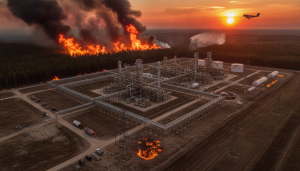
Climate scientists attribute the current heat dome phenomena to a rapidly warming Arctic, leading to “stuck” weather patterns caused by a wavier polar jet stream. A recent study published in the Proceedings of the National Academy of Sciences indicates that these stalled atmospheric patterns have tripled over the last 70 years, a development previously predicted by climate models but now empirically demonstrated. This escalating frequency of extreme weather, which can also manifest as heavy rainfall and floods, presents tangible physical risks to oil and gas infrastructure. High temperatures can stress pipelines, lead to operational disruptions at refineries, impact drilling operations, and strain power grids crucial for O&G facilities. For instance, the National Weather Service reported daily heat records set in at least 50 cities in the eastern US on a single Tuesday, with New York City experiencing its hottest day since 2012. Such conditions not only elevate operational costs due to increased cooling requirements and maintenance but also pose direct threats to safety and asset integrity, demanding robust adaptation strategies from energy companies.
Investor Outlook: Pricing in Climate Volatility and Long-Term Transition
A key question for many investors currently revolves around establishing a base-case Brent price forecast for the next quarter, alongside understanding the consensus 2026 Brent forecast. The escalating frequency and intensity of climate events, exemplified by these heatwaves, introduce a critical variable into these projections. Climate Central estimates that recent high temperatures were at least five times more likely to occur due to human-caused climate change, with scientists warning that such heatwaves will become “normal” by mid-century. This shift fundamentally alters the risk profile of oil and gas investments. It’s no longer just an ESG consideration but a direct operational and market risk that must be priced in. Companies with resilient infrastructure, diversified portfolios, and clear transition strategies will likely be favored. Investors are increasingly evaluating how climate-induced demand volatility, potential regulatory shifts, and the physical security of assets impact long-term capital allocation decisions. The human toll, with nearly 22,000 heat-related deaths in the US between 1999 and 2023, also amplifies societal pressure for energy transition, further influencing investor sentiment and strategic planning.
Navigating Supply Policy Amidst Climate Headwinds
The energy market calendar for the coming weeks will offer crucial insights into supply dynamics, which now must be viewed through the lens of accelerating climate volatility. The Baker Hughes Rig Count, scheduled for April 17th and 24th, will provide a snapshot of North American drilling activity, potentially reflecting any immediate operational impacts or adjustments in response to weather patterns. More significantly, the OPEC+ JMMC meeting on April 18th, followed by the Full Ministerial Meeting on April 20th, will be closely watched. While these discussions traditionally center on geopolitical factors and global economic growth, the increasing frequency of climate-driven demand shocks, whether upwards due to cooling needs or downwards from economic disruption, adds another layer of complexity to quota decisions. Furthermore, the API Weekly Crude Inventory (April 21st, 28th) and the EIA Weekly Petroleum Status Report (April 22nd, 29th) will offer granular data on US crude and product stocks. These reports will be critical in assessing how sustained periods of extreme heat are translating into actual inventory draws or builds, providing real-time indicators of demand and supply balances in a market increasingly influenced by unpredictable climate phenomena.