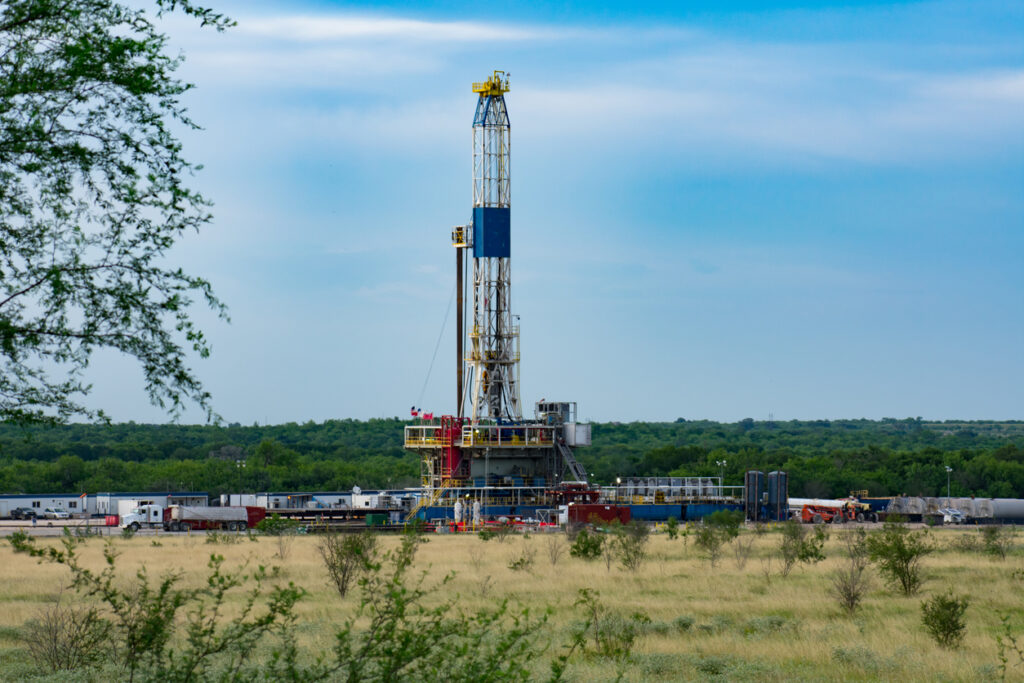
The Permian Basin, a titan of American energy production, continues to command significant attention from investors and industry analysts alike. From a robust 2.2 million barrels per day (bpd) in 2017, this prolific shale play now churns out over 6 million bpd, single-handedly accounting for nearly half of the nation’s total crude output. Despite multiplying predictions of an imminent production peak, the consensus from leading consultancies like Wood Mackenzie suggests the Permian still holds substantial reserves and growth potential, provided market conditions, particularly oil prices, remain supportive.
Navigating the Shifting Growth Trajectory
While the Permian’s exponential “boom days” might be a relic of the past, characterized by rapid, aggressive expansion, the basin remains a cornerstone of global oil supply. Recent trends indicate a deceleration in production growth, primarily driven by a confluence of rising operational costs and a volatile, often softer, oil price environment. This slowdown is not an anomaly but a widely anticipated phase for a mature, albeit still highly productive, basin.
Industry forecasts largely concur on this tempered growth outlook. For the current year, Wood Mackenzie projects the Permian will add approximately 200,000 bpd to its daily output, pushing the total to an impressive 6.6 million bpd. This represents a substantial volume, underscoring the basin’s continued importance, even if the pace of expansion moderates from its prior blistering rate.
The Peak and Plateau: A Long-Term Vision
Looking further down the horizon, analysts from Wood Mackenzie predict Permian production will ultimately peak at 7.7 million bpd around 2035. Crucially, their outlook challenges the conventional wisdom that a peak inevitably precipitates a steep decline. Instead, the Permian is expected to enter a prolonged plateau phase at this elevated level. This sustained high output is vital, as it is projected to more than compensate for natural declines in other legacy producing regions across the United States. Such a scenario implies a healthy underlying demand for crude oil, capable of absorbing these sustained volumes and supporting stable pricing for an extended period.
For investors, this “peak and plateau” narrative offers a compelling long-term value proposition. Companies with significant leasehold positions and established infrastructure in the Permian are positioned to generate consistent cash flows for decades, even in a slower growth environment. The emphasis shifts from rapid expansion to efficient resource management and optimized recovery, maximizing returns from existing assets rather than solely pursuing new drilling frontiers.
Addressing Geological and Operational Realities
Beneath the surface of this optimistic long-term outlook, operational realities present evolving challenges. The Permian Basin is witnessing a discernible rise in both the gas-to-oil ratio (GOR) and the water-to-oil ratio (WOR) across various formations. These trends serve as geological indicators that some wells and sub-basins are reaching their natural maturity, suggesting that incremental drilling may yield proportionally smaller oil volumes compared to earlier stages of development. This necessitates more sophisticated completion techniques and enhanced oil recovery strategies, which can, in turn, increase capital expenditure.
These geological considerations have not escaped the attention of major industry players. Some executives from integrated oil majors have publicly voiced predictions of a U.S. peak oil supply arriving well before 2035. While these perspectives diverge from Wood Mackenzie’s more extended plateau scenario, they highlight the inherent uncertainties in long-term forecasting and underscore the dynamic nature of shale resource development. Savvy investors understand that while expert analyses provide valuable guidance, market fundamentals and operational challenges can shift, requiring constant re-evaluation.
Regulatory Hurdles and Environmental Concerns
Adding another layer of complexity to the Permian’s operational landscape are growing environmental and regulatory concerns, particularly around wastewater disposal. The vast quantities of produced water, a byproduct of hydraulic fracturing, require careful management. Concerns about potential leakage from underground injection reservoirs and its correlation with increased seismic activity have gained prominence. In response, the Railroad Commission of Texas (RRC), the state’s primary oil and gas regulator, has begun implementing restrictions on the volume of wastewater disposed of underground in certain high-risk areas. These restrictions aim to mitigate pressure buildup in subsurface formations, thereby reducing seismic risk.
While essential for environmental stewardship, these regulatory actions have direct implications for drilling economics and operational efficiency. Reduced wastewater disposal capacity can lead to increased trucking costs, delays in well completions, and potentially higher overall operating expenses for producers. For investors, monitoring the evolving regulatory framework and its impact on production costs and timelines is crucial, as it directly affects profitability and capital allocation decisions within the basin.
Strategic Imperatives for Permian Operators
Given the nuanced outlook – slower growth, geological constraints, and regulatory pressures – what lies ahead for major Permian operators? As Wood Mackenzie aptly notes, “The prospect of substantial production growth and low-cost barrels has been a magnet for the US industry for more than a decade. Organic investment complemented by M&A and consolidation have made the Permian a huge store of future value.” This observation remains highly relevant.
Companies with extensive Permian holdings are now pivoting their strategies. The focus is increasingly on optimizing existing assets, employing advanced drilling and completion techniques to maximize recovery, and driving down per-barrel costs through economies of scale. Mergers and acquisitions (M&A) and continued consolidation are expected to play a critical role, allowing larger entities to achieve greater operational efficiencies, leverage integrated infrastructure, and enhance their financial resilience in a more mature market. For investors, identifying companies with strong balance sheets, proven operational excellence, and strategic growth through accretive M&A will be key to unlocking value in this evolving environment.
Investment Outlook: Sustained Value in a Maturing Basin
The Permian Basin’s narrative is transitioning from one of explosive, often unbridled, growth to a more measured, sustainable development phase. While the days of rapid double-digit percentage growth may be behind us, the basin’s capacity for sustained, high-volume production remains unparalleled. With forecasts pointing to a plateau of 7.7 million bpd extending well into the 2030s, the Permian continues to represent a robust, long-term asset for energy investors.
Successful investing in the Permian now requires a focus on efficiency, technological adoption, and strategic asset management. Companies that can navigate rising costs, adapt to geological challenges, and comply with evolving regulatory landscapes will be best positioned to deliver consistent returns. The Permian Basin, far from being “done,” is merely entering its next chapter – one characterized by enduring value, strategic optimization, and a continued, albeit more deliberate, contribution to global energy markets.