Leading the Green Shift: PepsiCo and Fertiberia’s Alliance Signals Major Decarbonization Push in Agriculture
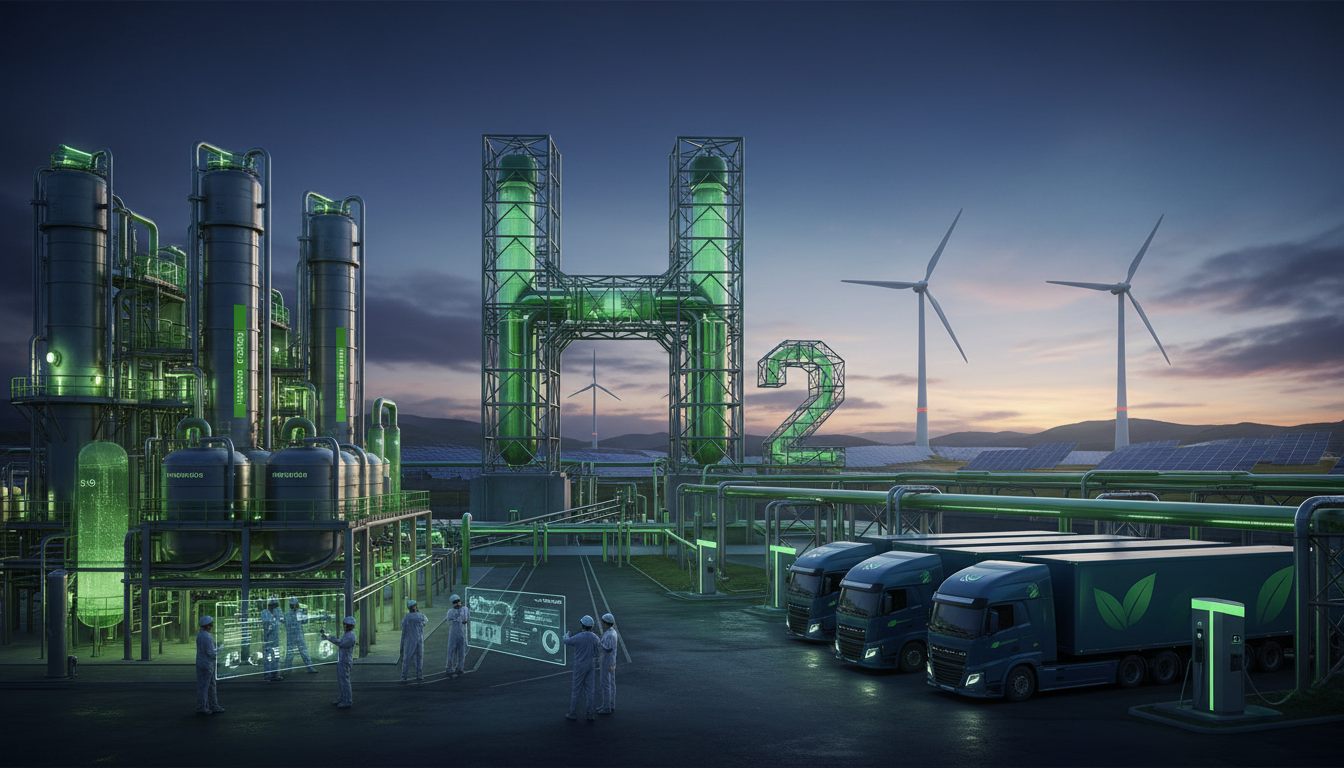
The global energy transition continues to reshape industrial landscapes, and a significant new multi-year agreement between food and beverage titan PepsiCo and industrial chemicals specialist Fertiberia underscores the accelerating imperative for decarbonization within agricultural supply chains. This landmark partnership, focusing on the scaled deployment of low-carbon, green hydrogen-based fertilizers across PepsiCo’s vast European agricultural operations, sends a clear signal to investors about the material shift towards sustainable practices impacting commodity markets and energy demand.
Fertilizer production and application currently contribute approximately 2% of global greenhouse gas emissions. For PepsiCo, specifically, the process of producing and utilizing fertilizers accounts for roughly half of the average carbon footprint associated with a potato in Europe. This substantial environmental impact has positioned fertilizer innovation as a critical leverage point for the company in its broader sustainability agenda.
The initiative is a cornerstone of PepsiCo’s ambitious environmental objectives. The multinational aims to implement regenerative, restorative, or protective practices across 10 million acres globally by 2030. Furthermore, it targets a 30% reduction in Scope 3 forest, land, and agriculture (FLAG) emissions by 2030, benchmarked against a 2022 baseline. Such aggressive targets highlight the growing pressure from stakeholders, including investors and consumers, for tangible action on climate change.
Archana Jagannathan, Chief Sustainability Officer for PepsiCo Europe, the Middle East, and Africa, emphasized the strategic importance of this transition, stating, “Adopting low-carbon fertilizers represents one of our most potent tools for mitigating agricultural emissions. This journey towards transforming our food system is further bolstered by the integration of advanced digital technologies.” This commentary underscores the dual-pronged approach of product innovation combined with operational efficiency.
Spain-headquartered Fertiberia stands at the forefront of this agricultural revolution, specializing in low-carbon crop nutrition solutions, green ammonia, and green hydrogen technologies designed to drastically reduce emissions across the entire agricultural value chain. Their expertise is pivotal in enabling large-scale decarbonization efforts.
Green Hydrogen at Scale: A Deep Dive into the Agreement’s Financial & Operational Impact
Under the terms of the new alliance, Fertiberia will commit to supplying PepsiCo with an impressive volume of up to 150,000 tons of its proprietary Impact Zero crop nutrition solutions annually by the close of the decade. This substantial commitment is projected to cover approximately 400,000 acres, equivalent to about 162,000 hectares, of farmland dedicated to cultivating essential crops for PepsiCo’s European portfolio. These crops include vital ingredients such as potatoes, corn, sunflower, sugar beet, and rapeseed, which are integral to popular brands like Lay’s, Doritos, Ruffles, and Cheetos.
The agreement’s magnitude is informed by a successful pilot program previously conducted by PepsiCo and Fertiberia across Spain and Portugal. During these trials, the application of Fertiberia’s low-carbon fertilizers yielded significant emission reductions: up to 15% in potato farming and an even more substantial 20% in corn cultivation. These quantifiable results provide a robust financial and environmental justification for the expanded rollout, demonstrating the operational viability and efficacy of these next-generation fertilizers.
This scaled deployment will initially target key European markets, commencing in France, Romania, Serbia, Greece, and Turkey. Concurrently, existing initiatives in Spain and Portugal will be expanded. The companies have also signaled intentions to progressively extend the partnership to additional European nations, indicating a broad, long-term strategic pivot across the continent.
Beyond the direct supply of low-carbon fertilizer, the collaboration extends to providing comprehensive support for farmers. This includes offering crucial technical guidance and access to digital tools, such as precision agriculture technologies. These innovations are designed to optimize fertilizer application, minimize waste, and enable precise tracking of regenerative agriculture practices, further enhancing the environmental and economic returns for farming partners.
David Herrero, Chief Operating Officer at Fertiberia, highlighted the technological advancements driving their solutions: “Since 2022, we have been at the forefront of developing hydrogen-based fertilizers with a significantly reduced carbon footprint. Our pioneering NSAFE technology, the world’s first nitrification bio-inhibitor, effectively mitigates nitrogen losses and expedites the green transformation of European agriculture. This ongoing journey gains profound momentum through the confidence placed in us by collaborators like PepsiCo, as we collectively work towards decarbonizing agri-food value chains.”
Investor Outlook: Green Hydrogen, Supply Chain Resilience, and ESG Value
For investors tracking the energy transition, this alliance represents more than just an environmental endeavor; it’s a strategic move with significant financial implications. The escalating demand for green hydrogen and its derivatives, like green ammonia for fertilizer production, signals a burgeoning market that traditional oil and gas players are increasingly eyeing. Investment in technologies and infrastructure supporting green hydrogen production and utilization will see continued growth, driven by such large-scale industrial off-take agreements.
The partnership also highlights the increasing importance of supply chain resilience and decarbonization as core components of corporate strategy. By mitigating a substantial portion of their Scope 3 emissions, PepsiCo not only enhances its ESG profile but also de-risks its operations against future carbon pricing mechanisms and regulatory pressures. Companies demonstrating leadership in sustainable practices are increasingly favored by institutional investors, translating into lower cost of capital and enhanced brand value.
Furthermore, the focus on digital tools and precision agriculture indicates a broader trend towards technologically driven efficiency in the agricultural sector. This creates investment opportunities in agricultural tech (AgriTech) firms and data analytics platforms that support regenerative farming and optimized resource use. The ripple effect across the commodity markets for fertilizers, particularly low-carbon variants, will become more pronounced as more major food producers follow PepsiCo’s lead.
This initiative by PepsiCo and Fertiberia serves as a potent illustration of how green hydrogen is moving from concept to industrial application, fundamentally altering the production landscape for essential commodities. It signifies a long-term commitment to sustainability that will reshape investment portfolios and accelerate the global energy transition, proving that environmental stewardship and robust financial performance can, and increasingly must, go hand-in-hand.


