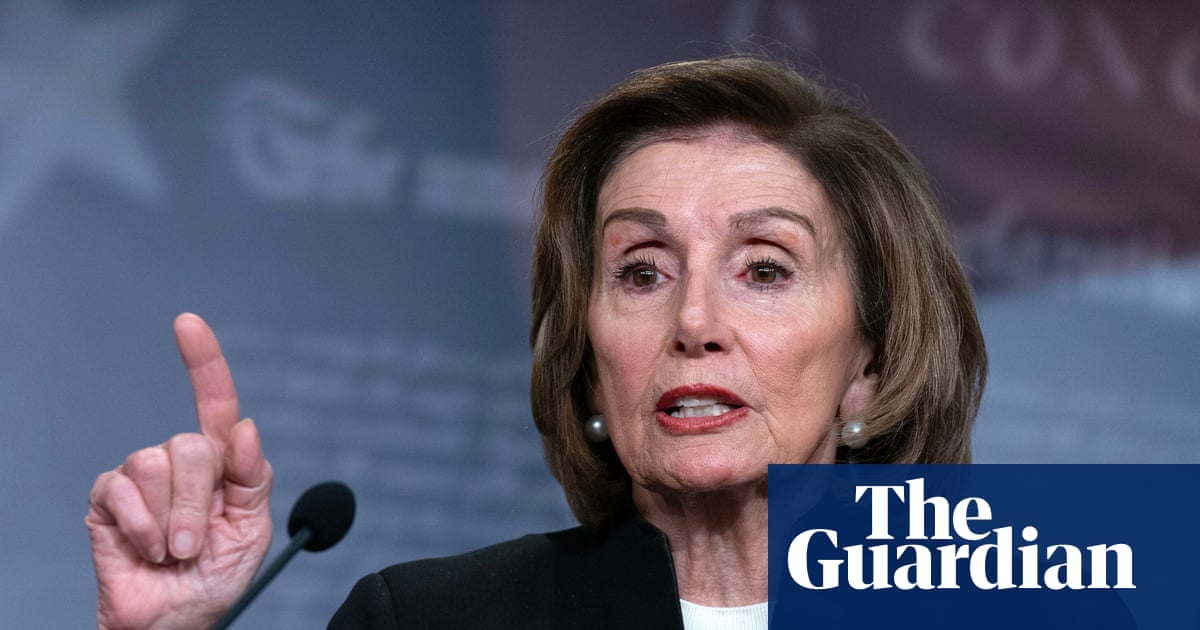
The recent public exchange between Speaker Emerita Nancy Pelosi and former President Donald Trump regarding climate policy serves as more than just political theater; it’s a critical signal for energy investors. Their starkly opposing views on the climate crisis and the role of fossil fuels highlight a deep ideological chasm within American politics, promising significant policy volatility that could reshape investment landscapes in the coming years. Trump’s characterization of climate action as a “con job” directly contrasts with Pelosi’s assertion that his stance is merely “projecting” his own alignment with the fossil fuel industry. This fundamental disagreement, underscored by the Trump administration’s unprecedented absence from the COP30 climate summit in Belém, Brazil, creates an environment of profound uncertainty. For those navigating the complex world of oil and gas investments, understanding the potential shifts in regulatory frameworks, incentives, and international commitments stemming from this ideological battle is paramount for strategic positioning and risk mitigation.
Policy Divergence and its Investment Implications
The core of this policy clash revolves around the future of the fossil fuel industry in the United States. Democrats, represented by figures like Senator Sheldon Whitehouse and House Democratic Leader Hakeem Jeffries, vociferously criticize Trump’s perceived allegiance to “big billionaire fossil fuel donors.” Whitehouse, attending COP30 despite being denied an official US badge, emphasized that Trump “does not represent the United States” on climate matters, but rather the industry. This perspective suggests that a future Democratic administration would likely double down on stringent climate regulations, potentially rejoining international accords like the Paris Agreement and implementing policies aimed at accelerating the energy transition. Conversely, a return of a Trump administration would likely entail a rollback of environmental protections, a renewed push for domestic fossil fuel production, and a continued disengagement from international climate efforts. For investors, this creates a binary risk: significant capital allocation towards renewables and carbon capture under one scenario, or a resurgence of traditional oil and gas exploration and production under the other. The lack of a clear, bipartisan long-term energy strategy in the US makes forecasting returns and managing regulatory risk exceptionally challenging.
Current Market Headwinds Amidst Political Noise
While the long-term policy outlook remains clouded by political contention, short-term market dynamics continue to exert immediate pressure on energy prices. As of today, April 17, 2026, Brent Crude is trading at $90.93 per barrel, marking a significant 8.51% decline from its opening. WTI Crude also saw substantial downward movement, settling at $83.17, down 8.77% on the day. Gasoline prices have followed suit, dropping 4.85% to $2.94. This sharp daily correction follows a broader trend, with Brent having fallen by $14, or 12.4%, from $112.57 on March 27 to $98.57 on April 16. This pricing environment, characterized by volatility and downward pressure, suggests broader market anxieties, possibly related to global economic outlooks or perceptions of oversupply. The political posturing around climate policy, while not the direct cause of day-to-day price swings, adds another layer of uncertainty. Investors are left to grapple with immediate supply-demand fundamentals while simultaneously factoring in the potential for radical policy shifts that could fundamentally alter the cost of doing business in the energy sector, irrespective of immediate market conditions.
Investor Focus: Navigating Future Price Trajectories and Supply Management
In this climate of market flux and policy uncertainty, investor attention is keenly focused on future price trajectories and the stability of global supply. Many in our community are actively asking about the long-term outlook, with a frequent query being, “what do you predict the price of oil per barrel will be by end of 2026?” The answer to this complex question hinges on several factors, including the effectiveness of OPEC+ in managing production quotas. Currently, there’s significant interest in “OPEC+ current production quotas” as the cartel’s decisions directly influence global supply balances. The political divide in the US adds another layer to this forecast. A pro-fossil fuel administration could theoretically boost US output, potentially challenging OPEC+’s market control, while a climate-focused administration might restrict domestic drilling, indirectly aiding OPEC+ in price support. This interplay between geopolitical policy, cartel decisions, and market demand makes precise predictions difficult. However, it underscores the need for investors to remain agile, closely monitoring both the political landscape and the tangible actions of key oil producers, recognizing that US energy policy shifts could significantly alter the supply side of the global equation.
Upcoming Catalysts on the Horizon
Even as the long-term policy debate rages, several crucial events in the immediate future will provide critical short-term direction for the oil and gas markets. The OPEC+ Joint Ministerial Monitoring Committee (JMMC) meeting on April 17th, followed by the full OPEC+ Ministerial Meeting on April 18th, are paramount. These meetings will determine production targets and potentially signal the cartel’s strategy in response to current market conditions, including the recent price declines. Any deviation from expected output levels could trigger significant market reactions. Beyond OPEC+, weekly inventory data provides a continuous pulse on US supply and demand dynamics. The API Weekly Crude Inventory report on April 21st and the EIA Weekly Petroleum Status Report on April 22nd will offer fresh insights into storage levels and refinery activity, directly impacting investor sentiment. Further, the Baker Hughes Rig Count on April 24th will indicate drilling activity, a key forward-looking metric for US production. For energy investors, these calendar events represent tangible catalysts that demand immediate attention, offering opportunities to adjust positions in response to concrete market data, even as they keep a watchful eye on the overarching policy uncertainties emanating from Washington.