In a significant development for India’s infrastructure sector, and one that offers valuable insights for energy sector investors tracking diversified engineering, procurement, and construction (EPC) firms, Patel Engineering Ltd (PEL) has secured a substantial new contract. The Mumbai-headquartered company, operating through a joint venture, recently finalized an agreement valued at an impressive ₹958.33 crore. This major project, awarded by the Maharashtra Krishna Valley Development Corporation, centers on the construction of an intricate pipe distribution network, integral to the Nira Deoghar Right Bank Main Canal system in Maharashtra. While the immediate application is irrigation, the underlying capabilities and financial implications resonate strongly across the broader infrastructure landscape, including crucial energy projects.
Strategic Infrastructure Development Fuels Revenue Growth
The newly awarded contract underscores the robust demand for large-scale infrastructure development across India, a trend closely watched by investors in the energy sector. This particular project focuses on a critical agricultural region, specifically Kalaj village in Taluka Phaltan, District Satara, Maharashtra. The scope of work is extensive, requiring the construction of a comprehensive pipe distribution network connecting KM 87 and KM 135 of the Nira Deoghar Right Bank Main Canal, along with its various distributaries. This complex undertaking demands precision engineering, robust project management, and a deep understanding of hydraulic systems – all core competencies that are highly transferable to hydrocarbon transport and water management within the oil and gas industry.
Patel Engineering’s joint venture will execute this project over a demanding 36-month timeline. The financial structure sees PEL holding a 20 percent share, representing a significant revenue stream and a clear indicator of the company’s strong competitive positioning, having emerged as the lowest (L1) bidder. For energy investors, this demonstrates PEL’s ability to secure large-ticket projects in a competitive environment, a crucial factor when evaluating EPC contractors for potential involvement in midstream pipeline projects, upstream field development infrastructure, or downstream facility expansions.
Technical Prowess and Operational Scope Mirror Energy Sector Demands
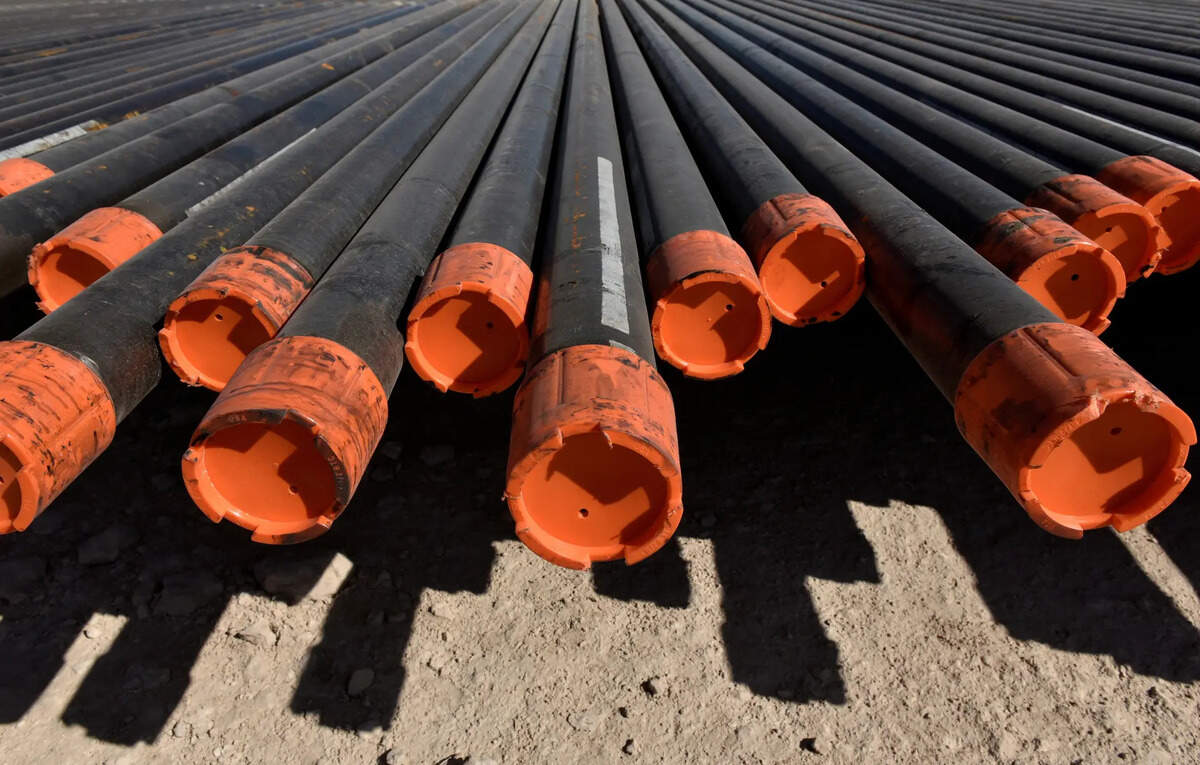
The detailed scope of the contract highlights technical proficiencies directly applicable to complex energy infrastructure. It encompasses excavation and refilling of pipe trenches, the construction of various support structures, precise supplying, jointing, lowering, and laying of pipes. Furthermore, the project mandates the installation of diverse types of valves, chambers, and outlets, culminating in rigorous testing of the entire pipeline system, including all valves and outlets. These tasks require specialized equipment, skilled labor, and stringent quality control protocols, mirroring the demands of constructing high-pressure oil and gas pipelines, gathering systems, or water injection networks critical for enhanced oil recovery (EOR) operations.
Beyond the initial construction phase, the agreement also includes a five-year period for operations, repairs, and maintenance (O&M). This extended engagement provides a stable, recurring revenue stream post-completion, enhancing the project’s long-term financial attractiveness. For investors assessing the viability of EPC firms, the inclusion of O&M contracts signals a company’s commitment to asset lifecycle management and an ability to generate sustained earnings, a highly desirable trait in the often-cyclical energy services market.
Management Vision: A Long-Term Investment in Infrastructure Resilience
Commenting on this significant achievement, Kavita Shirvaikar, Managing Director of Patel Engineering Ltd, emphasized the strategic importance of the project. “We are pleased to have been awarded this project by the Maharashtra Krishna Valley Development Corporation,” Shirvaikar stated. She further highlighted that the initiative “represents a significant step forward in enhancing irrigation infrastructure in the region and will play a crucial role in improving agricultural productivity and water management efficiency.” From an investor’s perspective, this sentiment underscores a commitment to delivering essential infrastructure that fosters economic growth and resilience.
Shirvaikar’s outlook extended beyond the immediate construction, framing it as “more than just a construction project—it is a long-term investment in the prosperity of rural communities and the resilience of our agricultural ecosystem.” This broader vision of sustainable development resonates with the evolving landscape of the energy sector, where environmental, social, and governance (ESG) factors are increasingly influencing investment decisions. Companies capable of executing projects that contribute to societal well-being, while maintaining strong financial performance, are often viewed favorably by long-term investors, including those focused on the energy transition and sustainable practices within hydrocarbon operations.
India’s Infrastructure Boom and Diversification for Energy Sector Players
This substantial contract for Patel Engineering takes place against the backdrop of India’s aggressive infrastructure push, a strategy vital for sustaining its economic growth trajectory. The nation is investing heavily across various sectors, from transportation and urban development to water resources and, critically, energy. For EPC contractors that serve the oil and gas industry, securing diversified contracts outside of core hydrocarbon projects can be a shrewd strategy for mitigating market volatility and ensuring a more stable revenue base.
Many prominent EPC players engaged in constructing oil refineries, liquefied natural gas (LNG) terminals, cross-country gas pipelines, and power generation facilities also possess the capabilities to execute large-scale civil and hydraulic projects. This versatility allows them to capitalize on broader government spending and economic development initiatives, thereby strengthening their financial position. Investors in the energy services space often seek companies with such diversified portfolios, as it indicates robustness against sector-specific downturns and an ability to leverage core engineering expertise across multiple growth avenues.
The skills honed in developing complex water distribution networks – managing vast quantities of materials, coordinating multi-disciplinary teams, adhering to strict timelines, and ensuring operational reliability – are directly transferable to the demanding requirements of energy infrastructure. Whether it’s laying new crude oil pipelines, expanding natural gas grids, or developing water management systems for upstream oil and gas operations, the fundamental principles of large-scale pipe network construction remain consistent. This ₹958.33 crore win for Patel Engineering Ltd therefore serves as an important data point for energy investors, signaling a financially healthy, technically capable firm with a proven track record in executing critical national infrastructure, a company that could potentially play an even larger role in India’s expanding energy sector.