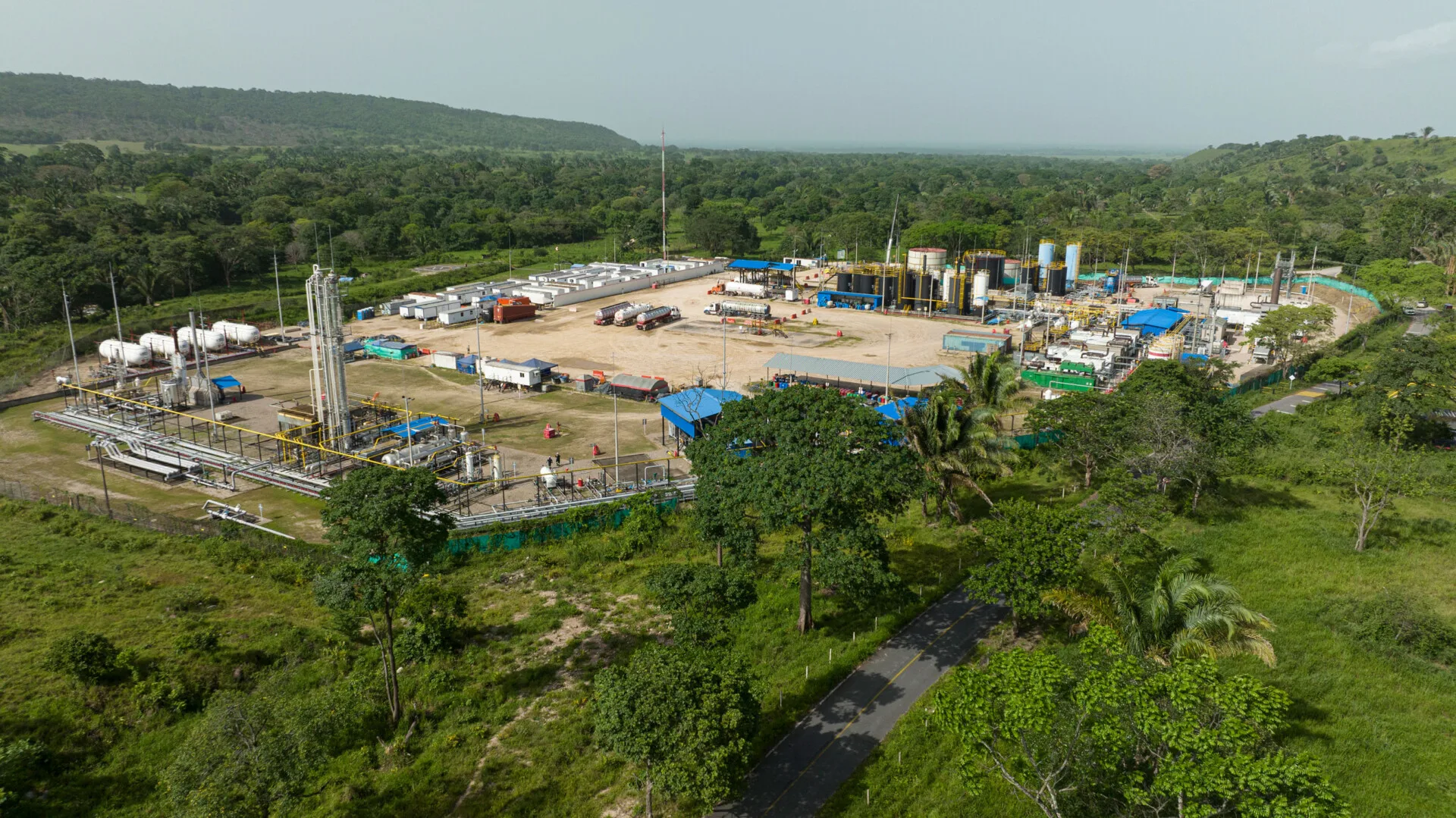
The competitive landscape for prime upstream assets in Latin America is heating up, evidenced by Parex Resources’ recent binding offer to acquire Frontera Energy’s Colombian exploration and production business. This significant move, valued at $500 million in cash upfront plus a potential $25 million contingent payment, represents a substantial premium and has been deemed a “superior proposal” by Frontera’s board compared to its existing agreement with GeoPark. Beyond the cash consideration, Parex’s offer includes the assumption of Frontera’s outstanding debt, specifically $310 million in unsecured notes due in 2028 and an $80 million prepayment facility with Chevron Products Company, bringing the total enterprise value of the transaction well north of $900 million. For investors, this development signals a renewed appetite for strategic consolidation in proven oil and gas regions, underscoring the intrinsic value of producing assets even amidst fluctuating global commodity prices.
The Strategic Rationale Behind Parex’s Aggressive Bid
Parex Resources’ decision to table such a compelling offer for Frontera’s Colombian assets speaks volumes about the perceived quality and strategic fit of these properties. The $500 million cash payment at closing, coupled with a $25 million contingent payment tied to development milestones within 12 months, provides Frontera shareholders with immediate value and upside potential. The assumption of $390 million in debt obligations further solidifies the attractiveness of the deal. This robust financial commitment suggests Parex sees significant synergies and growth opportunities within Frontera’s portfolio, likely aiming to bolster its existing Colombian operations and achieve greater economies of scale. The break fee of $25 million, which Frontera would pay if it terminates the GeoPark agreement, is a relatively small price to pay for what appears to be a substantially better deal for its shareholders. For Parex, expanding in a familiar and productive basin like Colombia offers a de-risked growth pathway compared to venturing into entirely new geographies, aligning with a prudent capital allocation strategy focused on value accretion.
Navigating Market Volatility with Targeted M&A
This high-stakes M&A play unfolds against a backdrop of considerable volatility in the global energy markets. As of today, Brent Crude trades at $90.38 per barrel, having seen a significant retraction from $112.78 just a few weeks prior, marking a nearly 20% decline over the past 14 days. WTI Crude stands at $82.59, while gasoline prices hover at $2.93. This recent downtrend in crude prices, while noticeable, has not deterred strategic acquisitions in regions with robust production profiles and clear growth runways. Indeed, such periods of price uncertainty often spur consolidation as stronger players seek to acquire quality assets at potentially more favorable valuations. Investor sentiment, as captured by common queries such as “is WTI going up or down,” clearly reflects a desire for clarity on price direction. However, this Parex-Frontera deal demonstrates that long-term value creation in the upstream sector can transcend short-term price swings, emphasizing the importance of asset quality, operational efficiency, and regional expertise.
The GeoPark Matching Period and Upcoming Energy Catalysts
The immediate focus now shifts to GeoPark, which has entered a critical five-business-day matching period to amend its existing agreement and counter Parex’s “superior proposal.” This period will be pivotal in determining the final outcome for Frontera’s assets and could potentially ignite a bidding war. Investors are keenly watching this development, seeking to understand the potential for further upside or the implications of GeoPark’s strategic response. This M&A drama plays out concurrently with several significant upcoming energy events that could influence market sentiment and, consequently, GeoPark’s calculus. The OPEC+ Joint Ministerial Monitoring Committee (JMMC) Meeting on April 20th, followed by the full OPEC+ Ministerial Meeting on April 25th, could provide critical insights into global supply policy. Any decisions regarding production cuts or increases will directly impact crude prices, potentially altering the attractiveness of E&P assets. Furthermore, weekly data releases like the API and EIA Crude Inventory reports (April 21st, 22nd, 28th, 29th) and the Baker Hughes Rig Count (April 24th, May 1st) will offer continuous signals on supply-demand fundamentals and industry activity, all of which GeoPark and other potential bidders will be closely monitoring.
Investor Takeaways: Positioning for Growth in a Dynamic Market
For investors, this development underscores several key themes in the current energy market. Firstly, high-quality, cash-generating upstream assets, particularly in established and politically stable regions like Colombia, remain highly coveted. Secondly, M&A activity continues to be a powerful catalyst for value realization for shareholders, especially for companies like Frontera that are able to attract competitive bids. The question “what do you predict the price of oil per barrel will be by end of 2026?” highlights the long-term outlook that drives such strategic acquisitions, rather than just the immediate spot price. For those holding Frontera shares, the potential for an even higher bid from GeoPark or the certainty of a strong exit price with Parex presents an attractive scenario. Parex shareholders, meanwhile, could benefit from enhanced scale and operational synergies. The outcome of the GeoPark matching period will be a significant indicator of competitive pressures in the Latin American E&P space, offering a benchmark for the valuation of similar assets and signaling continued consolidation as companies seek to optimize their portfolios for sustained growth.