Australia’s Net Zero Crossroads: A Policy Reassessment
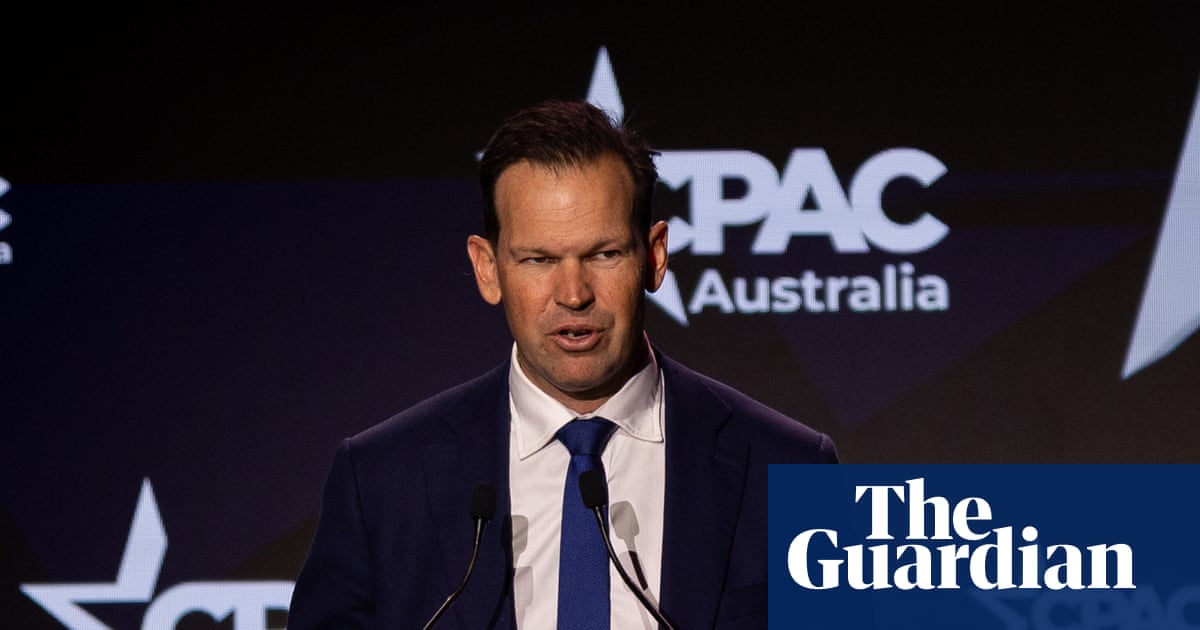
The Australian political landscape is signaling a potential seismic shift in its approach to climate policy, with profound implications for the oil and gas sector. Recent discussions within Australia’s opposition Coalition party indicate growing momentum to abandon the nation’s 2050 net-zero emissions target. This internal debate, spearheaded by figures like Nationals senator Matt Canavan, reflects a broader global tension between ambitious climate goals and the pressing realities of energy security and economic competitiveness.
Canavan, alongside other conservative voices including former Prime Minister Tony Abbott, has been vocal at recent political gatherings, arguing that the net-zero aspiration is unsustainable “at any cost.” Their strategy appears to draw inspiration from past successful political campaigns, aiming to galvanize public opinion against the target. While Shadow Energy Minister Sussan Ley leads an ongoing internal review into the Coalition’s energy policy, including its net-zero stance, she has deliberately avoided setting any timelines for its conclusion. Furthermore, Ley has stated the party will not commit to interim 2030 or 2035 emissions targets while in opposition, a position that net-zero skeptics argue inherently undermines the feasibility of the 2050 goal, suggesting it would necessitate even more drastic, perhaps impossible, reforms later.
Market Volatility and the Geopolitical Backdrop
This Australian policy uncertainty unfolds against a backdrop of significant global energy market volatility. As of today, Brent crude trades at $90.38 per barrel, marking a sharp decline of 9.07% within the day, with prices fluctuating between $86.08 and $98.97. Similarly, WTI crude has fallen to $82.59, down 9.41% from its open, moving within a range of $78.97 to $90.34. This single-day downturn is not an isolated event; our proprietary data reveals a stark 14-day trend where Brent crude has plummeted from $112.78 on March 30th to $91.87 just yesterday, representing an 18.5% erosion of value. Gasoline prices have followed suit, currently standing at $2.93, a 5.18% drop today.
Such dramatic price movements underscore the sensitivity of the market to global supply-demand dynamics and geopolitical tremors. In this environment, a major commodity-producing nation like Australia reconsidering its climate commitments carries substantial weight. A definitive shift away from net-zero could be interpreted by the market as a signal of increased future hydrocarbon supply, potentially dampening long-term price expectations and influencing investment decisions in new projects. Conversely, for the domestic Australian economy, particularly its vital resources sector, such a policy pivot could offer a lifeline, reducing regulatory burdens and encouraging upstream investment, especially in natural gas and LNG export facilities.
Investor Sentiment: Navigating Uncertainty
Oil and gas investors are acutely aware of the complexities at play, constantly seeking clarity amidst a landscape of shifting policies and volatile prices. Our first-party intent data from reader inquiries highlights this precisely. A common question echoing among our readership is, “What do you predict the price of oil per barrel will be by end of 2026?” This reflects a deep concern about the long-term trajectory of crude, a trajectory heavily influenced by the regulatory environments of key producing nations. The Australian debate directly feeds into this uncertainty, as a less restrictive energy policy could impact global supply forecasts.
Furthermore, investors are closely monitoring individual company performance, as exemplified by questions such as, “How well do you think Repsol will end in April 2026?” The success of major players is inherently tied to the operating conditions within the jurisdictions they operate. For companies with significant assets or potential projects in Australia, the Coalition’s eventual stance on net-zero will be a critical factor in their future profitability and strategic planning. This policy uncertainty, therefore, presents both a risk of prolonged indecision and a potential opportunity for those positioned to capitalize on a more favorable regulatory climate for hydrocarbon development.
Upcoming Events and Their Influence on Australian Policy
The confluence of global energy events in the coming days and weeks will undoubtedly cast a long shadow over Australia’s domestic policy debate. Investors are keenly focused on the upcoming OPEC+ meetings, with the Joint Ministerial Monitoring Committee (JMMC) convening tomorrow, April 18th, followed by the full Ministerial Meeting on Sunday, April 19th. A key question for our readers is, “What are OPEC+ current production quotas?” The outcome of these discussions on production levels will directly impact global supply, influencing crude prices and, by extension, the economic arguments for and against increased domestic Australian oil and gas development.
Beyond OPEC+, the market will absorb weekly data points such as the API Weekly Crude Inventory reports on April 21st and 28th, the EIA Weekly Petroleum Status Reports on April 22nd and 29th, and the Baker Hughes Rig Count on April 24th and May 1st. Each of these events provides crucial insights into the real-time supply and demand picture. Should global demand strengthen and prices recover, it could embolden the net-zero skeptics within the Coalition, providing a stronger economic rationale for supporting the oil and gas sector. Conversely, sustained low prices might temper enthusiasm for new, capital-intensive projects. Given that the Coalition’s internal energy policy review currently has no fixed timeline, the unfolding global market dynamics from these upcoming events could significantly influence the pace and direction of their ultimate decision, making these dates critical for investors monitoring the Australian energy landscape.
Strategic Implications for Australian O&G Investment
For investors with exposure or interest in Australian oil and gas assets, the ongoing policy re-evaluation by the Coalition presents a complex but potentially rewarding scenario. A definitive walk-back from the 2050 net-zero target, or at least a refusal to impose stringent interim targets, would likely usher in a more supportive regulatory environment for hydrocarbon exploration, development, and export. This could reduce project approval times, lower compliance costs, and provide greater long-term certainty for new investments, particularly in the robust LNG export sector where Australia is a global leader.
The potential beneficiaries would include existing producers looking to expand, as well as companies exploring new reserves. However, investors must also weigh the inherent political risk. While the internal debate is intense, it is not a finalized policy change. A change in government, or a shift in public sentiment, could reverse any pro-hydrocarbon leanings. Therefore, strategic investors will need to closely monitor not only the Coalition’s internal processes and public statements but also the broader global energy market signals emanating from upcoming OPEC+ meetings and inventory reports. The interplay of domestic politics and international market forces will ultimately determine the investment landscape for Australian oil and gas in the years to come.


