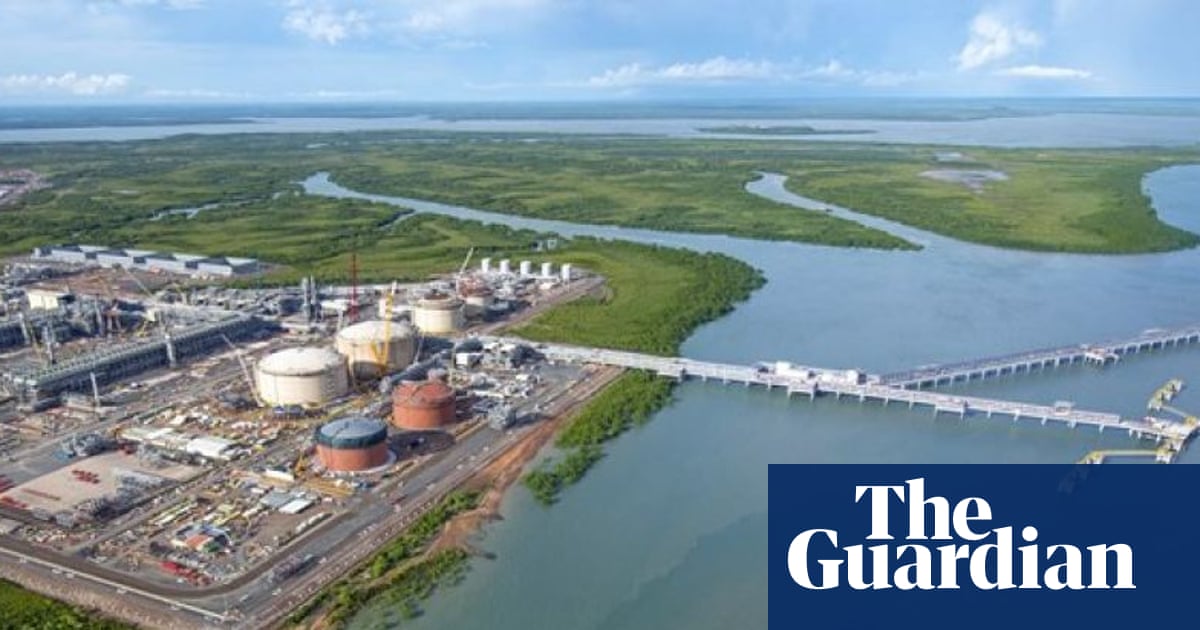
The proposed Bonaparte carbon capture and storage (CCS) project, led by Inpex in Australian waters, represents a pivotal moment for the energy sector. Pitched as Australia’s largest carbon capture facility, with ambitions to store 8 million to 10 million tonnes of CO2 annually from industrial facilities, including nearby LNG plants, it has immediately ignited debate. While proponents tout its potential for regional decarbonization, environmental advocates warn of Darwin becoming a “carbon dumping ground.” For investors, this project is a high-stakes litmus test for the viability and investment appeal of large-scale CCS in a world grappling with energy transition, volatile commodity markets, and increasing scrutiny of greenwashing claims.
The Ambitious Scale and Historical Hurdles of CCS Investment
The sheer scale of the Bonaparte project, targeting 8 million to 10 million tonnes of CO2 storage annually, is undeniably ambitious. Should it achieve these volumes, it would indeed rank among the world’s largest CCS initiatives. However, an analysis of the global CCS landscape reveals a challenging track record. Currently, 77 operational CCS projects capture approximately 64 million tonnes of CO2 per year, a figure dwarfed by global emissions. More critically, a significant portion of this captured CO2 is utilized for enhanced oil recovery (EOR), effectively extending the life of fossil fuel production rather than purely sequestering emissions. For projects designed solely for storage, the performance has often been subpar.
Consider the Chevron-operated Gorgon facility in Western Australia, which began injecting CO2 in 2019. Despite its pioneering status, it has captured less than half of its original intended volumes, with costs reportedly exceeding $200 per tonne of CO2. This serves as a potent reminder of the technical complexities, operational challenges, and substantial capital expenditure inherent in these ventures. Investors eyeing Inpex’s Bonaparte project, a joint venture with TotalEnergies and Woodside Energy, must weigh its ambitious targets against this historical context of underperformance and high costs. The “major project status” awarded by the Australian government offers a degree of regulatory support, but it does not negate the significant execution risk.
Navigating Current Market Volatility and Long-Term Energy Transition
The backdrop for evaluating massive infrastructure projects like Bonaparte is the constantly shifting global energy market. As of today, Brent crude trades at $90.38 per barrel, marking a significant -9.07% decline, while WTI crude sits at $82.59, down -9.41%. This intraday volatility follows a more substantial trend, with Brent having fallen by nearly 20% from $112.78 just two weeks ago. Such dramatic price swings underscore the inherent risks in upstream and midstream oil and gas investments, directly impacting the profitability and capital allocation decisions of major players like Inpex.
Despite these immediate price fluctuations, the long-term imperative for decarbonization remains. Traditional oil and gas companies are under increasing pressure from shareholders, regulators, and the public to demonstrate a credible path to net-zero. Projects like Bonaparte, despite the “dumping ground” controversy and historical underperformance of CCS, represent a strategic move to future-proof their operations and align with evolving climate policies. For investors, the question becomes: how much capital should be allocated to technologies that are critical for energy transition but have yet to prove their commercial scalability and consistent effectiveness?
Investor Focus: Price Direction and the Future of Energy Holdings
Our proprietary reader intent data highlights a clear preoccupation among investors: the direction of oil prices and the long-term outlook for energy investments. Questions such as “is WTI going up or down?” and “what do you predict the price of oil per barrel will be by end of 2026?” dominate discussions. This reflects a deep uncertainty regarding market stability and the profitability of traditional fossil fuel assets. In this environment, the investment rationale for a multi-billion-dollar CCS project becomes even more scrutinized.
While the immediate focus is on crude prices, these questions implicitly extend to the sustainability of current energy business models. Projects like Bonaparte offer oil and gas giants a narrative for continued operation in a decarbonizing world, potentially allowing them to maintain fossil fuel production while addressing emissions. Investors are keen to understand if these projects are genuine pathways to sustainability or merely expensive justifications for business as usual. The performance of such ventures will directly influence the perception of an energy company’s long-term value and its ability to attract ESG-focused capital.
Upcoming Market Signals and Regulatory Influence on CCS
The coming weeks will offer fresh insights into the broader energy market, influencing investment sentiment towards projects like Bonaparte. The upcoming OPEC+ Joint Ministerial Monitoring Committee (JMMC) Meeting on April 19th, followed by the full OPEC+ Ministerial Meeting on April 20th, could set the tone for global supply policies. Any significant shifts in production quotas will inevitably impact crude prices and, by extension, the financial health and investment capacity of major energy companies. Further insights will come from the API Weekly Crude Inventory reports on April 21st and 28th, and the EIA Weekly Petroleum Status Reports on April 22nd and 29th, which provide crucial snapshots of U.S. supply and demand dynamics.
While these events do not directly address CCS, they shape the overall macroeconomic environment in which these capital-intensive projects operate. A robust oil price environment might provide more financial flexibility for companies to invest in decarbonization technologies, whereas sustained low prices could force a re-evaluation of non-core or high-risk projects. The Australian government’s award of “major project status” to Bonaparte signals strong political backing, a critical factor for derisking such ventures. However, investor confidence will ultimately hinge on the project’s ability to navigate environmental concerns, demonstrate technical efficacy, and deliver on its ambitious carbon capture targets, rather than relying solely on governmental endorsements.


