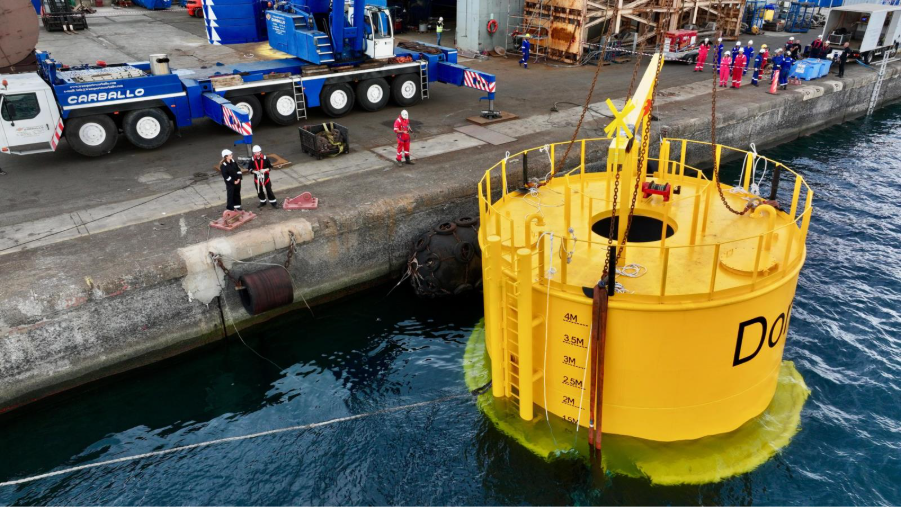
The selection of Global OTEC to participate in the DeepStar consortium’s research project marks a pivotal moment for deepwater oil and gas operations. This initiative, backed by 11 major operators including industry titans like Chevron, ExxonMobil, and bp, aims to evaluate Ocean Thermal Energy Conversion (OTEC) as a potential renewable baseload power source for offshore facilities. This is not merely a technological curiosity; it signifies a strategic industry shift towards integrating sustainable, efficient power solutions that can redefine the economic and environmental footprint of deepwater production. For investors, understanding the implications of OTEC’s potential adoption is crucial for assessing long-term value in the offshore sector.
The Strategic Imperative: Decarbonizing Deepwater Operations
Deepwater oil and gas production, while vital for global energy supply, faces increasing pressure to reduce its carbon intensity and improve operational efficiency. The DeepStar consortium’s decision to integrate OTEC technology into its research portfolio underscores a collective commitment from major operators to explore innovative solutions beyond traditional gas and diesel turbines. OTEC offers a compelling alternative: a continuous, low-carbon power source that harnesses the ocean’s natural thermal gradients. This is particularly attractive for facilities like FPSOs and CO₂ injection units, where consistent, reliable power is non-negotiable. The modular design of Global OTEC’s Power Module® suggests a scalable solution, potentially allowing for phased deployment and integration into existing infrastructure. This move by DeepStar, representing a significant portion of the deepwater industry, validates OTEC’s pragmatic potential for decarbonization and signals a growing willingness to invest in technologies that offer both environmental benefits and operational resilience.
Navigating Volatility: OTEC’s Role in a Dynamic Market Landscape
The current market environment underscores the critical need for operational efficiency and cost predictability in oil and gas investments. As of today, Brent crude trades at $98.17, reflecting a 1.23% decline over the last 24 hours, with WTI crude similarly down at $89.74. This continued slide follows a significant 12.4% drop over the past two weeks, pushing Brent down by $14 from its peak of $112.57 on March 27th. Such volatility highlights the financial exposure of deepwater projects to fluctuating fuel costs for their power generation. OTEC, by offering a stable, renewable baseload power supply, presents a compelling de-risking strategy. By replacing traditional fossil fuel-based power sources, operators can significantly reduce their exposure to price swings in diesel and natural gas, while simultaneously mitigating carbon taxes and emissions penalties. This fundamental shift towards energy independence at the operational level can enhance project economics, improve cash flow stability, and ultimately bolster investor confidence in deepwater assets amidst an unpredictable global energy market.
Investor Focus: Addressing Core Questions Amidst Deepwater Innovation
Our proprietary reader intent data reveals a strong focus on market fundamentals, with investors frequently asking about current Brent crude prices and OPEC+ production quotas. While these short-term supply-demand dynamics are crucial for immediate market outlook, the DeepStar-OTEC collaboration points to a more profound, long-term strategic shift that investors should not overlook. Reducing operational emissions and fuel dependency through technologies like OTEC can significantly enhance the Environmental, Social, and Governance (ESG) profiles of major operators. In an era where capital allocation is increasingly influenced by sustainability metrics, investments in low-carbon operational solutions can unlock new pools of capital and improve valuations. By proactively tackling the decarbonization challenge for deepwater assets, companies involved in this initiative are positioning themselves as leaders in responsible energy production, directly addressing the evolving expectations of institutional and retail investors alike. This forward-thinking approach mitigates future regulatory risks and aligns with global energy transition goals, creating more resilient and attractive investment opportunities.
The Road Ahead: Upcoming Events and OTEC’s Trajectory
The coming weeks are packed with critical events that will shape the near-term energy landscape. Investors will be closely watching the OPEC+ Joint Ministerial Monitoring Committee (JMMC) meeting on April 18th, followed by the full Ministerial meeting on April 20th, for any signals regarding production policies. Additionally, the recurring Baker Hughes Rig Count reports on April 17th and April 24th will provide insights into drilling activity and supply trends. While these events primarily focus on traditional market drivers, the DeepStar OTEC project represents a longer-term strategic play. The initial phase of this research initiative will focus on feasibility and technical assessment. For investors, the forward-looking analysis extends beyond these immediate market catalysts. Key milestones to watch for will include the successful completion of the initial study, any announcements regarding pilot projects or scaled deployments of Global OTEC’s modular units, and the potential for a wider industry adoption curve. The integration of OTEC technology, if proven viable and cost-effective, could fundamentally alter the CapEx and OpEx profiles for future deepwater developments, creating new opportunities for specialized service providers and enhancing the long-term value proposition of the operators committed to this innovative pathway.