Policy Volatility Rocks Renewable Investment, Posing Implications for Oil & Gas
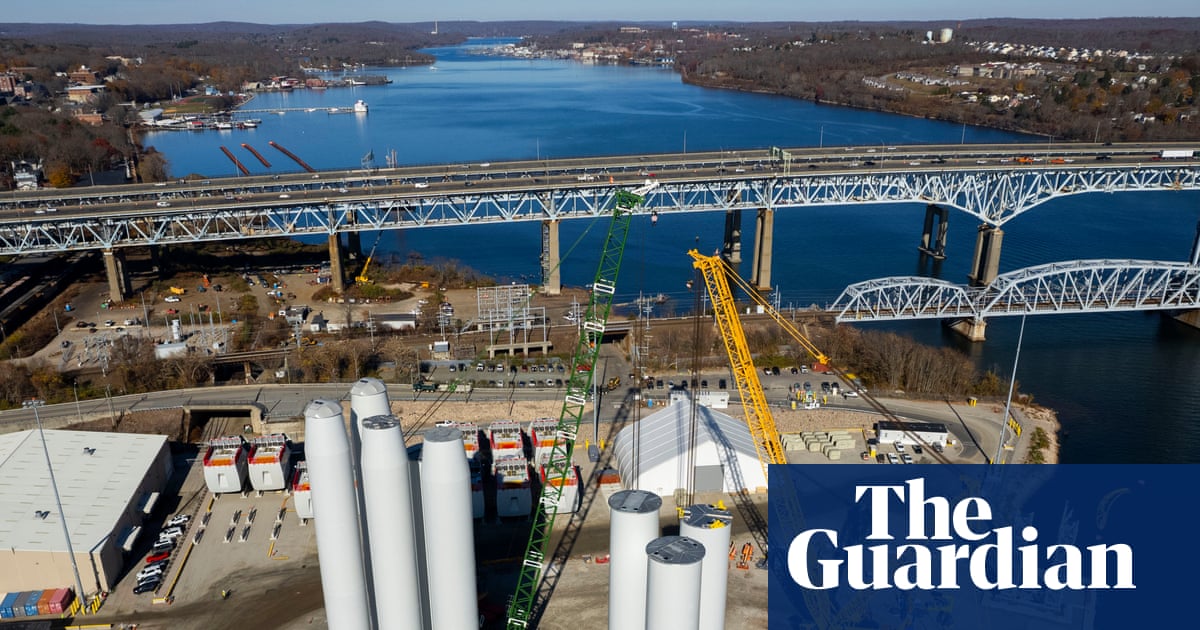
The energy investment landscape is currently grappling with significant policy uncertainties, underscored by Europe’s leading offshore wind developer, Ørsted, initiating legal action against the United States government. This unprecedented lawsuit challenges the Trump administration’s decision to suspend work on the $5 billion Revolution Wind project on the north-east US coast, citing unspecified “national security risks.” This move, which follows a broader halt on offshore wind construction, sends a clear signal of escalating regulatory and political risk within the energy sector. For oil and gas investors, this development warrants close attention, not only for its direct impact on renewable deployment but also for the broader precedent it sets regarding the stability and predictability of major energy infrastructure projects in the US.
Regulatory Headwinds and the Price of Uncertainty
Ørsted’s legal challenge against the White House’s abrupt suspension of its Revolution Wind lease highlights the critical role of policy stability in attracting and retaining capital for large-scale energy projects. The project, a joint venture with Skyborn Renewables, is nearly 90% complete, with 58 of its 65 wind turbines already installed and all federal and state permits secured back in 2023 following an extensive nine-year review process. The sudden imposition of a “stop-work order” in August, later followed by a federal judge allowing work to restart, and now a fresh suspension on December 22nd, illustrates a deeply unpredictable regulatory environment. The lack of detailed justification for the “national security risks” claim further exacerbates investor unease. This kind of policy whipsaw, regardless of the energy source, introduces substantial development risk, potentially leading to significant project delays, cost overruns, and even abandonment. The market’s reaction to Ørsted’s initial suspension, which saw its shares plunge by 12%, and then a 4% lift upon news of the lawsuit, vividly demonstrates how sensitive valuations are to regulatory certainty.
Investor Focus Amidst Shifting Energy Tides
The ongoing legal battle over Revolution Wind throws a spotlight on the complexities of the global energy transition and how policy friction can influence investment decisions. Our proprietary reader intent data reveals a consistent and strong focus among investors on the performance of traditional fossil fuels. Questions such as “is WTI going up or down” and “what do you predict the price of oil per barrel will be by end of 2026?” dominate current queries, indicating that immediate and medium-term oil price direction remains a primary concern. While the Ørsted situation directly impacts renewable energy, the broader implications of policy risk are keenly felt across the entire energy spectrum. If renewable projects, even those nearing completion, can be halted by executive action, it might lead some investors to question the long-term stability and predictability of returns in the clean energy space. This, in turn, could indirectly sustain or even increase capital allocation towards traditional oil and gas, perceiving it as having a clearer, albeit evolving, regulatory framework and less exposure to sudden, politically motivated project freezes.
Market Dynamics and Upcoming Catalysts
Against this backdrop of policy uncertainty, the crude oil market continues to navigate its own supply and demand dynamics. As of today, Brent crude trades at $90.24, reflecting a slight dip of 0.21% within a daily range of $93.87-$95.69. WTI crude similarly saw a modest decline of 0.85%, settling at $86.68. This current stability, however, contrasts with the significant volatility observed over the past two weeks, where Brent crude shed nearly 20%, plummeting from $118.35 on March 31st to $94.86 by April 20th. Gasoline prices remain relatively stable at $3.04. Looking ahead, several key events will shape the near-term outlook for oil and gas. Tomorrow, April 21st, the OPEC+ Joint Ministerial Monitoring Committee (JMMC) meeting will be closely watched for any signals regarding production policy, particularly as global demand forecasts are constantly re-evaluated against economic performance and energy transition narratives. The EIA Weekly Petroleum Status Reports on April 22nd and April 29th, alongside the API Weekly Crude Inventory updates on April 28th and May 5th, will provide crucial insights into US inventory levels and demand trends. Furthermore, the Baker Hughes Rig Count on April 24th and May 1st will offer an indication of North American upstream activity. The EIA Short-Term Energy Outlook, due on May 2nd, will integrate all these factors to present a comprehensive forecast for the coming months, and any delays in renewable deployment due to policy battles like Ørsted’s could subtly influence its demand projections for traditional fuels.
Strategic Implications for Oil & Gas Portfolios
For savvy oil and gas investors, the Ørsted lawsuit serves as a potent reminder that the investment thesis for any energy project, whether fossil fuel or renewable, must account for significant non-market risks. The ability of a future administration to halt a nearly complete $5 billion project on vague grounds introduces a level of political and regulatory risk that demands careful consideration. While some might view this as a potential long-term tailwind for conventional energy, slowing the pace of the energy transition, it simultaneously highlights the fragility of long-term capital commitments in a politically charged environment. Investors should prioritize companies with strong balance sheets, diversified asset bases, and robust legal teams capable of navigating such challenges. Furthermore, a detailed understanding of the political landscape and regulatory frameworks in regions of investment becomes paramount. The Ørsted case underscores that in the evolving energy sector, policy certainty is as valuable a commodity as the energy itself, and its scarcity can significantly impact investor confidence and capital flows across the entire energy value chain.


