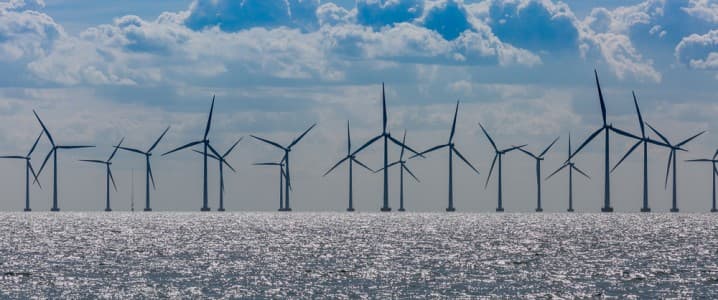
The recent announcement by Ørsted, the world’s largest offshore wind developer, to reduce its workforce by 2,000 positions by the end of 2027, cutting a quarter of its current roles, serves as a potent signal to the broader energy investment landscape. This significant strategic realignment underscores the formidable headwinds facing capital-intensive renewable energy projects, even as the global energy transition gains momentum. For investors scrutinizing portfolios across the energy spectrum, Ørsted’s pivot highlights the enduring complexities and financial pressures that can emerge even in high-growth sectors, offering a stark contrast to the often-different dynamics driving the traditional oil and gas markets.
The Strategic Realignment: A Retreat from US Ambitions
Ørsted’s decision to shed 2,000 jobs, a quarter of its global workforce, is not merely a cost-cutting measure but a fundamental strategic shift. The Denmark-based company indicated a renewed focus on its European operations, aiming to enhance competitiveness amidst a challenging global environment. CEO Rasmus Errboe clarified that this move is a “necessary consequence” of focusing the business and nearing completion of its extensive construction portfolio, implying a reduced need for a large workforce in the coming years.
A key driver behind this strategic pivot is the mounting pressure from its US ventures. The company has grappled with significant obstacles, including regulatory changes, escalating cost inflation, and persistently high interest rates, all of which have severely impacted the economics of offshore wind projects over the past two years. Notably, the fully permitted 704-megawatt (MW) Revolution Wind project, slated for offshore Rhode Island and Connecticut, has faced specific obstruction, exemplifying the regulatory uncertainty that can derail even advanced projects. These challenges collectively underscore the precarious nature of large-scale infrastructure development, particularly when exposed to shifting political winds and macroeconomic pressures.
Capital Structure Under Pressure: The Rights Issue and Investor Confidence
The job cuts follow closely on the heels of a substantial $9.35 billion (59.56 billion Danish crowns) rights issue, through which Ørsted sought to raise capital from existing shareholders. This fundraising was critical for shoring up immediate financing needs, managing risks from US regulatory uncertainty, and strengthening its overall capital structure. The terms of the rights issue reveal a telling story about investor confidence and market perception: shares were priced at a heavily discounted 66.60 Danish crowns (approximately $1.04) apiece, significantly below the company’s closing share price of 122.35 Danish crowns ($19.18) just days prior to the offering.
While the issue saw a high subscription rate of 99.3%, a closer look reveals that the Danish state subscribed for just over 50% of the total. This substantial backing from the state highlights the strategic importance of Ørsted to Denmark but also suggests that private investors might have been less enthusiastic about subscribing at the discounted price without such significant state participation. For energy investors, this situation raises critical questions about the perceived risk profile and long-term viability of even leading players in the renewable energy sector, especially when faced with systemic financial pressures and project-specific setbacks.
Market Dynamics: Offshore Wind Headwinds vs. Oil & Gas Resilience
The struggles of a renewable energy giant like Ørsted offer a compelling juxtaposition to the current state of the traditional oil and gas market, which continues to command significant investor attention despite broader energy transition narratives. As of today, Brent crude trades at $90.38 per barrel, marking a significant 9.07% drop within the day’s range of $86.08 to $98.97. Similarly, WTI crude has seen a steep decline to $82.59, down 9.41%, trading within a day range of $78.97 to $90.34. This recent volatility follows a broader downward trend for Brent, which has fallen from $112.78 on March 30th to its current level, representing a nearly 20% decline over the past 14 days.
Despite this recent dip, the sustained interest in oil and gas remains evident through investor sentiment. Our proprietary data indicates that investors are keenly focused on future crude prices, with questions like “What do you predict the price of oil per barrel will be by end of 2026?” being particularly prominent. This persistent inquiry underscores the market’s belief in the enduring relevance and profit potential of traditional energy, even as the renewable sector grapples with its own economic realities. Unlike the capital-intensive, long-gestation periods and regulatory hurdles plaguing offshore wind, the oil and gas sector, while volatile, often presents more immediate cash flow opportunities and a clearer regulatory framework in many established producing regions. Investor interest also extends to specific companies, with inquiries such as “How well do you think Repsol will end in April 2026?” indicating a focus on individual stock performance within the sector.
Navigating Future Volatility: Upcoming Events and Investment Outlook
For investors navigating the energy landscape, understanding the upcoming catalysts is paramount. While Ørsted’s challenges are company-specific, they reflect broader macro trends that can also influence traditional energy markets. Looking ahead, the immediate horizon for oil and gas investors is marked by key events that could dictate short-term price movements and supply strategies. The upcoming OPEC+ Joint Ministerial Monitoring Committee (JMMC) Meeting on April 19th, followed by the full OPEC+ Ministerial Meeting on April 20th, will be critical. Our reader intent data shows significant investor interest in “OPEC+ current production quotas,” highlighting the market’s sensitivity to these decisions. Any indication of quota adjustments, or a reaffirmation of current strategies, will send ripples through the market.
Beyond OPEC+, regular data releases will continue to shape sentiment. The API Weekly Crude Inventory reports on April 21st and 28th, coupled with the EIA Weekly Petroleum Status Reports on April 22nd and 29th, will provide crucial insights into US supply and demand dynamics. Furthermore, the Baker Hughes Rig Count on April 24th and May 1st will offer a snapshot of drilling activity, serving as a leading indicator for future production. The contrasting investment environments – with offshore wind facing project-specific financial and regulatory hurdles, and oil and gas grappling with macro-level supply management and inventory data – underscore the diverse risk profiles within the broader energy sector. For savvy investors, Ørsted’s strategic retreat serves as a powerful reminder that even the most promising energy transition pathways are not immune to economic realities, reinforcing the need for diligent analysis across all energy segments.


