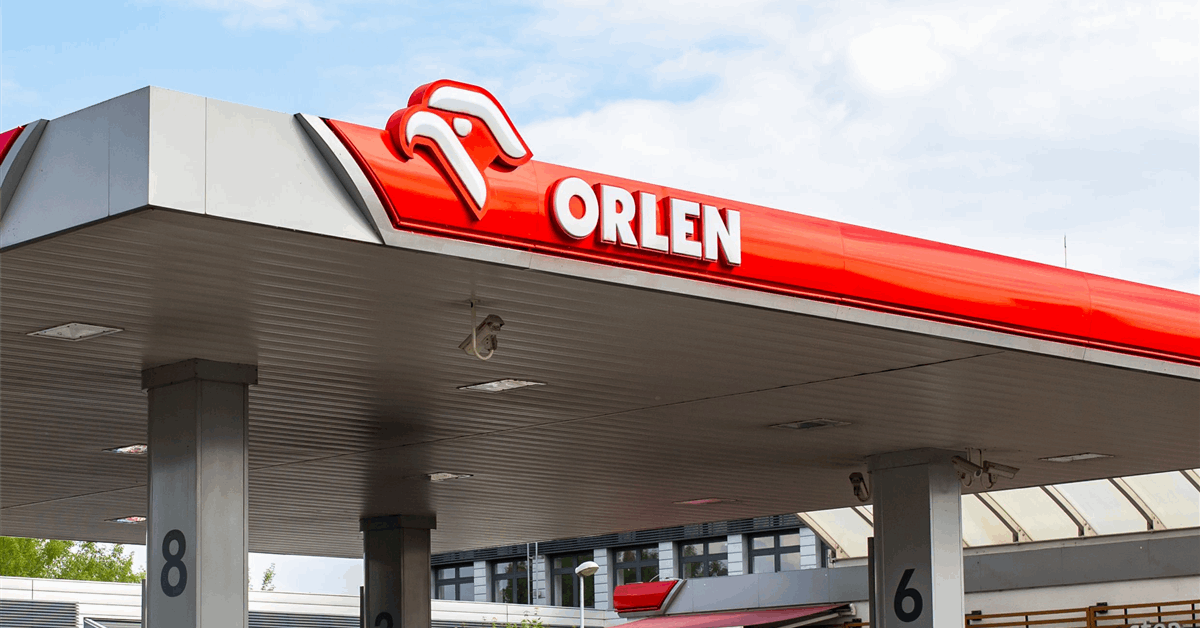
ORLEN SA has delivered a compelling second-quarter 2025 performance, reporting LIFO-based EBITDA of PLN 9.2 billion ($2.52 billion), a substantial increase from PLN 5 billion in the same period last year. This robust growth, however, comes against a backdrop of declining revenue, which fell from PLN 69.5 billion to PLN 60.7 billion. This divergence signals a fascinating dynamic at play within the integrated energy giant, where strategic diversification and a strong upstream segment are working to offset pressures in refining and petrochemicals, as well as the impact of lower gas prices and the absence of prior year compensations. For investors, understanding the drivers behind this complex financial picture is crucial for assessing ORLEN’s resilience and future trajectory in a volatile global energy market.
Upstream Propels Profitability Amidst Downstream Squeeze
The standout performer for ORLEN in Q2 2025 was undoubtedly the Upstream and Supply segment, which posted an impressive EBITDA of PLN 3.34 billion. This marks a dramatic turnaround from the corresponding quarter in 2024, when the Upstream segment recorded a loss of PLN 3.94 billion, primarily due to regulatory measures aimed at consumer support. This significant swing underscores the segment’s underlying profitability once external factors are mitigated, proving a powerful engine for the Group’s overall EBITDA growth. Hydrocarbon production during the April-June 2025 period averaged 182,000 barrels of oil equivalent per day (boed), a decrease from 207,500 boed in Q2 2024. Notably, over 70 percent of this output was natural gas, predominantly sourced from Norway and Poland, with crude and liquefied natural gas making up the remaining nearly 30 percent. This gas-heavy portfolio is a key characteristic for investors to monitor.
Conversely, the Downstream segment, encompassing refining and petrochemicals, generated LIFO-based EBITDA of PLN 2.2 billion. While this segment benefited from strong crude throughput, with ORLEN refineries processing 9.8 million metric tons of oil (a five percent increase year-over-year), it faced considerable margin compression. Refining margins saw a 10 percent decline to $11.3 per barrel, and petrochemical margins dropped by 21 percent to EUR 192 ($224) per metric ton. This highlights the ongoing challenge of maintaining profitability in a refining and petrochemical environment characterized by lower product quotations, even as operational efficiency remains high.
Diversification Pays Dividends: Strength in Energy and Consumer Segments
Beyond the traditional oil and gas segments, ORLEN’s diversified business model demonstrated its value in the second quarter. The Energy segment, which includes gas and electricity distribution and heating operations, contributed PLN 2.26 billion in EBITDA, an increase from PLN 1.97 billion in Q2 2024. This improvement was largely attributed to increased gas and electricity distribution volumes and higher heat sales, supported by the company’s “consistently implemented investment program.” Furthermore, ORLEN continues to expand its power generation capabilities, with installed capacity growing to 6.2 gWe and renewables capacity seeing a 0.6 gW increase compared to 2024. Power production also surged by 27 percent year-on-year, reaching 3.8 tWh, signaling a clear strategic pivot towards cleaner energy sources and infrastructure.
The Consumers and Products segment, consolidating the sale of gas, electricity, and fuels to end users, also delivered a strong performance with PLN 2 billion in EBITDA, representing a PLN 363 million increase year-over-year. This segment reported higher sales of both gas and electricity, with a particularly impressive growth of more than 70 percent in the e-mobility market. This growth underscores ORLEN’s successful adaptation to evolving consumer demands and its commitment to capturing market share in emerging energy sectors, providing a stable, demand-driven revenue stream that can help buffer against commodity price volatility.
Navigating Current Market Volatility with Strong Cash Flow
One of the most encouraging aspects for investors from ORLEN’s Q2 2025 report is the robust improvement in cash flow. Operating cash flow reached PLN 10.5 billion, a significant jump from PLN 6 billion in Q2 2024. More critically, free cash flow turned positive at PLN 4 billion, a stark contrast to the negative PLN 1 billion recorded in the prior year. This strong cash generation, alongside stable capital expenditure of PLN 7.6 billion, provides ORLEN with substantial financial flexibility to fund its strategic investments and manage market fluctuations. However, the external market environment remains highly dynamic.
As of today, Brent Crude trades at $90.38, reflecting a significant daily drop of 9.07% within a day range of $86.08-$98.97. Similarly, WTI Crude is at $82.59, down 9.41% for the day, with a range of $78.97-$90.34. This recent downturn follows a notable 14-day trend where Brent fell from $112.78 on March 30, 2026, to $91.87 on April 17, 2026, representing a substantial 18.5% decline. Gasoline prices are also feeling the pressure, currently at $2.93, down 5.18% today. This kind of volatility presents a complex backdrop for an integrated player like ORLEN. While lower crude prices could further squeeze refining margins in the Downstream segment, they might also reduce input costs. Conversely, the Upstream segment’s revenue, particularly from crude and natural gas sales, would naturally face headwinds from sustained lower commodity prices. ORLEN’s strong cash position positions it well to weather these market shifts, but investors will be keenly watching how these price movements impact the coming quarters.
Anticipating Future Trends and Addressing Investor Concerns
Looking ahead, the global energy market remains a focal point for investors, and our proprietary data reveals that many of our readers are actively inquiring about the trajectory of oil prices by the end of 2026 and the impact of OPEC+ decisions on the market. These questions are particularly pertinent for ORLEN given its significant upstream exposure and refining operations. The upcoming OPEC+ Joint Ministerial Monitoring Committee (JMMC) meeting tomorrow, April 18th, followed by the full Ministerial Meeting on April 19th, will be critical events. Any adjustments to current production quotas, a common concern among investors, could significantly influence crude prices and, consequently, ORLEN’s profitability across its Upstream and Downstream segments.
Further insights into market balances will come from the API Weekly Crude Inventory reports on April 21st and 28th, and the EIA Weekly Petroleum Status Reports on April 22nd and 29th. These data points will offer a clearer picture of demand and supply dynamics in key global markets. Additionally, the Baker Hughes Rig Count reports on April 24th and May 1st will provide an indication of future production capacity, particularly in North America, which can influence global supply expectations. ORLEN’s management will need to skillfully navigate this landscape, leveraging its diversified portfolio and robust cash flow to mitigate risks and capitalize on opportunities. The company’s strategic focus on natural gas, renewables, and consumer-facing energy solutions appears to be a well-timed hedge against the inherent volatility of crude oil markets, offering a degree of insulation as the energy transition progresses.


