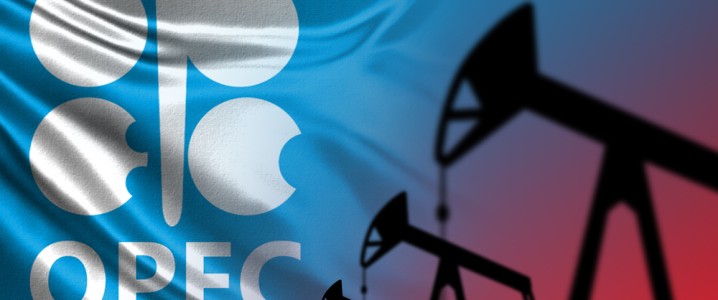
The global oil market is poised for sustained expansion in the coming decades, with demand exhibiting no signs of an imminent peak, according to the Organization of the Petroleum Exporting Countries (OPEC). This assertive stance, articulated recently by OPEC Secretary-General Haitham Al Ghais, projects a significant 24% cumulative increase in crude oil consumption by the year 2050. For energy investors, this declaration underscores a fundamental belief within the world’s leading oil cartel: traditional energy sources will remain indispensable to economic growth and societal development for the foreseeable future, defying narratives of an accelerated transition away from hydrocarbons.
Al Ghais, speaking at a prominent energy forum, was unequivocal in his assessment, stating, “There is no peak in oil demand on the horizon.” This statement is not merely an observation but a strategic affirmation that global population expansion and rising prosperity, particularly across emerging economies, will continue to fuel the need for petroleum products. This long-term outlook from OPEC directly challenges the prevalent discourse in some developed nations, where policy pressures often advocate for an abrupt cessation of investment in the oil and gas sector. The organization has consistently warned against the perils of underinvestment in new supply, highlighting potential adverse consequences for market stability and energy security.
The Critical Investment Chasm
A central theme of OPEC’s message revolves around the substantial capital required to meet future energy needs. The organization estimates that global investment in new oil and gas supply must reach an staggering $17.4 trillion over the next quarter-century to prevent supply shortages and ensure market equilibrium. This figure stands in stark contrast to the estimated $110 trillion necessary for achieving a net-zero global economy between 2021 and 2050 – a cost projection that has seen repeated upward revisions in recent years. This disparity in investment priorities presents a significant dilemma for the global energy landscape and a crucial point of analysis for investors.
The implications of this investment gap are profound. A sustained lack of capital flowing into upstream exploration and production could lead to a tightening of global supply, increased price volatility, and potential energy crises down the line. For investors, this scenario suggests that companies with robust asset bases and efficient operational capabilities in the oil and gas sector could see enhanced profitability and valuation as demand persists and supply becomes more constrained. The warning from OPEC serves as a reminder that neglecting the foundational energy infrastructure in pursuit of ambitious decarbonization targets carries inherent risks to economic stability and affordability.
Divergent Demand Perspectives: OPEC vs. IEA
While OPEC maintains a robust long-term demand outlook, its near-term projections also reveal significant differences compared to other influential bodies like the International Energy Agency (IEA). OPEC anticipates global oil demand to expand by 1.3 million barrels per day (bpd) in both 2025 and 2026. This forecast paints a picture of resilient and steady growth, providing a bullish signal for market participants anticipating strong fundamentals.
In contrast, the IEA offers a more conservative immediate-term perspective. The agency projects oil demand growth for the current year at less than 1 million bpd. Furthermore, while the first quarter of the year saw a respectable demand increase of 990,000 bpd, the IEA expects a considerable slowdown, forecasting growth of only 650,000 bpd for the remainder of the year. These differing short-to-medium-term projections highlight the complexities in forecasting global energy consumption, influenced by factors ranging from economic cycles and geopolitical stability to the pace of energy transition technologies. Investors must carefully weigh these contrasting views, understanding that each scenario carries distinct implications for short-term trading strategies and long-term portfolio allocations. A higher demand growth trajectory, as envisioned by OPEC, could support higher oil prices and stronger earnings for producers, while a more modest increase might temper market enthusiasm.
Non-OPEC Supply Challenges and Market Balance
Compounding the demand outlook, OPEC has also issued a significant warning regarding the supply side of the equation, particularly concerning non-OPEC producers. Earlier in the year, the cartel indicated that reduced upstream capital expenditures, prompted by periods of declining oil prices, are set to impede supply growth from countries outside the OPEC+ alliance this year and next. This assessment was a key highlight in its monthly oil market report.
The implications for global market balance are substantial. If non-OPEC supply growth falters or even contracts, as OPEC suggests, the onus of meeting rising global demand falls disproportionately on OPEC+ members. This dynamic could strengthen OPEC+’s market influence and its ability to manage supply and price. For investors, this scenario underscores the potential for tighter oil markets, especially if global economic activity continues to expand. Companies operating in non-OPEC regions, particularly those sensitive to price fluctuations and long-term investment cycles, may face increasing challenges in maintaining or growing their production volumes. Conversely, this could create a more favorable pricing environment for resilient producers and those with lower lifting costs, offering compelling investment opportunities amidst potential supply constraints.
Investor Takeaways and Strategic Positioning
OPEC’s latest pronouncements offer critical insights for investors navigating the complex energy landscape. The message is clear: oil demand is not peaking anytime soon, requiring substantial, consistent investment to avert future supply deficits. This perspective provides a robust counterpoint to the prevailing sentiment in some policy circles and warrants careful consideration in investment strategies.
For those focused on the oil and gas sector, these insights suggest continued relevance and potential profitability for well-positioned companies. Opportunities may lie in firms with strong balance sheets, efficient operations, and strategic assets that can capitalize on sustained demand and potentially constrained supply. Investors should monitor the divergence in demand forecasts between OPEC and the IEA, as these differing views will undoubtedly influence market sentiment and price volatility. Furthermore, the warning regarding non-OPEC supply shrinkage highlights the importance of understanding geopolitical dynamics and the long-term investment decisions of major producers. In an environment where energy security remains a paramount concern, the enduring role of oil and gas within the global energy mix appears increasingly secure for decades to come, demanding strategic and informed investment decisions.