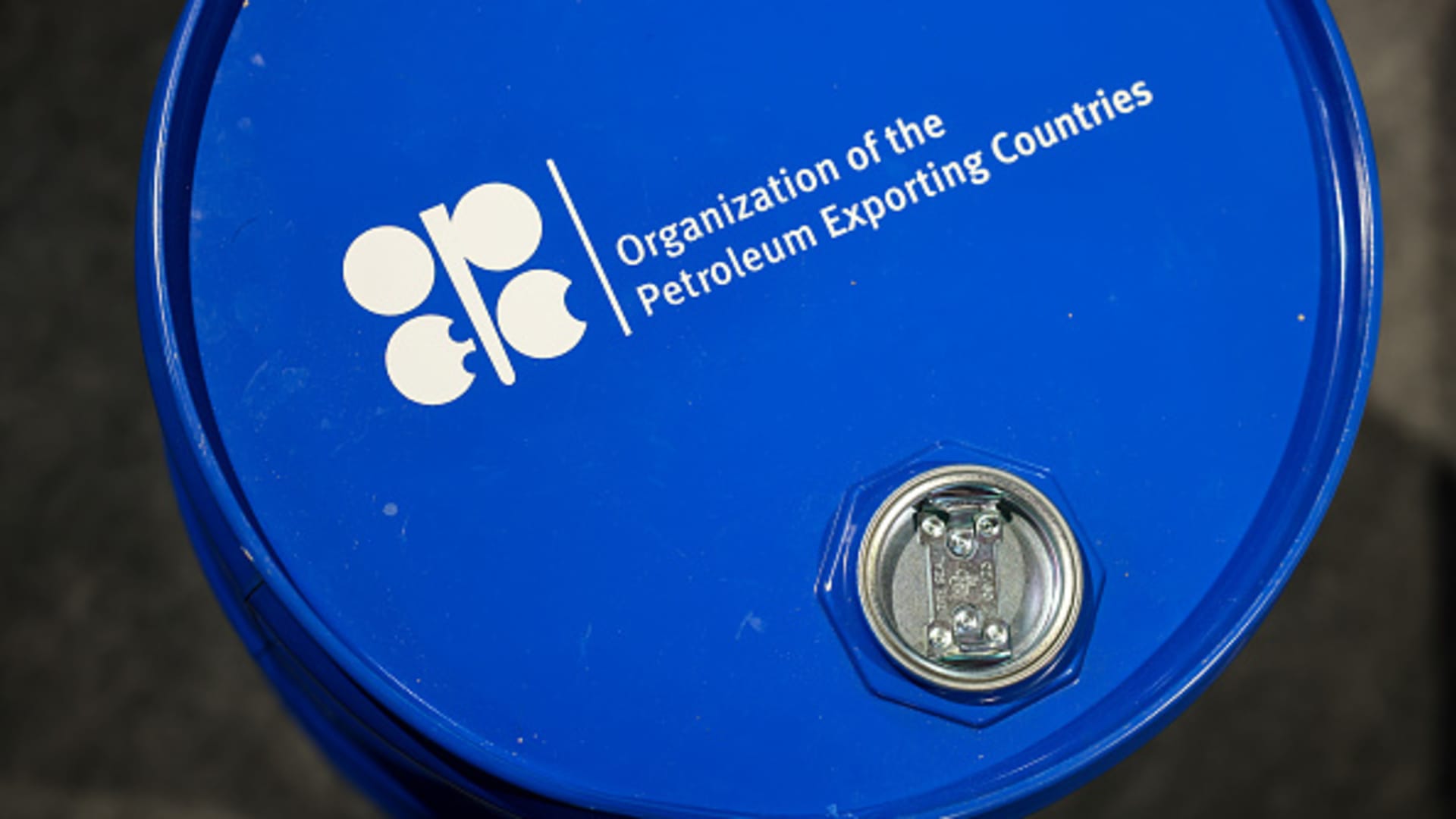
The global oil market has entered a period of intense volatility, with U.S. crude oil futures experiencing a significant downturn. This sharp correction follows the OPEC+ alliance’s confirmation of a substantial and sustained increase in production, injecting considerable new supply into an already delicate market. Investors are now grappling with the immediate ramifications of this strategic shift, which has sent energy prices reeling and amplified concerns regarding potential oversupply.
Crude Benchmarks Dive as OPEC+ Unlocks Production
Early trading sessions witnessed a dramatic decline across key crude oil benchmarks. West Texas Intermediate (WTI) crude futures, a critical indicator for North American energy markets, plummeted by $2.49, marking a 4.27% drop to settle at $55.80 per barrel. Concurrently, the international bellwether, Brent crude, registered a decline of $2.39, or 3.9%, with prices trading at $58.90 per barrel. These pronounced decreases highlight the market’s acute apprehension concerning the rapid influx of new supply. This latest downturn exacerbates an already challenging year for oil valuations, which have fallen by more than 20% since the beginning of January, underscoring persistent bearish sentiment.
OPEC+’s Aggressive Supply Expansion Shakes Confidence
The latest market turbulence directly stems from the OPEC+ group’s recent decision, announced over the weekend, to boost its collective output by an additional 411,000 barrels per day (bpd) for the month of June. This move mirrors an identical 411,000 bpd production surge implemented for May, a decision that had already caught numerous market participants by surprise. In a span of merely two months, the influential alliance is introducing more than 800,000 bpd of incremental crude onto the global market. This aggressive and rapid expansion in output has far exceeded the more conservative forecasts from leading energy analysts; for instance, Goldman Sachs had initially anticipated a more modest 140,000 bpd increase for June, making the actual output hike nearly triple that projection. This strategic pivot by OPEC+ signals a clear intent to prioritize market share or respond to perceived demand, regardless of its immediate impact on price stability.
Broader Economic Headwinds Compound Supply Concerns
This substantial supply expansion arrives at a particularly precarious juncture for the global energy sector. The month of April concluded with oil prices recording their largest monthly loss since 2021, a stark and unambiguous indicator of the prevailing bearish sentiment gripping the markets. Beyond the immediate supply shock, investors are increasingly contending with burgeoning fears of a global economic slowdown. These concerns are further exacerbated by the imposition of tariffs by U.S. President Donald Trump, which threaten to stifle international trade and subsequently dampen crude oil demand. The unfortunate confluence of rapidly increasing supply and weakening demand prospects paints a challenging and complex picture for energy commodity prices in the near term, suggesting continued downward pressure unless macroeconomic conditions or geopolitical factors shift dramatically.
Upstream Investment Under Significant Pressure
The current soft price environment is already casting a long shadow over investment decisions across the entire oil and gas value chain. Major oilfield service providers, the foundational pillars of exploration and production, are signaling a significant expected decline in exploration and production (E&P) spending this year. Industry giants such as Baker Hughes and SLB are among those anticipating a contraction in capital expenditure. Lorenzo Simonelli, the Chief Executive Officer of Baker Hughes, articulated these mounting concerns during the company’s first-quarter earnings call on April 25. He explicitly stated, “The prospects of an oversupplied oil market, rising tariffs, uncertainty in Mexico and activity weakness in Saudi Arabia are collectively constraining international upstream spending levels.” This candid assessment indicates a widespread cautious approach from energy companies, likely leading to reduced drilling programs, deferred development projects, and a general belt-tightening across the sector. Such a slowdown in upstream investment carries profound long-term implications for future global supply dynamics, potentially creating supply deficits years down the line if sustained for too long.
Oil Majors and Investor Outlook
The ripple effects of this challenging market environment are inevitably reaching the balance sheets of major integrated oil companies. Lower crude prices directly impact their profitability, particularly for their upstream segments. For investors, this translates into potential pressure on earnings, cash flow, and ultimately, dividend sustainability or share buyback programs. Companies will be forced to re-evaluate capital allocation strategies, potentially prioritizing only the most resilient, low-cost projects. Acquisitions and new ventures may be put on hold, as the focus shifts to operational efficiency and cost control. This scenario demands a careful re-assessment of portfolios by energy investors, favoring companies with strong balance sheets, diversified revenue streams, and a proven ability to thrive in a lower-price environment. The interplay of increased OPEC+ supply, global economic deceleration, and geopolitical trade tensions creates a complex landscape where only the most robust and strategically agile players are likely to maintain strong shareholder value. Investors should closely monitor capital expenditure announcements, production guidance, and any shifts in global demand projections as key indicators for navigating these turbulent waters.