OPEC+ Supply Surge and Geopolitical Crosscurrents Drive Crude Price Volatility
The global crude oil market finds itself navigating a complex confluence of increased supply, persistent geopolitical tensions, and U.S. trade policy uncertainty, all contributing to a notable weekly decline in benchmark prices. Investors are closely monitoring these intertwined factors, which collectively signal potential headwinds for energy valuations in the immediate future.
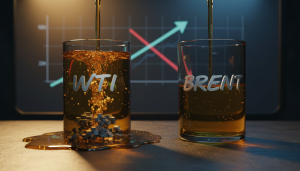
At the time of this report, Brent crude, the international benchmark, registered at $63.84 per barrel, while West Texas Intermediate (WTI), the U.S. benchmark, traded at $60.67 per barrel. Both contracts experienced a slight dip on Thursday, though they remained above their opening levels for the week. This modest recovery, however, struggles against the broader bearish sentiment stemming from a projected surge in global oil availability.
OPEC+ Opens the Spigots: Implications for Global Supply
A primary driver of the current market sentiment is the anticipated decision from the OPEC+ alliance. The cartel is widely expected to announce a further increase in its collective output by 411,000 barrels per day (bpd) for July. This comes ahead of their pivotal meeting scheduled for Saturday, where traders and analysts anticipate a confirmation of this supply expansion strategy.
This incremental addition to supply follows a period of disciplined production cuts, and its continuation suggests a concerted effort by the alliance to balance market stability with a strategic defense of market share. While some individual member nations may face challenges in fully realizing their allocated production increases, the overall trajectory of OPEC+ output points firmly upwards. Notably, Kazakhstan has publicly declared its intention not to limit its own production, further underscoring the group’s collective momentum towards higher supply levels.
The consistent injection of additional barrels into the global market is a critical factor exerting downward pressure on prices. Analysts at ING commodity desks reinforced this view in a recent note, forecasting similar production increases to extend through the third quarter. This sustained focus on boosting supply, while potentially stabilizing the market, inherently weighs on crude valuations, creating a more challenging environment for oil price appreciation in the coming months.
U.S. Trade Tariffs: A Legal Battle with Economic Ramifications
Adding another layer of uncertainty to the global economic and energy landscape is the ongoing legal saga surrounding U.S. trade tariffs. Earlier in the week, a U.S. trade court delivered a significant ruling, asserting that the previous administration had overstepped its constitutional authority in imposing broad tariffs on various U.S. trading partners. The court clarified that the power to dictate trade policy rests exclusively with the U.S. Congress.
However, the administration swiftly launched an appeal against this judgment. The appeals court subsequently paused the initial ruling, indicating that it would consider the federal government’s challenge. A hearing for both sides is now scheduled for June 9. Despite the legal complexities, reports indicate the administration remains resolute in its determination to implement tariffs through alternative means if necessary.
For energy investors, this tariff uncertainty carries considerable weight. Broad-based trade tariffs can stifle global economic growth by disrupting supply chains, increasing manufacturing costs, and reducing consumer demand. A slowdown in international trade and economic activity directly translates to diminished demand for crude oil, acting as a significant bearish factor for the commodity market. The ongoing legal battle ensures that this economic headwind will persist, demanding close attention from market participants.
Iranian Nuclear Talks: Potential for a Supply Shift
Further complicating the global supply outlook are developments concerning Iran. Reuters recently reported that Tehran might be open to considering a 12-month moratorium on its uranium enrichment activities. This potential pause, however, comes with specific conditions: the release of frozen Iranian funds held internationally and the explicit recognition of the country’s sovereign right to utilize uranium for peaceful nuclear power generation.
Should an agreement materialize, leading to the lifting of sanctions, it could pave the way for a substantial return of Iranian crude oil to global markets. Iran possesses significant untapped production capacity, and even a partial re-entry of its barrels could materially alter the prevailing supply-demand dynamics, adding millions of barrels per day over time. This prospect introduces a powerful bearish catalyst, as a sudden influx of Iranian crude could further depress prices already grappling with increased OPEC+ output. Investors must closely monitor diplomatic progress on this front, as it represents a major geopolitical variable with direct implications for global oil supply.
Investor Outlook: Navigating a Complex Energy Landscape
The current environment presents a multifaceted challenge for crude oil investors. The strategic and consistent production increases from OPEC+, driven by a desire to defend market share, are fundamentally expanding the global supply base. This proactive supply management, as highlighted by expert analysis, is anticipated to continue exerting downward pressure on prices through the third quarter.
Simultaneously, the protracted legal and political battle over U.S. trade tariffs injects significant uncertainty into the global economic outlook, threatening to dampen demand for crude oil. Compounding these factors is the potential for a diplomatic breakthrough with Iran, which could unlock substantial new supplies and fundamentally reshape the supply-demand equilibrium. For those invested in the energy sector, vigilant monitoring of these intertwined geopolitical, economic, and supply-side developments will be paramount in navigating the complex and often volatile crude oil market in the coming months.