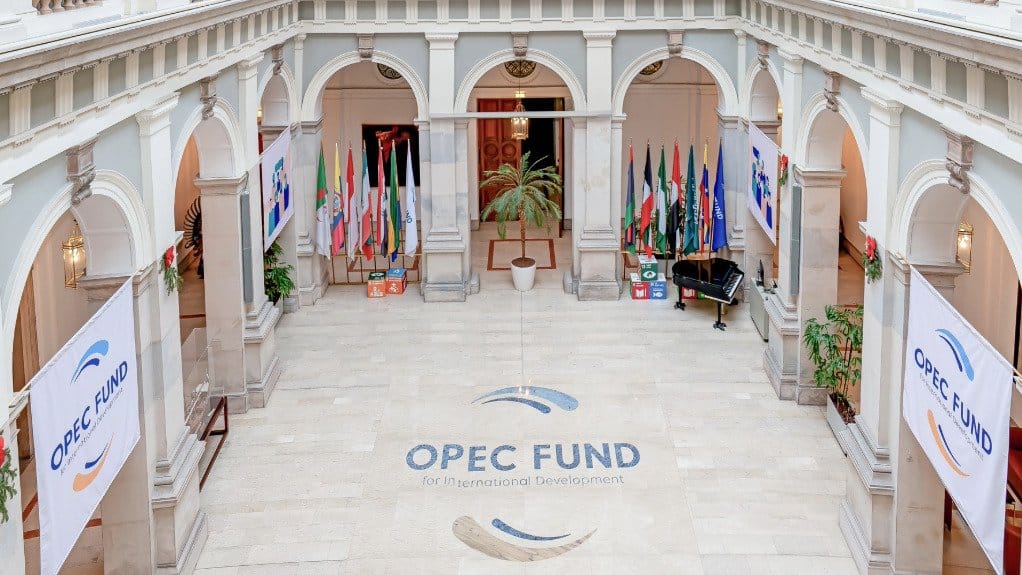
In a significant move signaling the evolving strategic priorities of major energy players, the OPEC Fund for International Development and Saudi-based ACWA Power have forged a deepened five-year partnership, pledging up to US$450 million towards renewable energy, water desalination, and green hydrogen projects in emerging markets. This alliance, announced at the 9th Future Investment Initiative (FII9), extends a successful collaboration that has already seen the OPEC Fund contribute nearly US$300 million to six prior joint ventures across Jordan, Egypt, Uzbekistan, and Azerbaijan. For astute investors, this isn’t merely a corporate announcement; it’s a potent indicator of how institutions with deep roots in traditional energy are actively diversifying their portfolios and de-risking future growth, even as the conventional oil market navigates its perennial volatility.
Navigating Volatility: Green Investments Amidst Crude Swings
This substantial commitment to sustainable infrastructure arrives at a moment of pronounced turbulence in global crude markets, underscoring the strategic imperative for long-term diversification. As of today, Brent Crude trades at $90.38 per barrel, marking a sharp 9.07% decline within the day, with its price range fluctuating between $86.08 and $98.97. The broader trend is even more stark: over the past 14 days, Brent has shed approximately $22.4, representing a nearly 20% drop from its $112.78 perch on March 30. This kind of rapid depreciation, also mirrored in WTI Crude, currently at $82.59, and gasoline prices, now at $2.93, highlights the inherent unpredictability of fossil fuel commodity markets. Against this backdrop, the OPEC Fund’s proactive investment in green energy and associated technologies through ACWA Power represents a calculated hedge. For investors seeking stability and growth outside the immediate vagaries of crude price swings, these partnerships in renewable energy and green hydrogen present compelling long-term opportunities, particularly in developing economies where energy demand is soaring and climate resilience is critical.
The Strategic Pivot: OPEC Fund’s Role in Emerging Green Frontiers
The OPEC Fund’s expanded partnership with ACWA Power is a powerful illustration of a strategic pivot by an institution historically associated with oil-producing nations. This isn’t just about corporate social responsibility; it’s a clear move to position itself at the forefront of the energy transition in the Global South. The initial $300 million in financing for projects in Jordan, Egypt, Uzbekistan, and Azerbaijan has demonstrated the viability and impact of these blended finance models. By leveraging the OPEC Fund’s concessional capital alongside ACWA Power’s proven development expertise, the partnership aims to unlock significant private-sector participation in regions often challenged by limited access to climate finance. Many investors are keenly observing how traditional energy players are adapting, with questions frequently arising about the long-term price trajectory of oil and the sustainability of current production quotas. This alliance offers a partial answer: diversification into high-growth, future-proof sectors like green energy and water desalination is a tangible strategy to ensure sustained influence and return in a decarbonizing world. It signals that even entities rooted in fossil fuels recognize the imperative to invest in the energy systems of tomorrow, shaping new markets and securing future revenue streams beyond crude.
Catalyzing Future Growth: Green Hydrogen and Water Security as Key Drivers
A closer look at the specific technologies targeted by this alliance reveals a sharp focus on areas poised for exponential growth and crucial for sustainable development: renewable energy, water desalination, and green hydrogen. Renewable energy, already a mature investment class, gains new momentum through blended finance, allowing deployment in riskier or capital-scarce emerging markets. Water desalination, a critical technology in water-stressed regions, is a natural fit for integration with clean power generation, aligning with the OPEC Fund’s “Green-Blue Connect” initiative that interlinks energy and water security. However, it is the emphasis on green hydrogen that truly positions this partnership at the cutting edge. Green hydrogen, produced using renewable electricity to split water, holds immense promise as a clean fuel and industrial feedstock, but its commercial scalability still requires significant upfront investment and de-risking. ACWA Power’s experience in large-scale energy projects, combined with the OPEC Fund’s financing muscle, creates a powerful synergy to accelerate the development of these complex, capital-intensive projects. This strategic focus on green hydrogen and advanced water solutions suggests a forward-looking investment thesis, targeting high-growth sectors that address core global challenges while generating robust returns over the long term for participating investors.
Upcoming Events and the Broader Energy Market Outlook
While the OPEC Fund and ACWA Power solidify their long-term green strategies, the short-to-medium term dynamics of the traditional oil market remain critical for investors. The upcoming week is packed with events that will shape this outlook. The OPEC+ Joint Ministerial Monitoring Committee (JMMC) meeting on April 19, followed by the full OPEC+ Ministerial Meeting on April 20, will be closely watched for any indications regarding production quotas. Investors are actively asking about current OPEC+ production levels and how these might evolve, recognizing their direct impact on global supply and, consequently, crude prices. Simultaneously, key data releases such as the API Weekly Crude Inventory on April 21 (and again on April 28) and the EIA Weekly Petroleum Status Report on April 22 (and April 29) will provide crucial insights into immediate supply-demand balances in the world’s largest consumer. The Baker Hughes Rig Count on April 24 (and May 1) will offer a pulse check on North American production activity. These conventional market signals, while distinct from the long-term green energy investments, are not entirely disconnected. The growing capital allocation towards renewable energy, water, and green hydrogen by influential players like the OPEC Fund suggests a strategic hedging against the very volatility and demand uncertainties that OPEC+ decisions and inventory reports attempt to manage. Investors must therefore monitor both the immediate market indicators and these profound shifts in investment philosophy to build a resilient and diversified energy portfolio.


