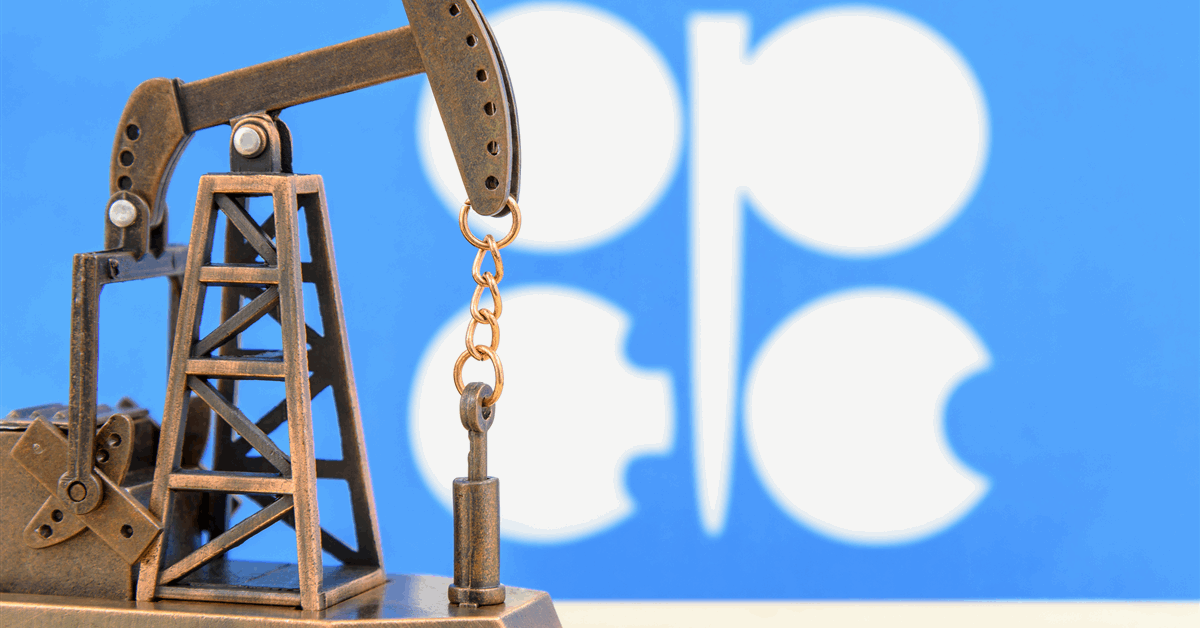
The global oil market is once again navigating the strategic maneuvers of key producers, with a recent announcement from a subset of OPEC+ nations signaling a fresh commitment to market stability. On October 5, eight prominent OPEC+ members – Saudi Arabia, Russia, Iraq, the United Arab Emirates, Kuwait, Kazakhstan, Algeria, and Oman – convened virtually to implement a collective production adjustment totaling 137,000 barrels per day. This decision, set to take effect in November 2025, marks a concerted effort to maintain market equilibrium amidst evolving global economic conditions and inventory levels. For investors, this move underscores the cartel’s proactive stance in managing supply, creating ripples that demand close attention given the current volatile market landscape. Our analysis delves into the specifics of this adjustment, its immediate market implications, the forward-looking trajectory shaped by upcoming events, and what it means for investment strategies in the energy sector.
OPEC+ Tightens the Screws: A Deeper Dive into the 137,000 bpd Adjustment
The recent production adjustment of 137,000 barrels per day by eight OPEC+ nations is a clear signal of their intent to bolster market fundamentals. This is not a new, standalone cut, but rather a further tightening on top of the existing voluntary adjustments initiated in April 2023 (1.65 million bpd) and November 2023 (2.2 million bpd). Individually, Saudi Arabia and Russia will each contribute 41,000 bpd to this latest adjustment, followed by Iraq at 18,000 bpd, the UAE at 12,000 bpd, Kuwait at 10,000 bpd, Kazakhstan at 7,000 bpd, and both Algeria and Oman at 4,000 bpd each. These specific contributions underscore a coordinated strategy among the group’s largest producers.
The rationale behind this move, as stated, points to a “steady global economic outlook and current healthy market fundamentals, as reflected in the low oil inventories.” However, the market’s immediate reaction presents a stark contrast to this sentiment. As of today, Brent Crude trades at $90.38 per barrel, marking a significant 9.07% drop within the day’s range of $86.08 to $98.97. Similarly, WTI Crude stands at $82.59, down 9.41% from its previous close, oscillating between $78.97 and $90.34. This downturn is not an isolated event; Brent crude has seen a substantial decline of 19.9% over the past 14 days, falling from $112.78 on March 30 to its current level. This divergence suggests that while OPEC+ aims to tighten supply, broader macroeconomic headwinds, demand concerns, or speculative pressures are currently exerting stronger downward force on prices. Investors must weigh the cartel’s production discipline against these potent external variables.
Navigating Investor Concerns and Future Price Trajectories
Our proprietary reader intent data reveals a clear focus among investors on future price trends and OPEC+’s strategic flexibility. A common inquiry this week asks, “What do you predict the price of oil per barrel will be by end of 2026?” and “What are OPEC+ current production quotas?” The recent adjustment directly addresses the latter, outlining specific “required production” figures for November 2025: Saudi Arabia at 10.061 million bpd, Russia at 9.532 million bpd, Iraq at 4.255 million bpd, the UAE at 3.399 million bpd, Kuwait at 2.569 million bpd, Kazakhstan at 1.563 million bpd, Algeria at 967,000 bpd, and Oman at 808,000 bpd.
These new targets, combined with the 137,000 bpd adjustment, illustrate OPEC+’s proactive supply management. The cartel also reiterated its commitment to “full conformity with the Declaration of Cooperation,” including compensating for any overproduced volumes since January 2024. This focus on compliance is critical for market credibility and provides a potential floor for prices by ensuring that agreed-upon cuts are actually delivered. However, the statement also highlights the group’s “full flexibility to pause or reverse the additional voluntary production adjustments” based on “evolving market conditions.” This optionality introduces a degree of uncertainty for investors but also signals a pragmatic approach to market management. While the current market reaction shows bearish sentiment, OPEC+’s firm stance on supply could provide underlying support, especially if global demand stabilizes or picks up, influencing price trajectories through 2026.
Upcoming Catalysts and Geopolitical Undercurrents
The immediate future holds several key events that will further shape the crude market following OPEC+’s adjustment. A crucial `OPEC+ Meeting (Full Ministerial)` is scheduled for April 19, 2026. While the eight nations have made their move, this broader ministerial gathering will indicate whether the collective sentiment aligns with further tightening or if other members might push for different strategies. This meeting could ratify the recent adjustment, or it could introduce broader commitments that further impact global supply.
Beyond OPEC+’s internal dynamics, market participants will closely monitor weekly inventory data. The `API Weekly Crude Inventory` and `EIA Weekly Petroleum Status Report` on April 21, 22, 28, and 29 will provide critical insights into the supply-demand balance in the world’s largest consumer. If these reports show continued draws, it would validate OPEC+’s assessment of “low oil inventories” and lend support to their tightening strategy. Conversely, unexpected builds could intensify bearish pressures. Furthermore, the `Baker Hughes Rig Count` on April 24 and May 1 offers a vital pulse on non-OPEC supply, particularly from North America. A declining rig count could signal future slowdowns in shale production, potentially amplifying the impact of OPEC+’s cuts. Geopolitical tensions and the pace of economic recovery in major consumption hubs like China and Europe will also continue to cast long shadows, influencing the “evolving market conditions” that OPEC+ explicitly watches.
Strategic Implications for Energy Investors
For discerning energy investors, the latest OPEC+ production adjustment is more than just a number; it’s a strategic move with significant implications. Despite the immediate market dip reflected in Brent and WTI prices, the cartel’s decision to further tighten supply, even modestly, demonstrates a clear commitment to propping up prices and managing market surplus. This active management reduces the downside risk for crude, potentially setting a higher floor for prices in the medium term, especially as global inventories remain lean.
Investors should closely monitor not only the compliance of the eight nations with their new targets but also the broader OPEC+ sentiment at the upcoming ministerial meeting. The emphasis on “full conformity” and compensatory cuts suggests a disciplined approach that, if maintained, could support stronger crude prices. Companies with robust upstream portfolios and efficient production operations stand to benefit if prices stabilize or trend upwards due to these supply-side interventions. However, the persistent volatility and the significant 19.9% drop in Brent over the past two weeks highlight that global macroeconomic uncertainties, including potential demand destruction or slower-than-expected economic growth, could still overshadow OPEC+’s efforts. Therefore, a balanced investment approach, focusing on companies with strong balance sheets and diversified operations, remains prudent as the market navigates these complex supply and demand dynamics through 2026.


